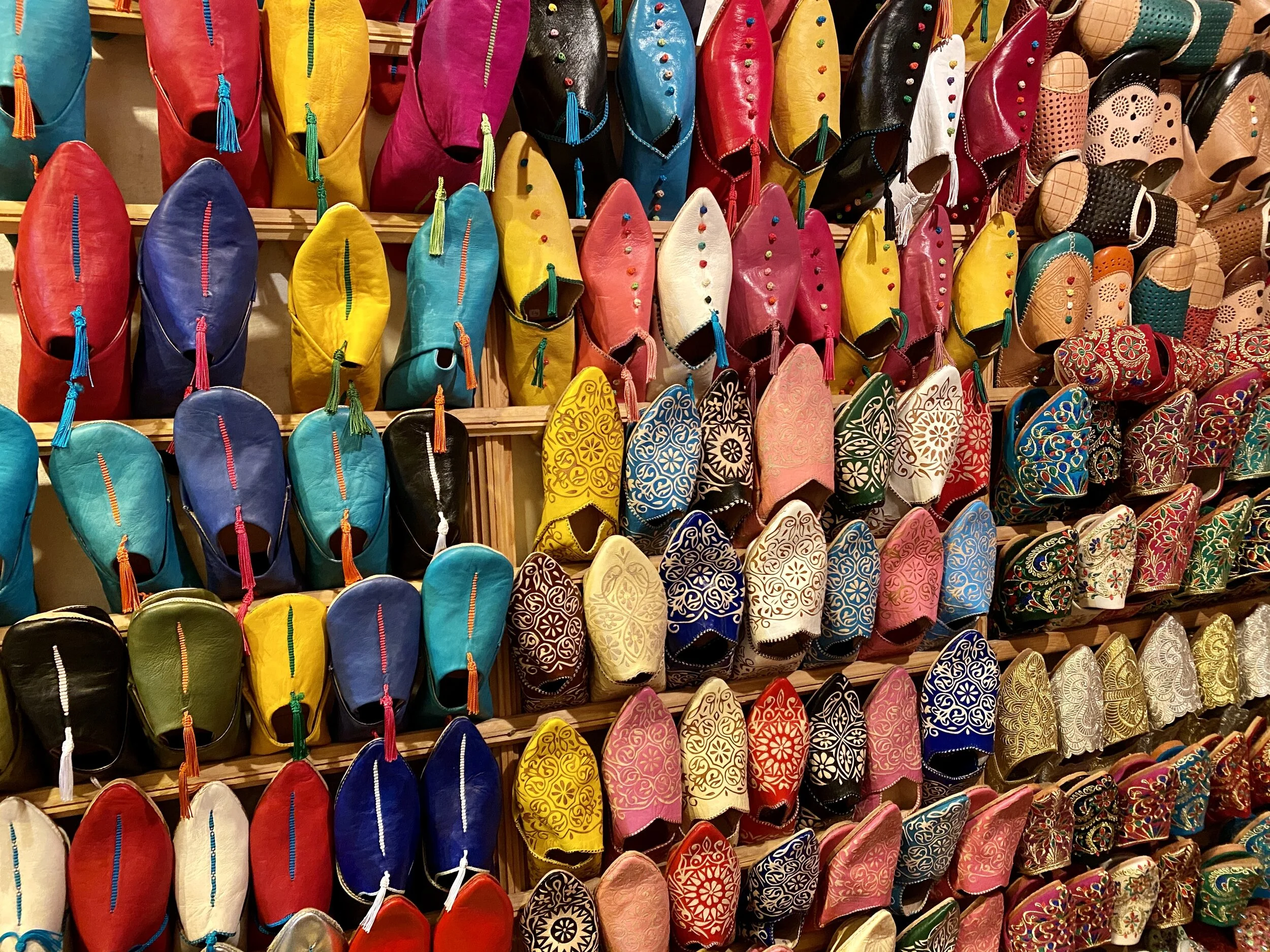
MARRAKECH ~ THE CITY OF 50 SHADES OF RED
February 2020 & 2026
Well hello there …
What made me dream of going to Marrakech? Getting lost in the colourful and vibrant souks, the hustle and bustle at the Djemaa el Fna square, the beautiful architecture, tasting and preparing a delicious traditional tagine, enjoying a mint tea at a beautiful rooftop terrace, experience the fairy-tale of 1001 nights in one of the beautiful riads and restaurants, submerging myself in the culture, …
Marrakech, you love it or hate it … they say! Do I hate it? No, I don’t! Did I fell instantly in love? No, neither! My personal feeling lies somewhere in between! I loved our beautiful and charming riads and the warm hospitality of the staff. I loved to learn to make a traditional tagine and mint tea, while talking about our differences in culture. I also look back with pleasure on my first hammam experience, even though the lady treated us rather brutally. I love the purity and origin of their wares, often pure craftsmanship! But I dislike the chaos, unhealthy air of the exhaust gases of the hundreds of motorcycles that tear through the souks, not knowing if the locals are honestly trying to help you out or they want to rip you off, all the rubbish lying around everywhere … At times, I received too many stimuli at the same time, which made me restless and insecure. So, will I return? I did in 2026, I am happy I’ve been there, for sure, but I don’t feel the urgent need to return!
Practical Wisdom
The best season to travel to Morocco is from October to May. During the winter, the nights can be cold due to the close location of the Atlas Mountains. We went twice in February, the mornings and nights were a bit cooler, but during the daytime temperatures were running up to 25°C and higher in 2020. In 2026, we had rain 3 out of 5 days, rather exceptional, but the climate is changing, and up north, there were even severe floods.
From Belgium, there are 3 flights a week from Zaventem with both Sn Brussels Airlines & TUI fly. And Ryanair flies 4 times a week from Charleroi. Another good option for Belgians is Transavia, leaving from Eindhoven or Brussels.
The currency in Morocco is the Moroccan Dirham (Dhs/Mad). At the time of writing (February 2020) the conversion rate is as following 10,42 MAD = 1 €. At the souks you pay cash, in the modern restaurants and at your hotel or riad you can pay with your bank or credit card.
Belgian citizens need, like most other nationalities, an international passport to enter Morocco. Travellers from the European Union do not require a visa. For all nationalities, the duration of a tourist stay is a maximum of 90 days. https://www.visitmorocco.com
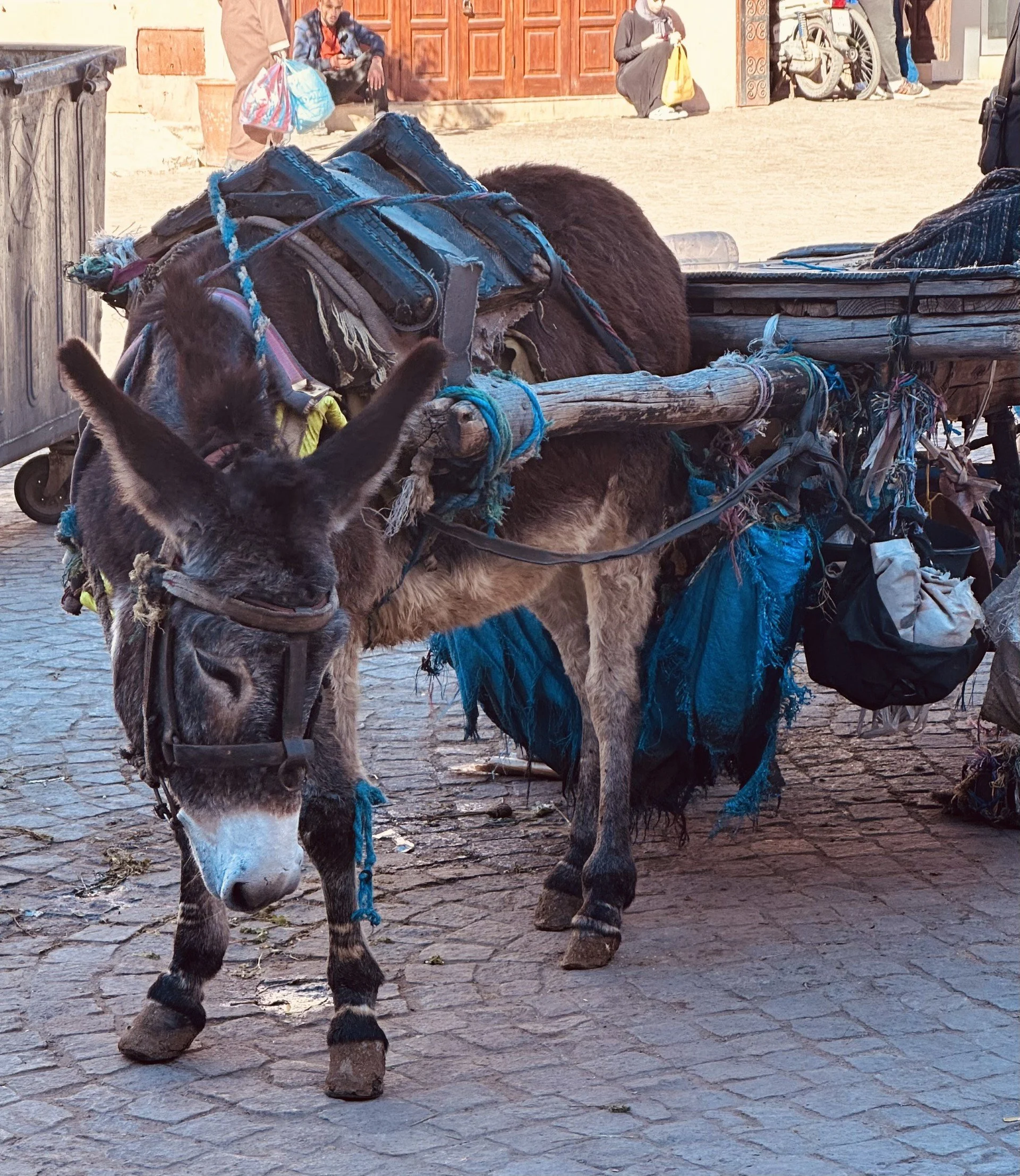
Moroccan people don’t like to be photographed, so only do so when you ask permission. And it’s prevailing that they ask for money for it. The most common reason is referred to as “Aniconism” a proscription in Islam against the creation of images of sentient beings. In 2026 I took a picture of a donkey at “Place des espices”, and immediately and old man came out of nowhere asking for money.

If you’re lost and someone offers to help, then only accept, if you’re willing to pay for it. And only trust women or reliable shop owners to advice you. Certainly, young children, make it a habit to ask you for money, when showing you the way. A common trick is to ask you, where are you staying and try to convince you they are a close friend to the owner of your riad.
In 2020 Google Maps was still getting confused in Marrakech, as the streets are too narrow. So, it’s recommended to download a simplified navigation app, specifically for Marrakech. I downloaded an app, called Marrakech-Riad, which is free and has a GPS map of the medina, but due to the data roaming, we did not use it. Some Riads (for example Riad Kheirredine, Riad de Tarabel, Riad 72) are providing a mobile phone for you to use in case you get lost and you want them to pick you up. In 2026, we used a wifi-box and navigating with Google Maps was working fine then.
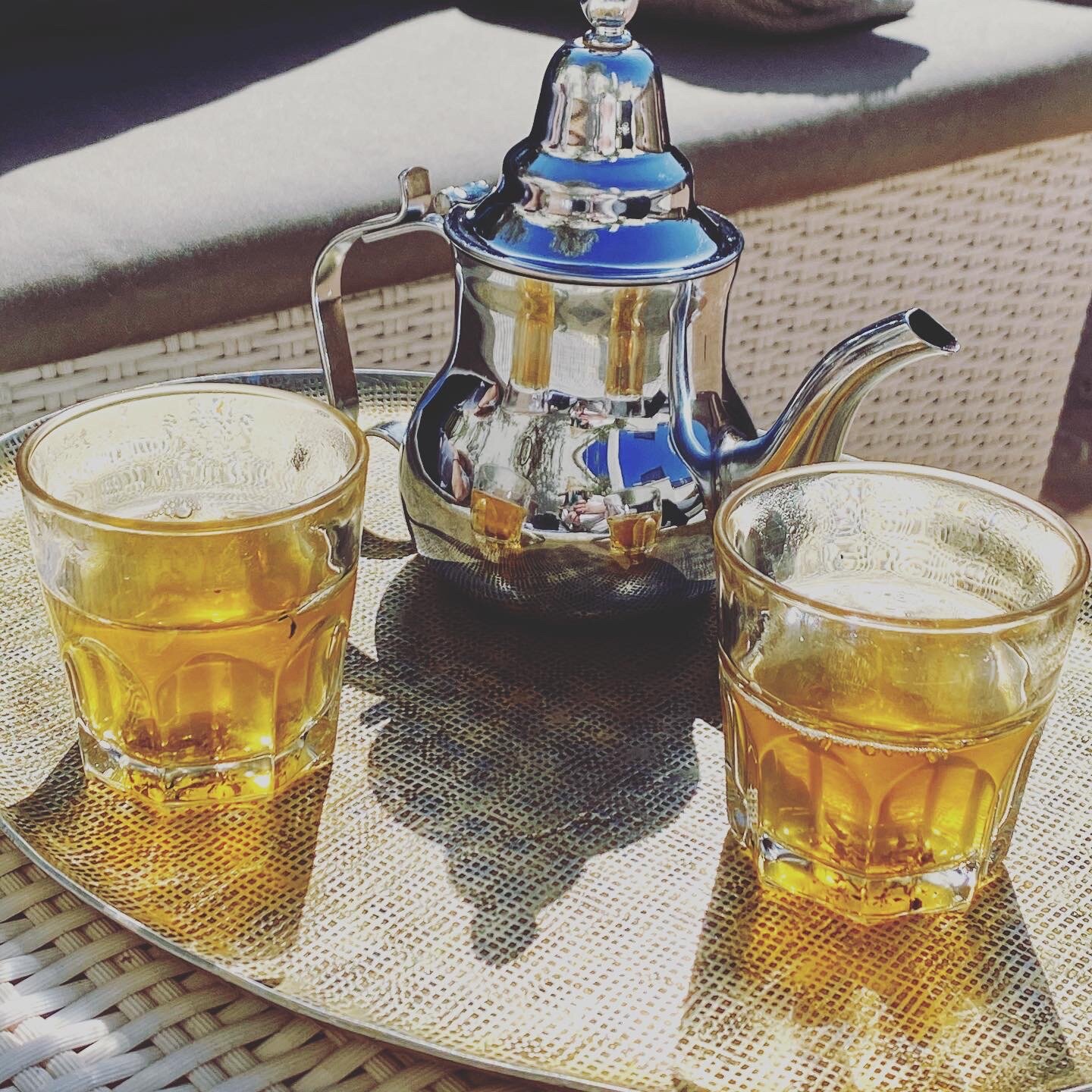
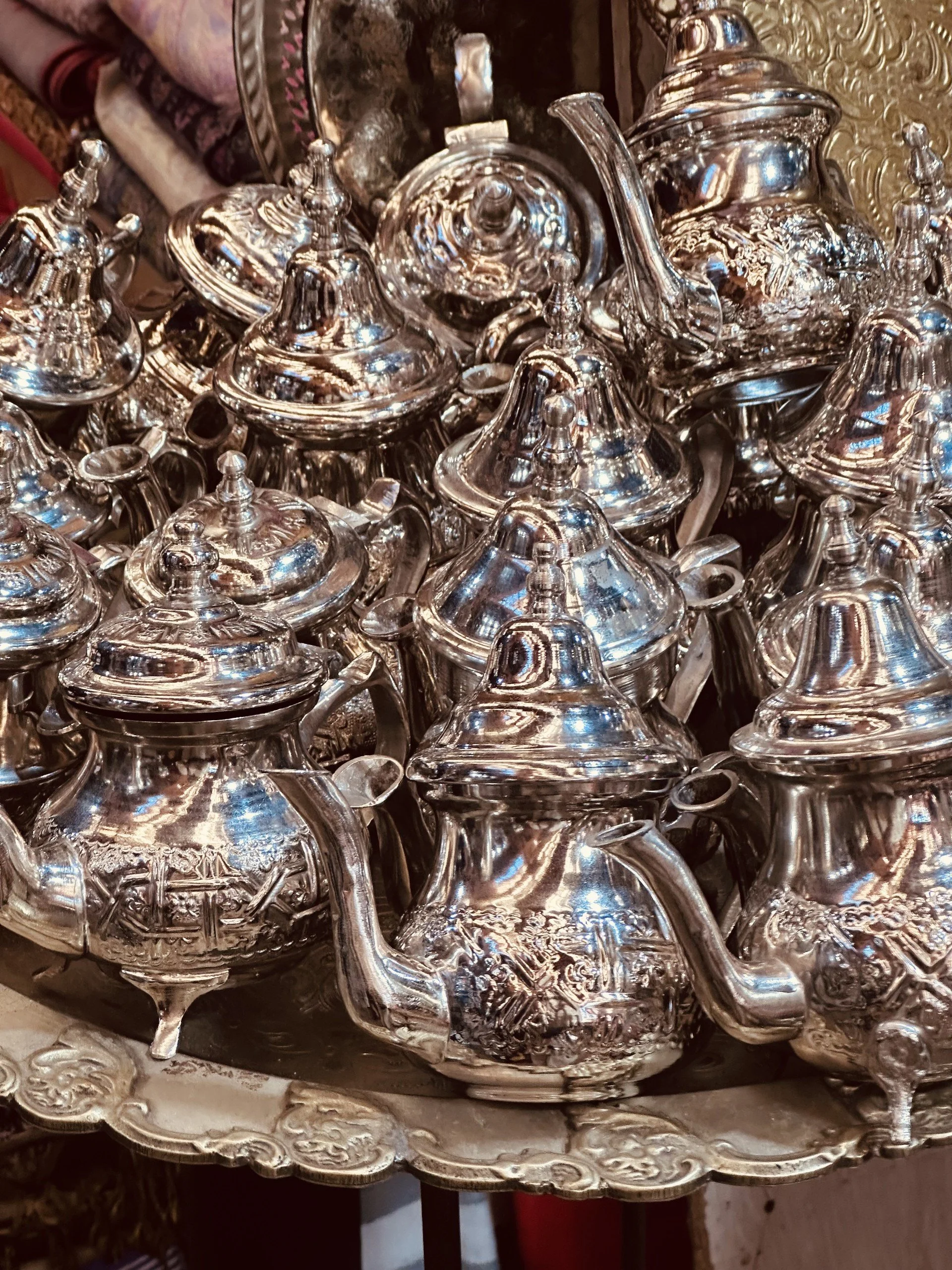
Mint tea is the national drink of Morocco. It is brewed green tea with a handful of mint leaves and a ton of sugar (at least 3 lumps of sugar for a small teapot). At some places (the minority), they ask you if you want tea with or without sugar. Muslims are officially not allowed to drink any alcohol; that’s probably why they call their tea “Moroccan whiskey”. The tradition tells: the more important the guest is, the higher the host pours the tea. The tea gets its unique taste, when it is transfused three times.
While many mosques around the world open at least a portion of their interior to non-Muslims, foreigners will find that in Morocco most are off-limits. Some Muslims will find it even disrespectful to photograph the exterior of mosques.
The second language for most Moroccans is French. English is not used as widely so if you don’t speak French, you’ll likely be challenged at times to communicate.
If you stay in a riad, generally it’s just one person who is taking care of everything for you. And they are usually willing to help with anything and everything – breakfast, laundry, directions, recommendations, tour reservations – you name it. Commonly, you pay a tip. An average tip is around 30-60 Dhs/day. In our riads, the owner had the habit of collecting the tips and to distribute them fairly among the staff, because not everyone comes into the picture, while they work just as hard behind the scenes. We gave 250 dhs for 4 nights stay in 2020. In bars or restaurants, it’s common to pay a tip of 10% of the bill.
Most Moroccans do not consume alcohol. You’ll find some restaurants and hotels, though in the old city that serve alcohol. But it’s even more common in the new city. The only place we went, where they did not serve alcohol, was at “Nomad”. If you want to drink a glass of wine, it’s mostly a local wine; international wines and champagnes are only sold by the bottle and rather expensive in comparison with the European value.
As with most conservative countries, women are expected to cover their knees and shoulders when venturing out of the house. Remember, you’re not here to change the culture, you’re here to experience a new one.
Friday is the Muslim prayer day, so don’t be surprised if some restaurants and shops are closed.
In 2026, most of the shops were open in the morning but closed in the afternoon.
Must sees
Djemaa el Fna
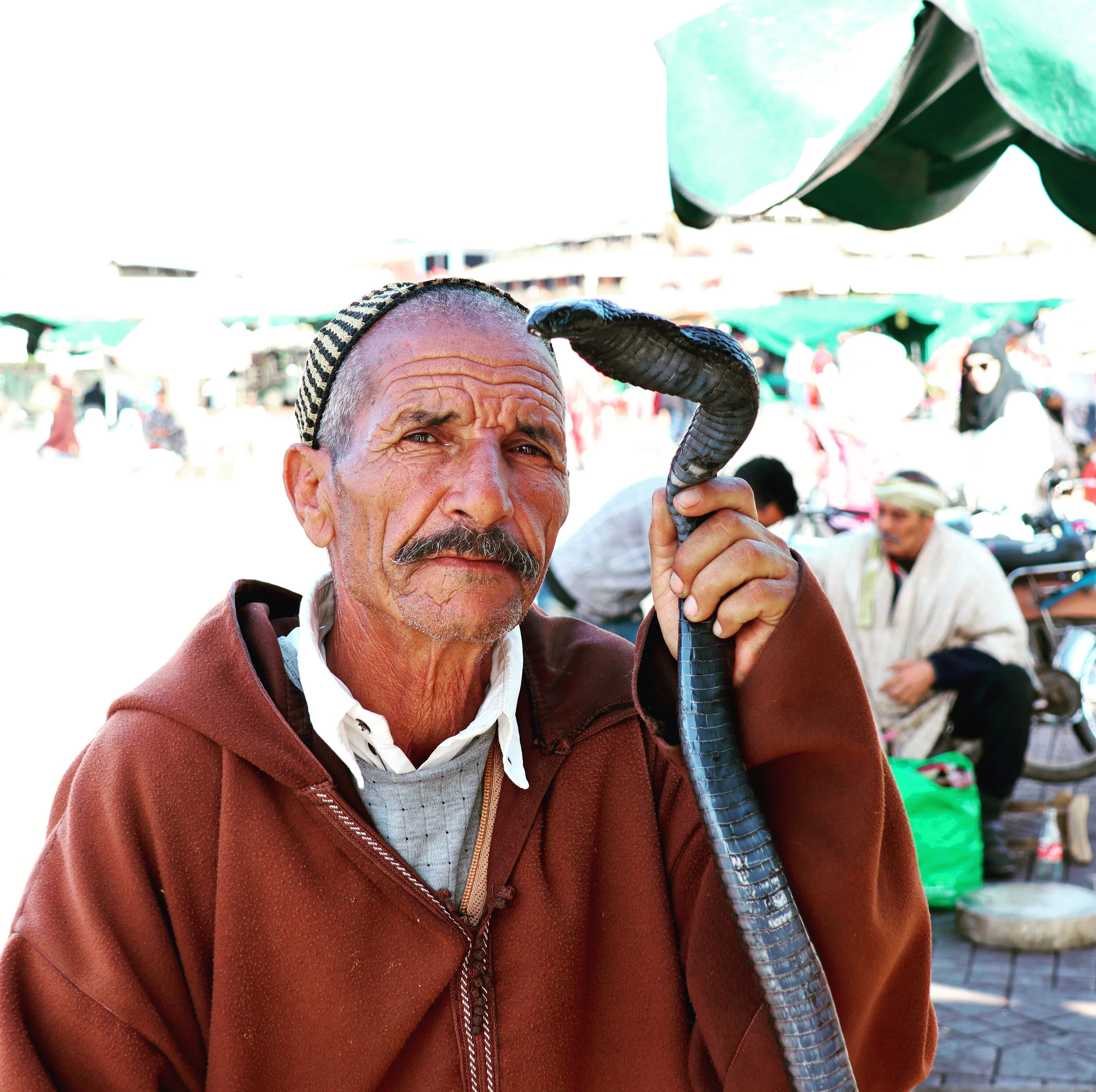
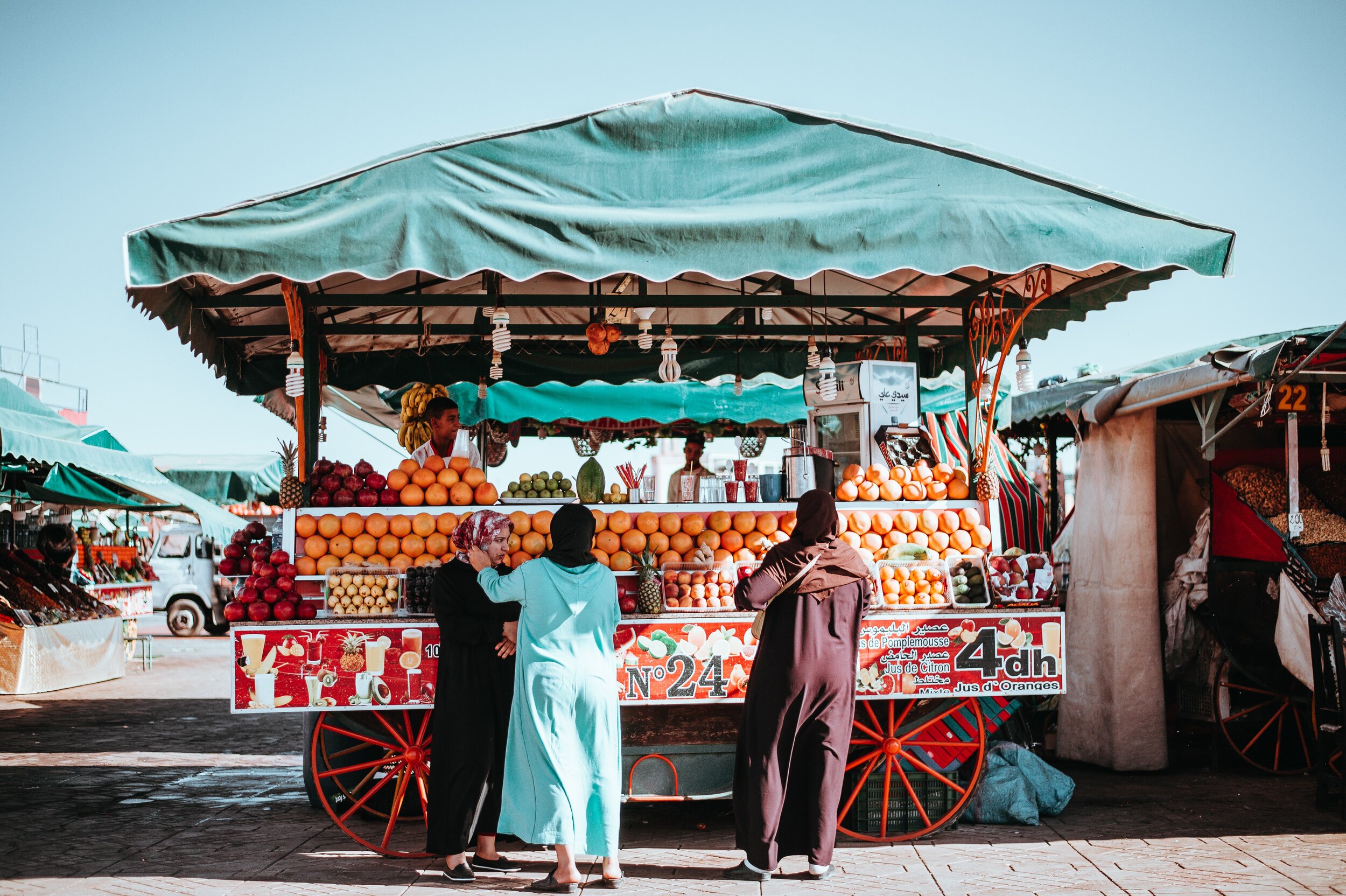
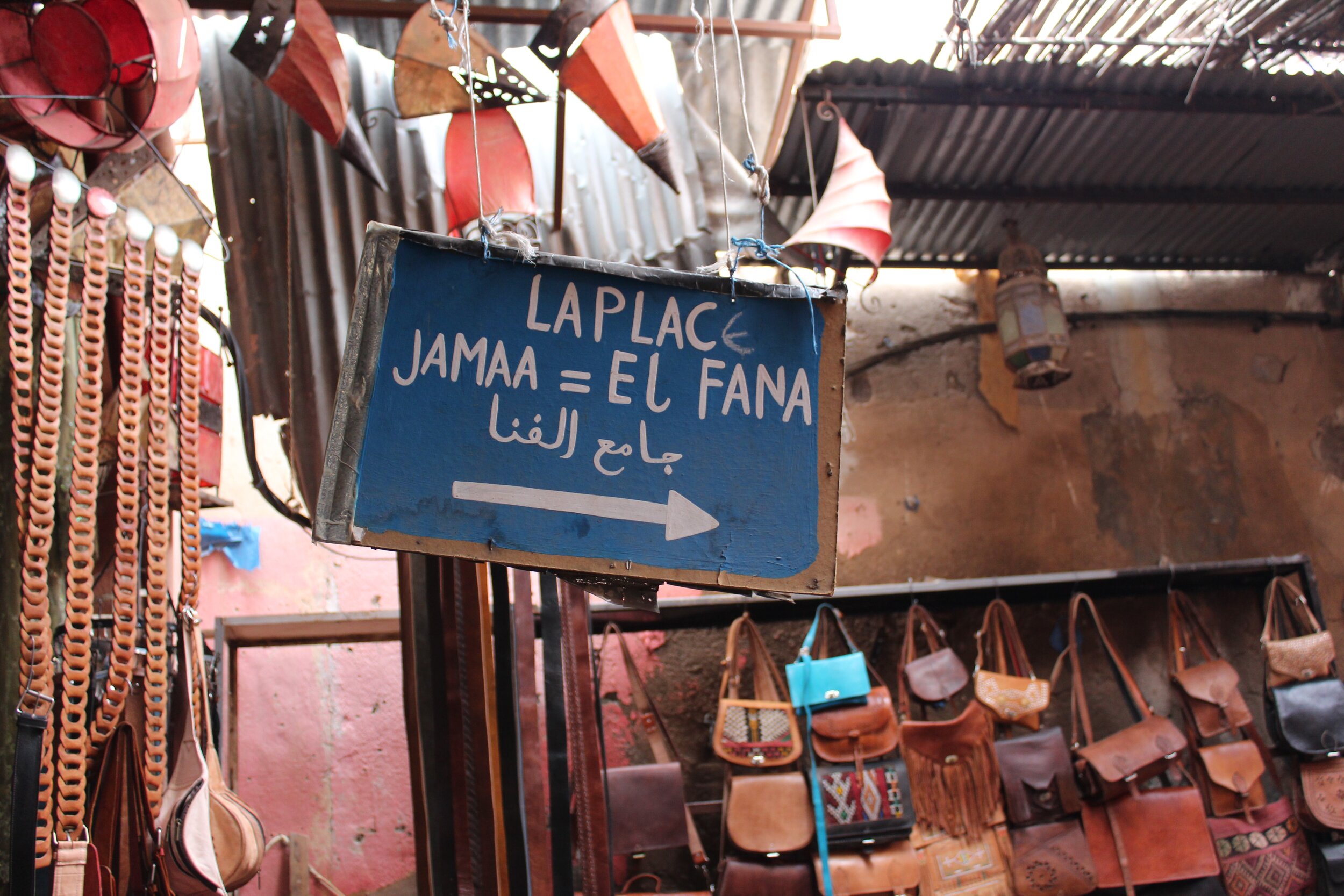
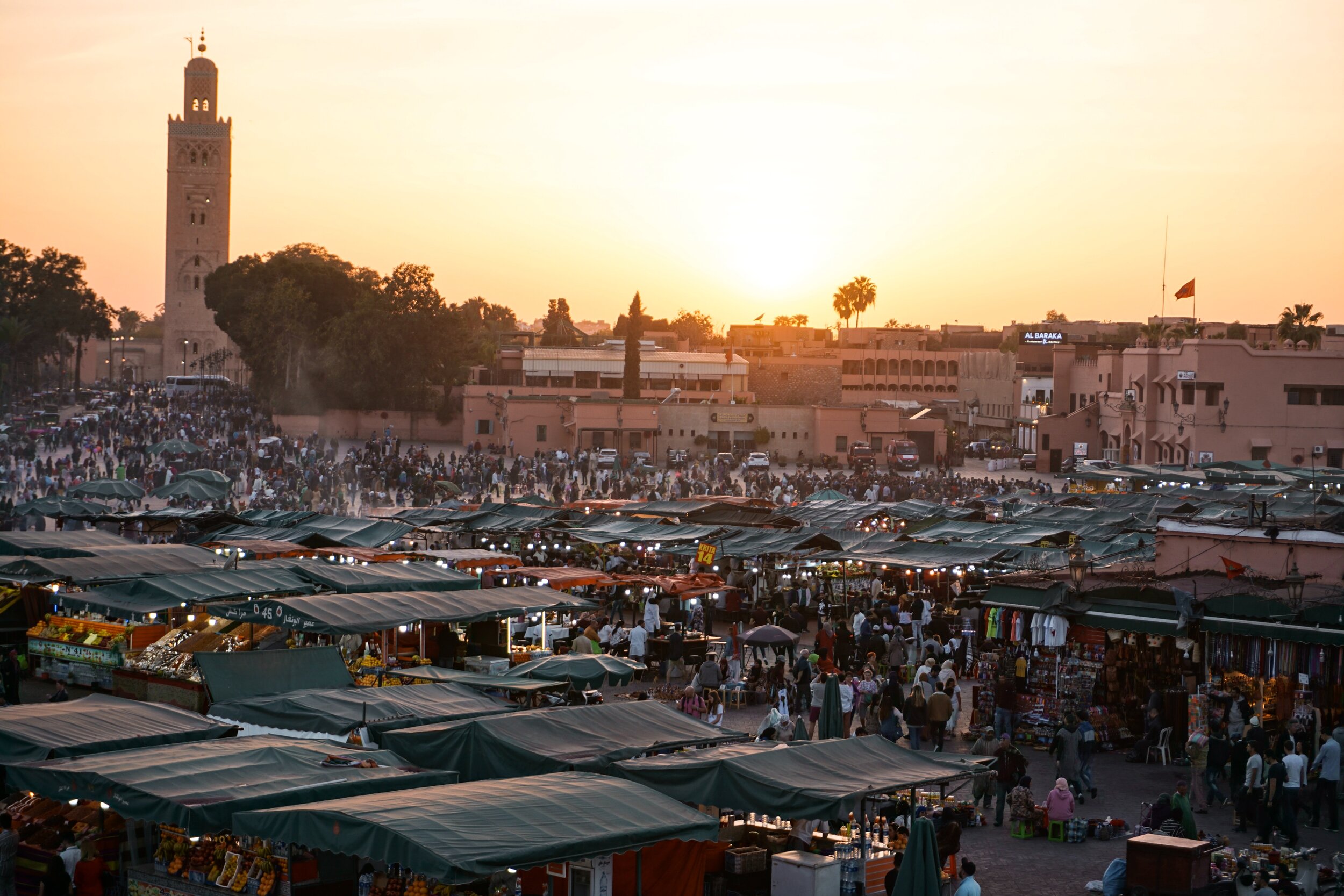
The huge, lively square at the heart of Marrakech, one of the city's principal attractions. By day or by night, the square is filled with wandering salesmen, musicians, dancers, and snake charmers, attracting the attention of a cosmopolitan crowd. When you’re wandering in the souks, the locals are asking constantly, “are you looking for the square?” Because is the reference point in the medina! When you’re lost in the souks, almost every signpost points in the direction of Djemaa El Fna. It’s a must-see, but for me, the place where the traders are the most intrusive! After saying several times "no, I am not interested in a henna drawing", a lady had strangled my hand and before I knew it, she started to draw on it, without hesitation. Then she demanded money to support her children, and the work she had put in it … which I subsequently refused because no is no! They even tried to separate me and my husband to get their way. I heard several similar stories from friends, so be on your guard here! In 2026 we only visited by day, and the salesmen were less pushy, because anno 2026 they were all occupied with their mobilephone.
Place des Epices
For me one of the most beautiful squares in the medina. If you suddenly see a strip of sunlight in the dark labyrinth of the souks, there is a good chance that you will end up at “Place des Epices”. This square mainly houses cane craftsmen and herbs. The popular Nomad café and Café des Epices are also located around the square. We bought all our herbs in a shop called
“spicy-herby”, a master in sales, but friendly and not aggressive.

The Souks
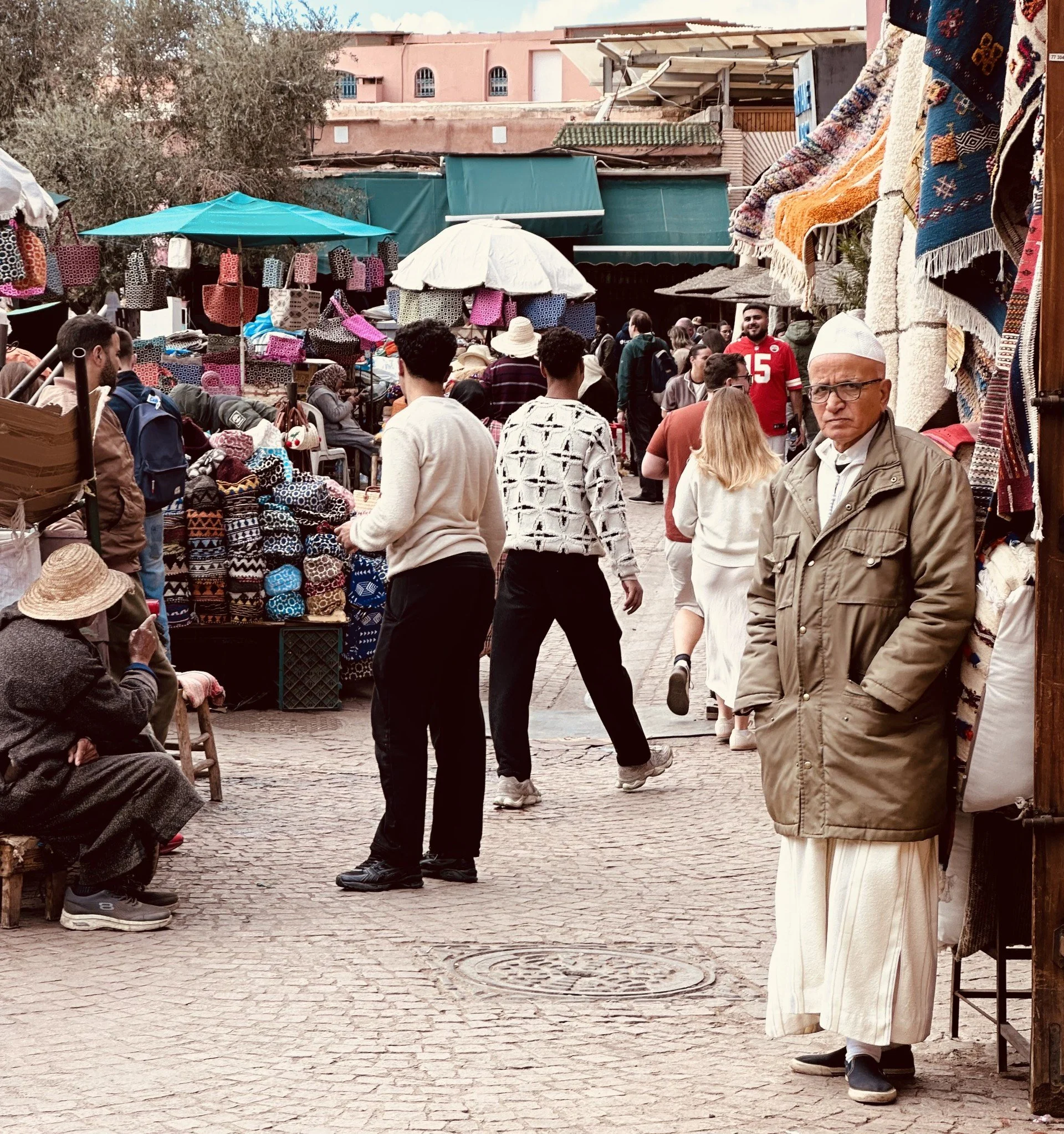
The souks in Marrakech are the heart of the medina, UNESCO World Heritage since 1985, so a must-see when you’re visiting the city. Prepare for all your senses to be overwhelmed at once – there’s the smell of spices and motorbikes fumes, the feel of the heat, the shouts of the stallholders and the bright colours of stalls piled high with pottery, leather bags, etc … The souks are the ultimate navigational challenge – a labyrinth of narrow alleyways that twist and turn their way north of the main square, the Djemaa el-Fna. There are no street names, and what is a road today may have been taken by a stall tomorrow. Bargaining is a big part of the souk experience. The usual rule is to begin your negotiations by halving the figure they ask at first. However, they often start at such ridiculous prices knowing the tourist will follow this well-known rule, that it’s often better to return volley with an equally ridiculous low sum. For my husband who’s in sales it was pure fun, for me someone who is a bit suspicious, sometimes rather an irritation. If you see something beautiful, buy it right away, because the chance that you will find it again, a second time is rather small.

Medersa Ben Youssef
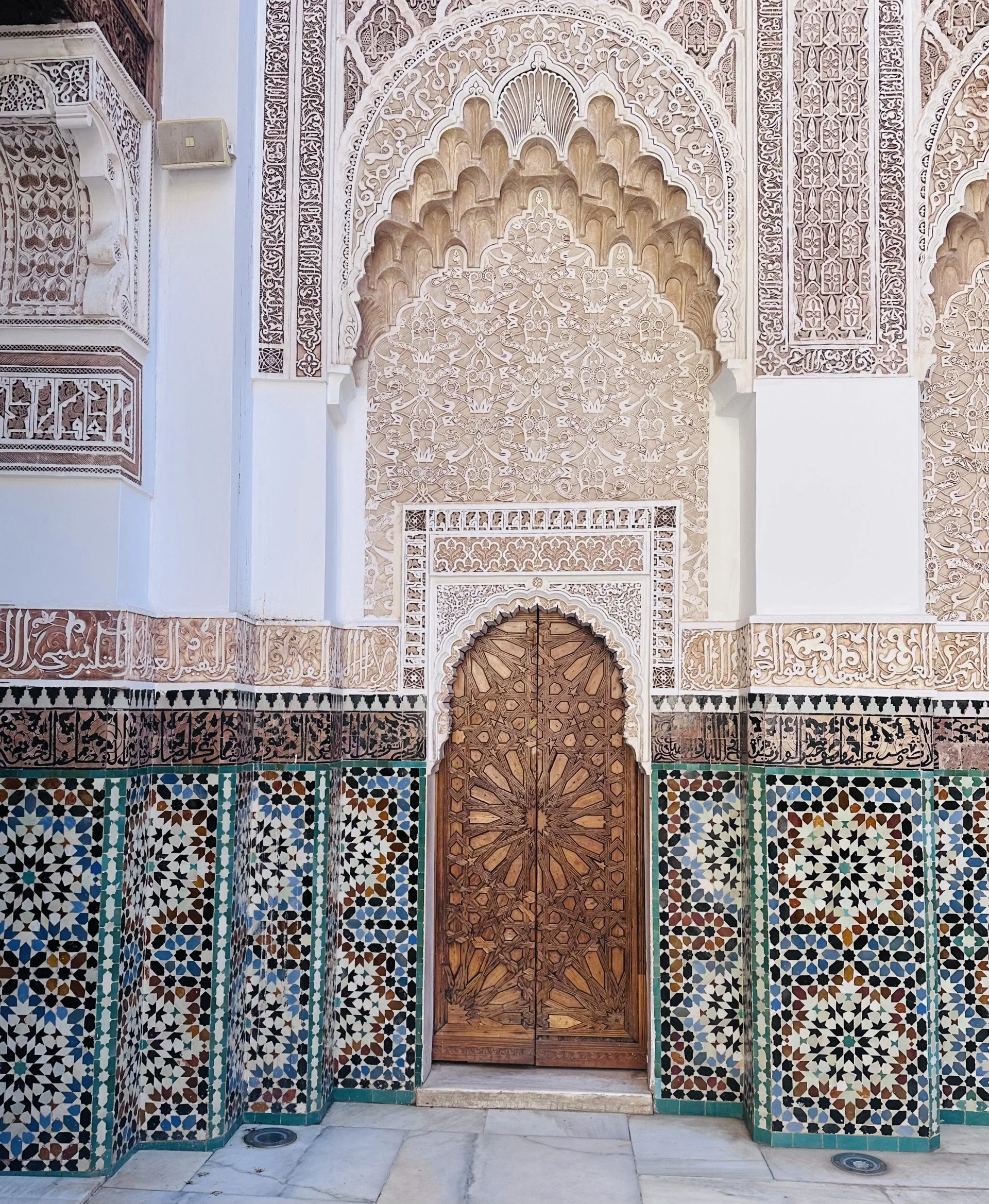
For more than four centuries, students lived here to study law and theology. The building itself is gorgeous. In 2020 it was closed for renovations. But in 2026, we were able to visit.
The Tanneries
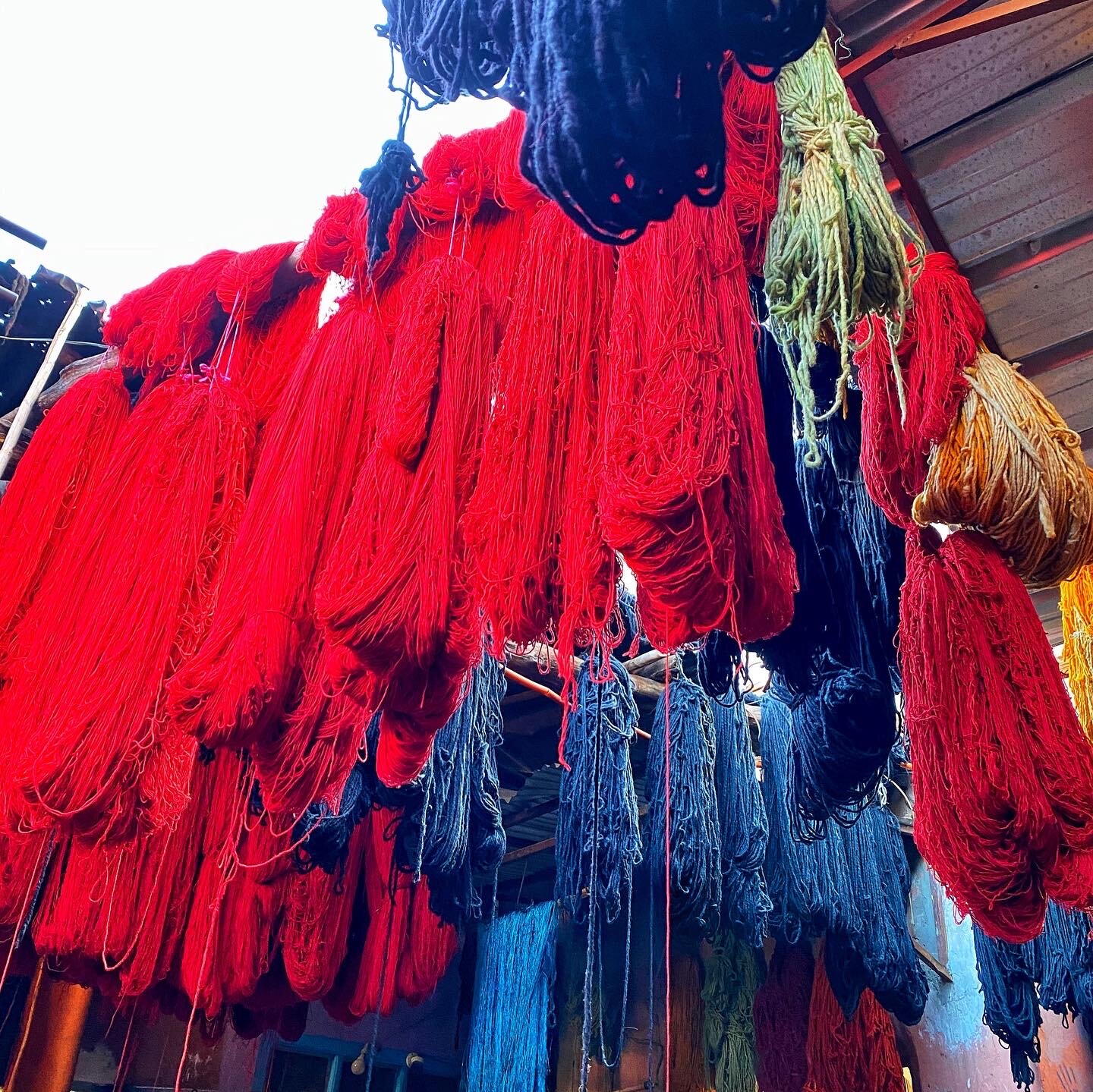
This place triggered me on the one hand, but on the other side, I was afraid to become sick of the smell, as I am quite sensitive to this. I had read it’s is not for everyone and certainly not for the faint-hearted or those easily affected by strong smells. Another thing that kept me from adding it to my program is, that often travellers get scammed into coming here. If you want to visit the tanneries, ask for directions from a trusted source (hotel worker, guide, police) or use a good city map and refuse any offers of help by men on the streets. A man sent us into an alley where they gave us a little insight into how the colours are acquired. He wrapped a headscarf around us, hoping to sell us one. Although we were not in the real tanneries, they were already intrusive enough for me.
Bahia Palace
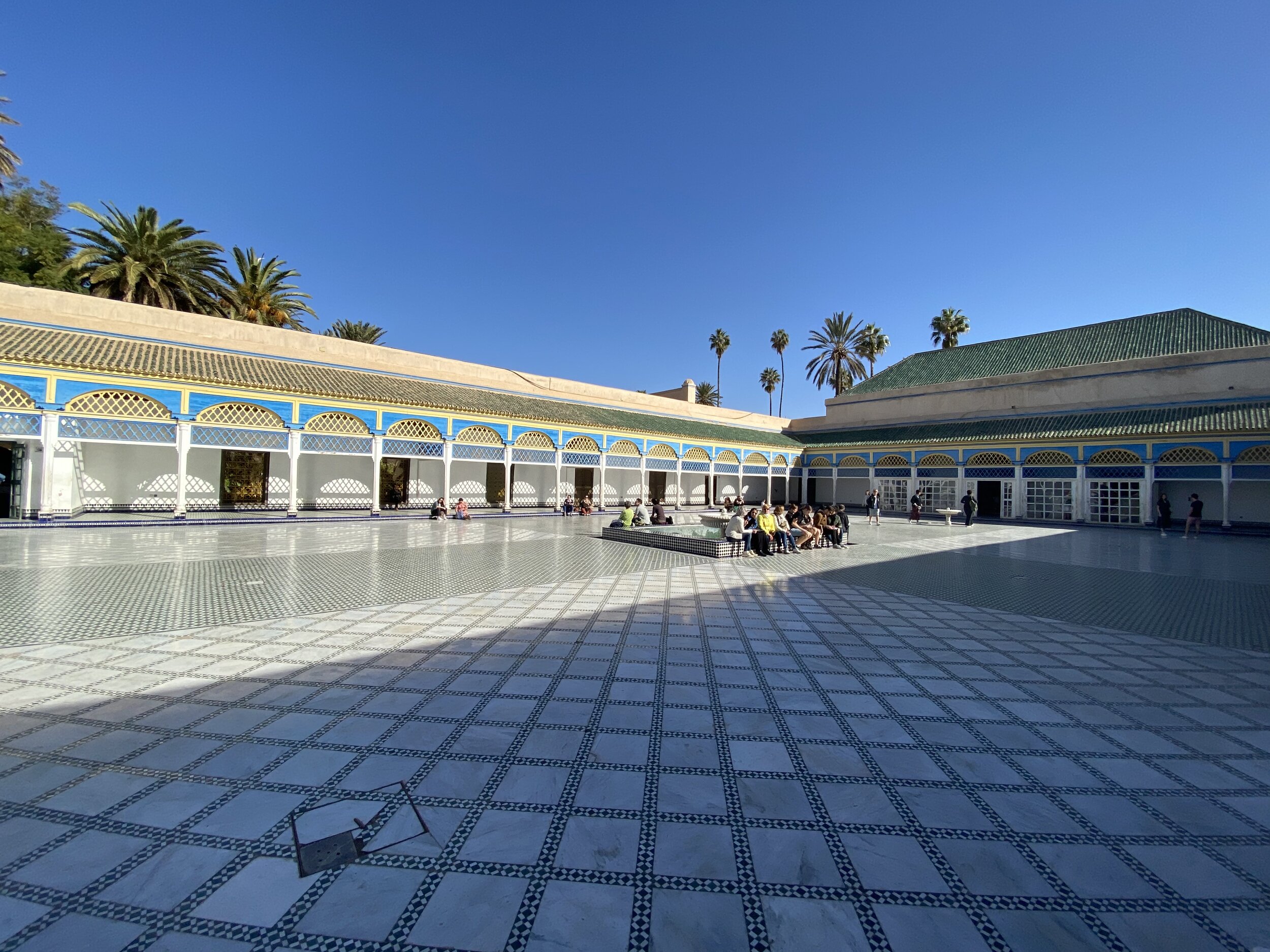
A palace from the 19th century with 2 hectares garden. The name "beauty" refers to the ambition of the builders ... this structure was supposed to be the most beautiful building in the city. Access: 70 dhs pp. It’s popular amongst tourists, so busy. Count 45 minutes more or less to visit this place.
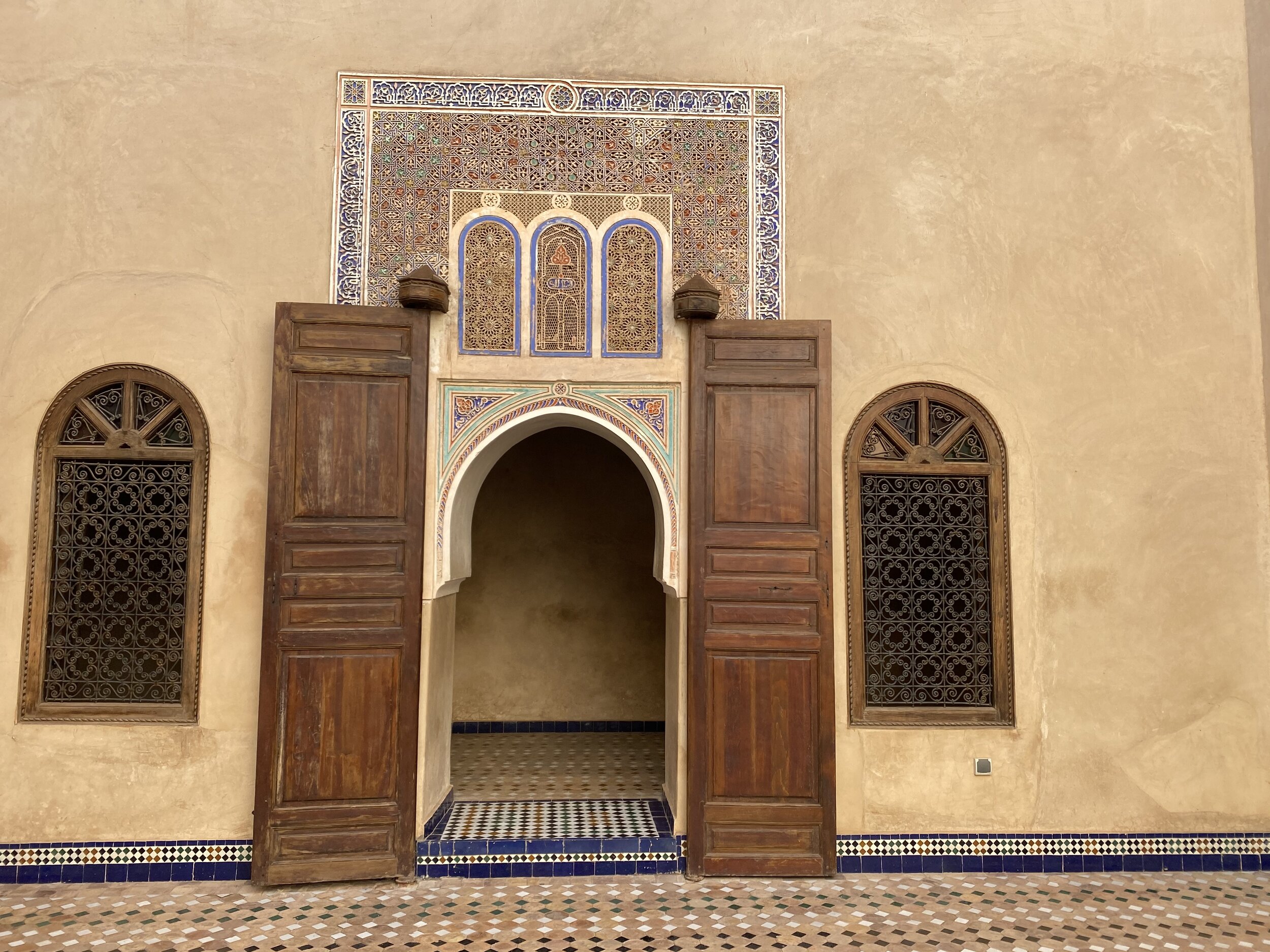
The Secret Garden
In the heart of the Medina lies a sanctuary, a complex of palaces set within a magnificent garden. The origins of this place date back to the Saadian Dynasty. Entrance fee: 60 dhs

Koutoubia Mosque
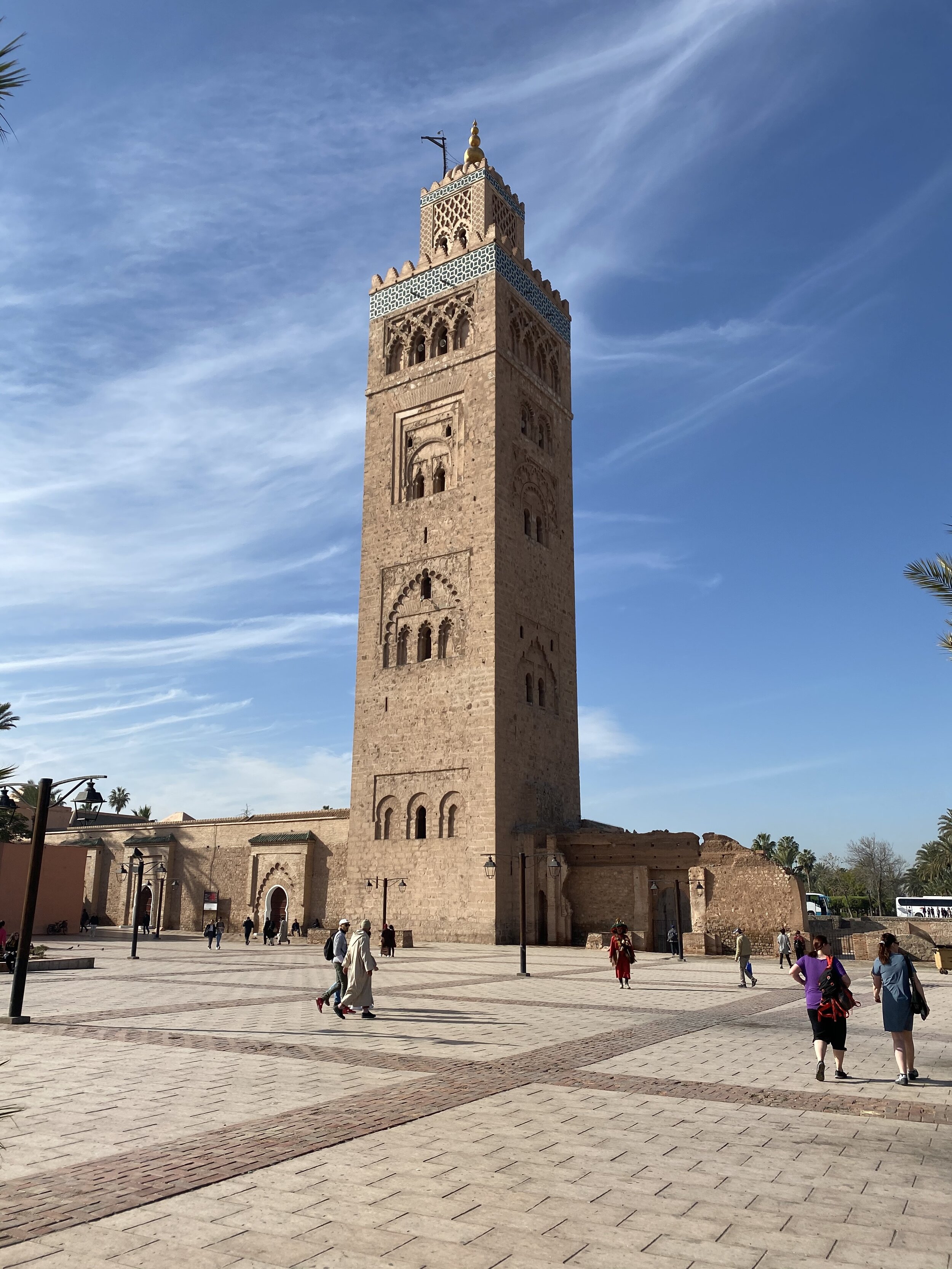
The largest mosque in Marrakech, close to the Djemaa el Fna square. A beautiful building with curved windows, mosaics and decorative arches. When we passed it was closed to the public.
Majorelle Garden
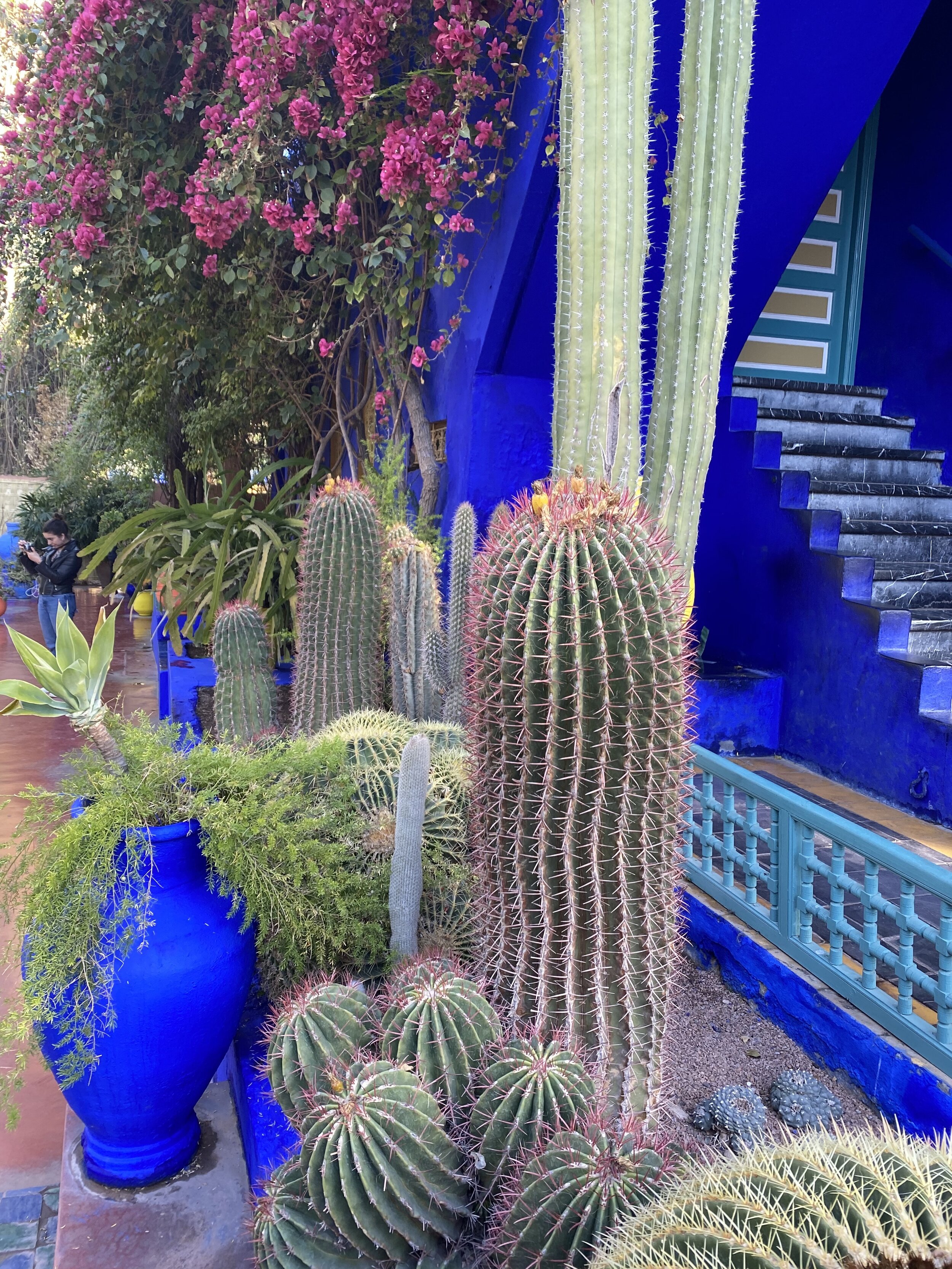
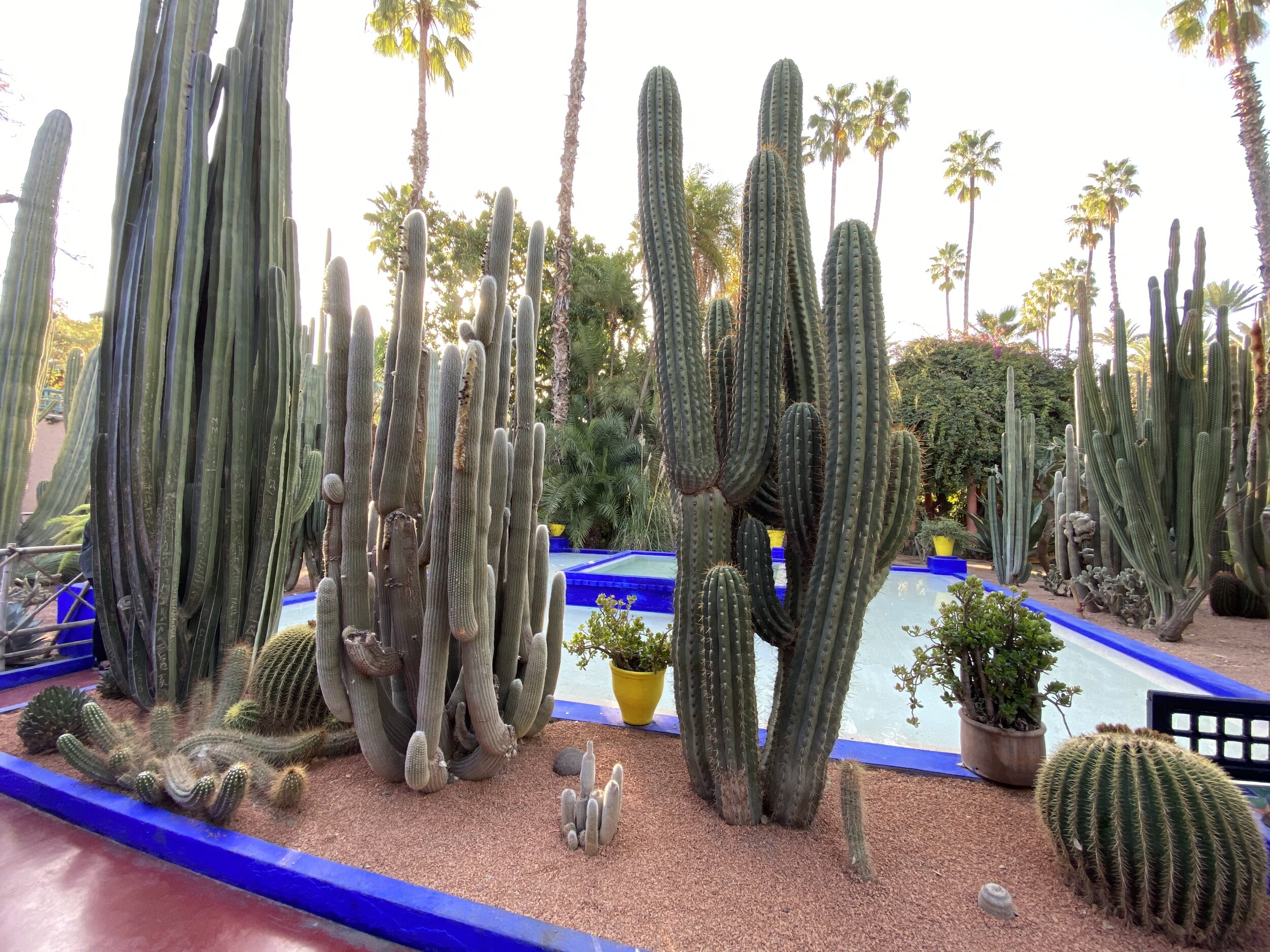
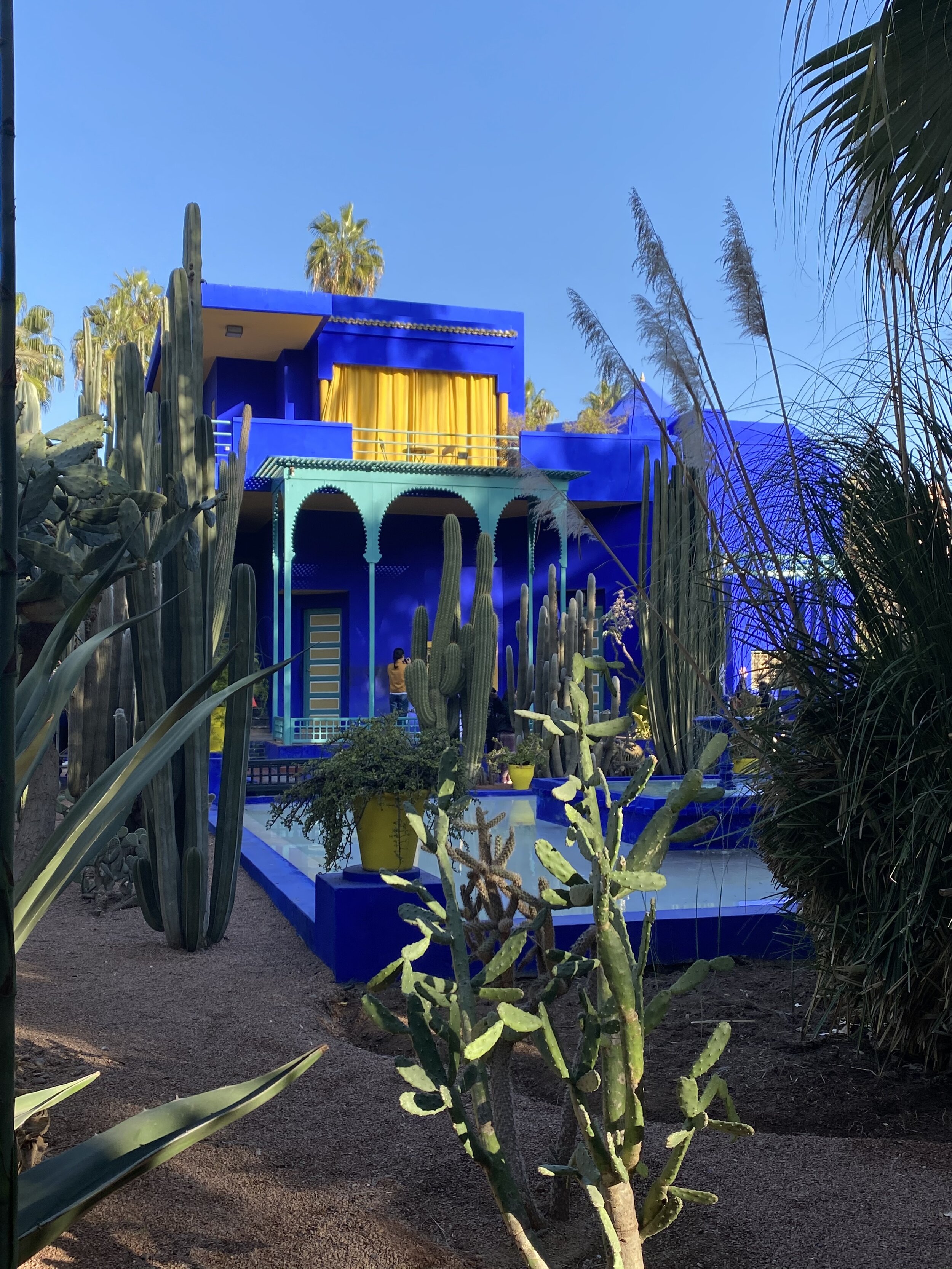
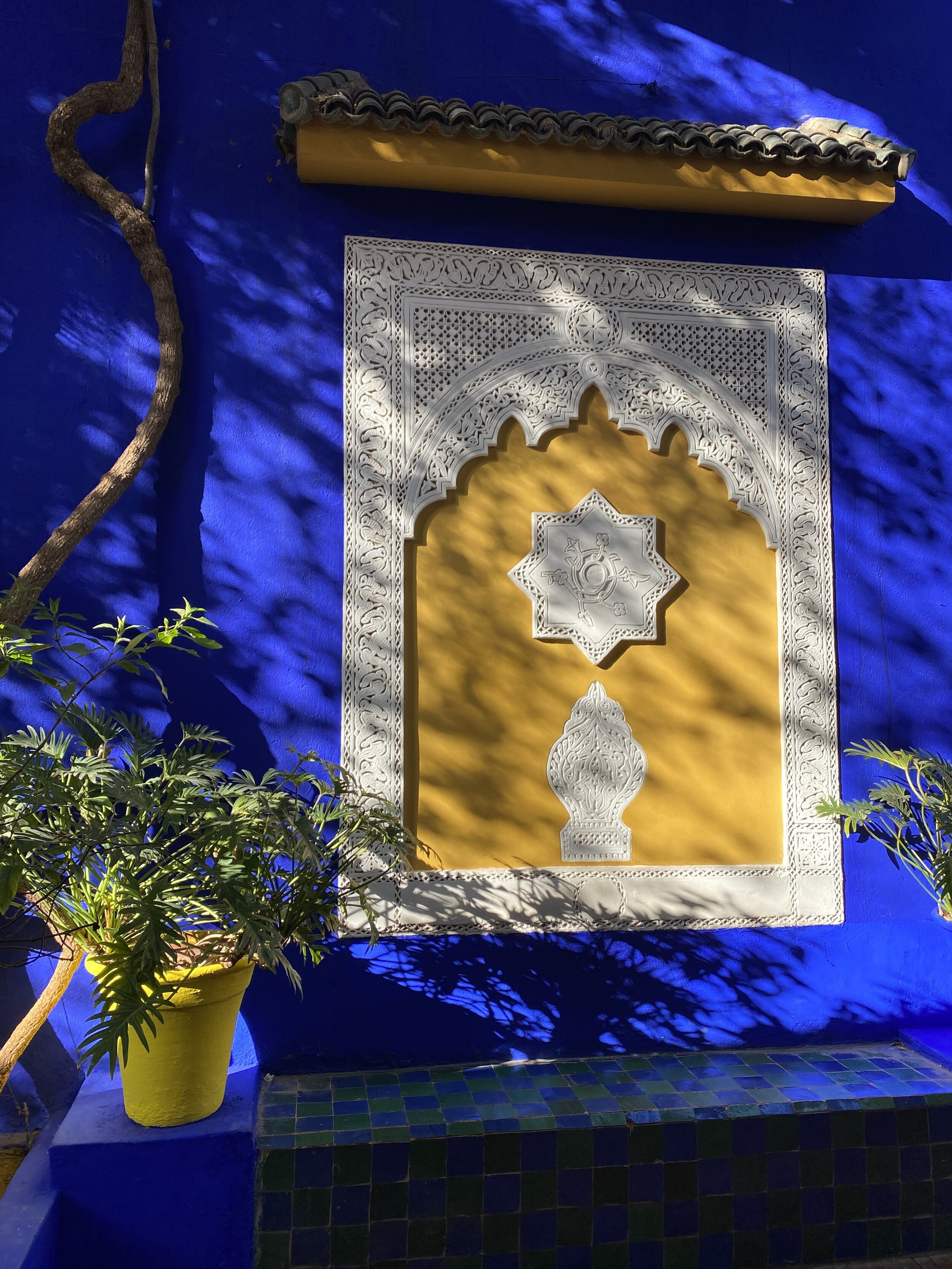
This exotic botanical garden was created in 1931 by the French painter Jacques Majorelle. Yves Saint Laurent and his partner bought the electric-blue art-déco villa and its garden to preserve the vision of its original owner and to keep it open to the public. Entrance fee Dhs 70 pp. I love cacti, so I didn’t want to miss out on this one! We visited the garden at 10.00 am before the big crowds, apparently when you arrive later the queue at the cash desk can be quiet long. I loved this yellow and blue tinted little paradise. If you don’t visit the connecting Berber Museum, 45 minutes to 1 hour gives you enough time to take Instagram proof pictures. For those looking for designer “babouches” or a luxury teapot, a visit to the boutique is more than worth it.
Museum Yves Saint Laurent
A museum entirely devoted to the work of the legendary fashion designer Yves Saint Laurent. It opened its doors in 2017. Around a thousand items from his collection are exhibited. Terracotta was used extensively to build this beautiful building. We decided not to visit it, as our interest in “haute-couture” is not that big.
Guéliz
The new city, with large retail chains such as Zara and H&M and a whole range of McDonalds. Since we showed more interest in the authentic Marrakech, we only drove through, but did not stop. There are also several good restaurant options in this district ( please find below ). But we stayed in the old city for diner.La Palmeraie
My expectations were very low about “La Palmeraie”, due to the things I read about it … Once it must have been a beautiful place full of palm trees and traditional tents, but unfortunately there is not much left of it. The tents have been forced to move to a place far outside of Marrakech, and now only a dry palm tree plain remains. The trees are even artificially raised to prevent them from falling over. As it was included in our ½ daytrip we decided to ride a camel and to have tea in an artificial Berber tent. We paid € 25 each for 45 minutes, it’s not fair to call it a tourist trap as it was what I expected. But I would not recommend it … You also can go quad biking here.

A local touch …
Cooking classes
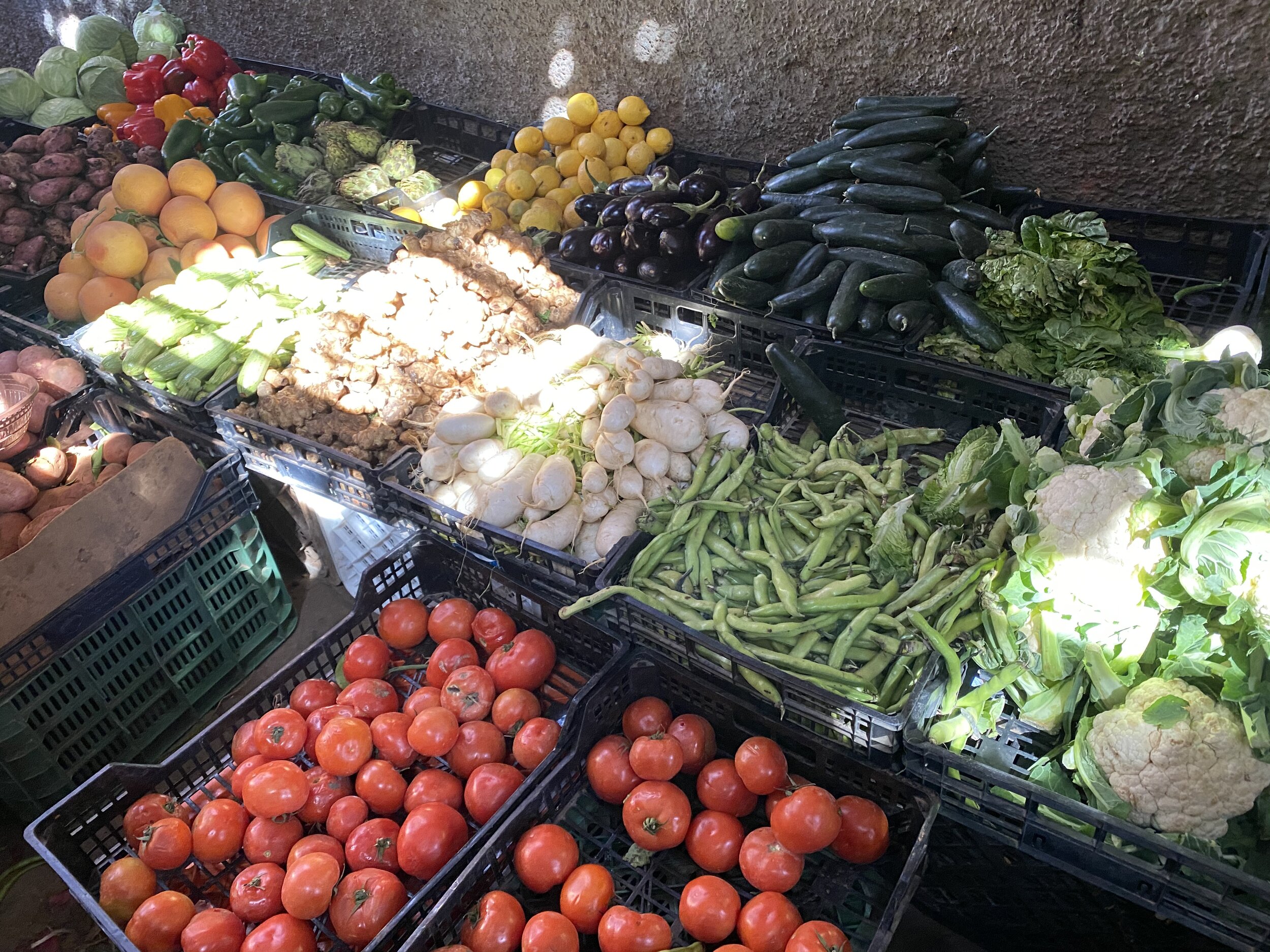
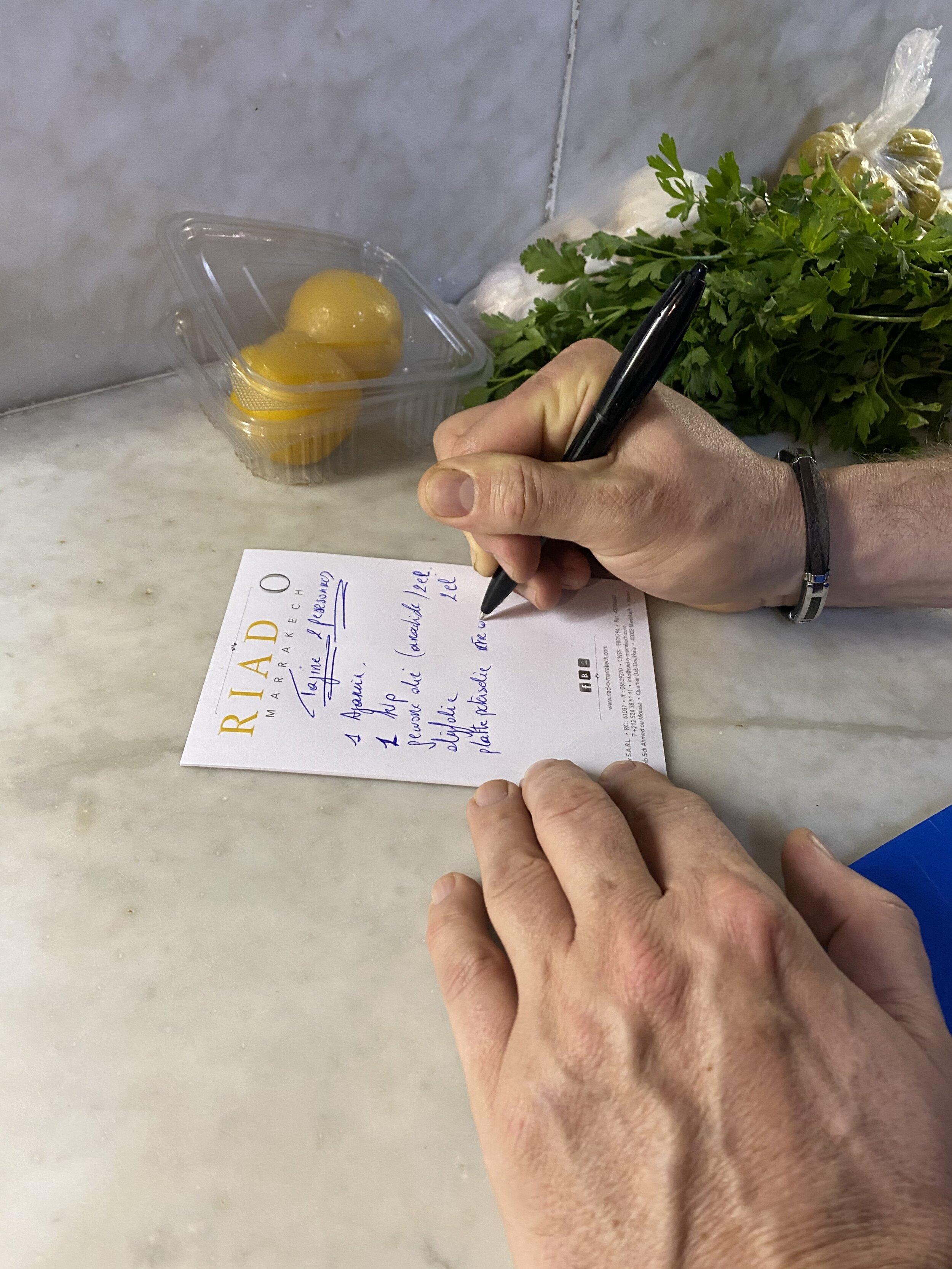
Nowadays you can find lots of cooking classes offered in Marrakech, which provide deeper insights into the special traditional cuisine of Morocco than a simple restaurant visit. The cooking classes differ in length and complexity. We decided to follow a cooking class in our own riad. Fahima, their resident chef, first took us to the local market to buy the ingredients. Afterwards she brought us to the kitchen to teach us how to prepare a wonderful 3-course Moroccan diner. As appetizer we prepared some briouattes with cheese and minced meat. The main course was a lovely chicken tajine off course, and as dessert a milk pastilla. It was fun and educational, I really loved it. Afterwards we were invited at the rooftop terrace to taste everything! We paid € 45 pp for a fun afternoon including diner. In 2026 we followed another course at “Kasbah Bab Ourika” in the Atlas Mountains, this one was less interactive and comprehensive, but we cooked a tajine with lots of vegetables which was also interesting.
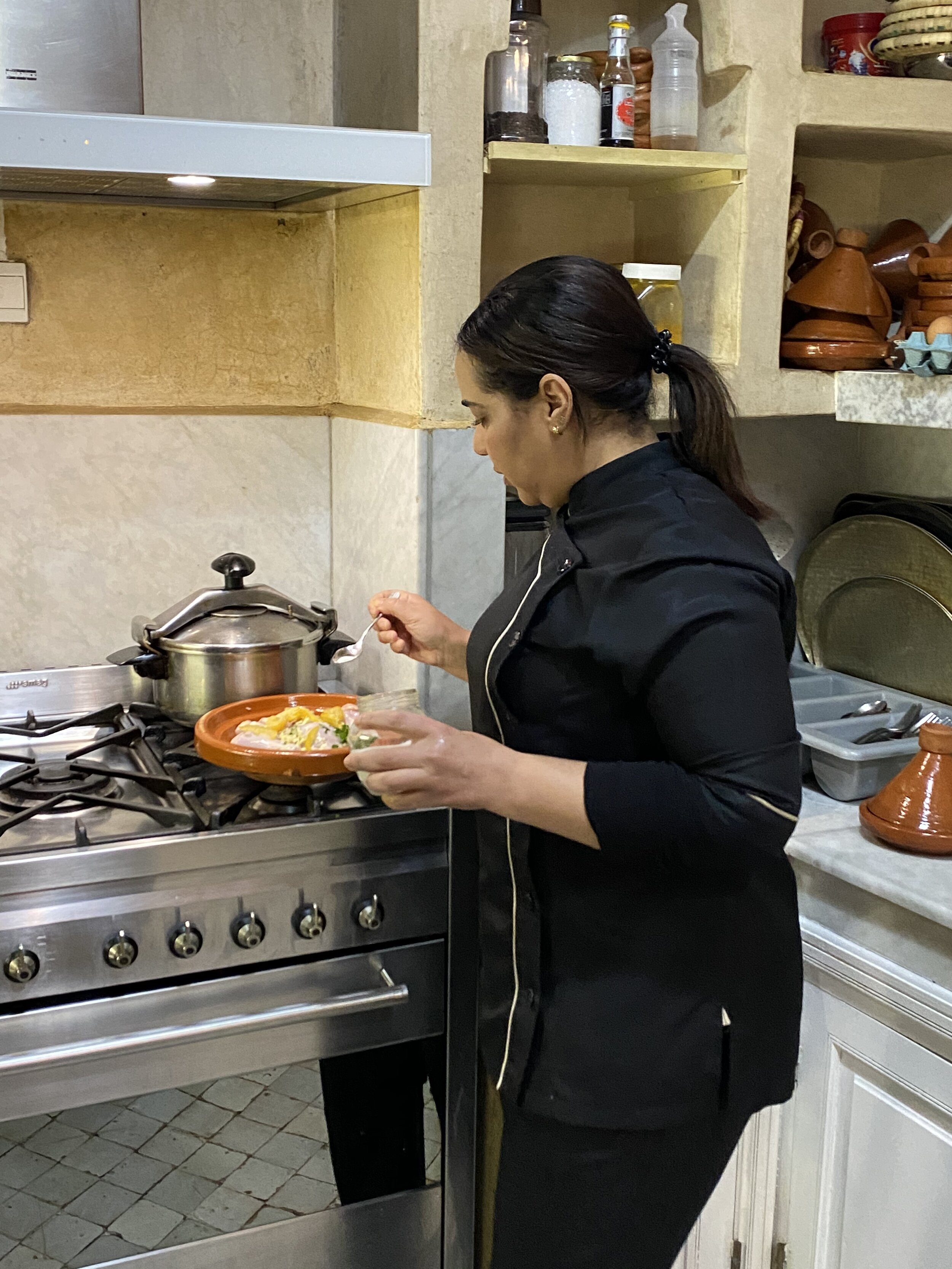
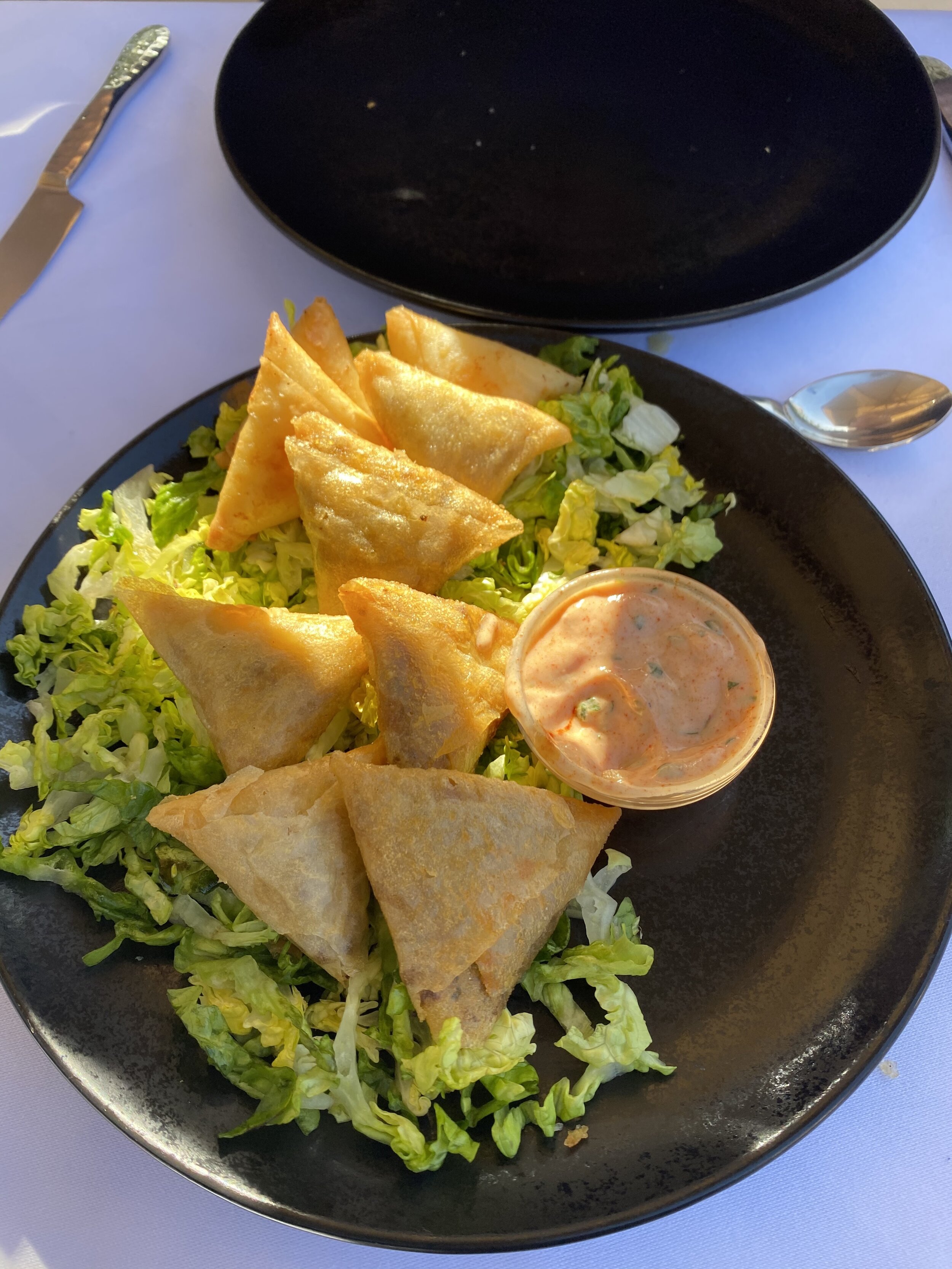
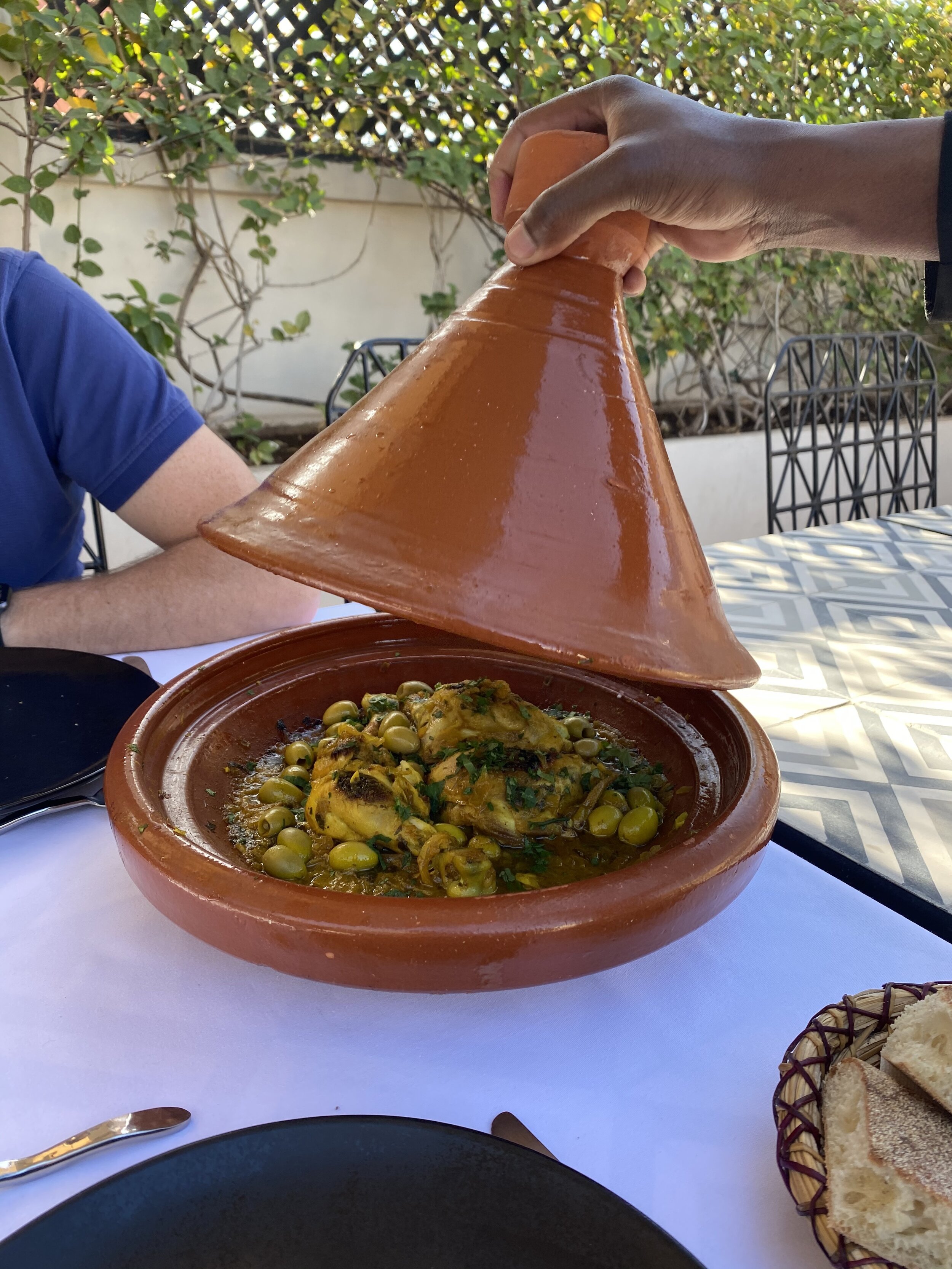
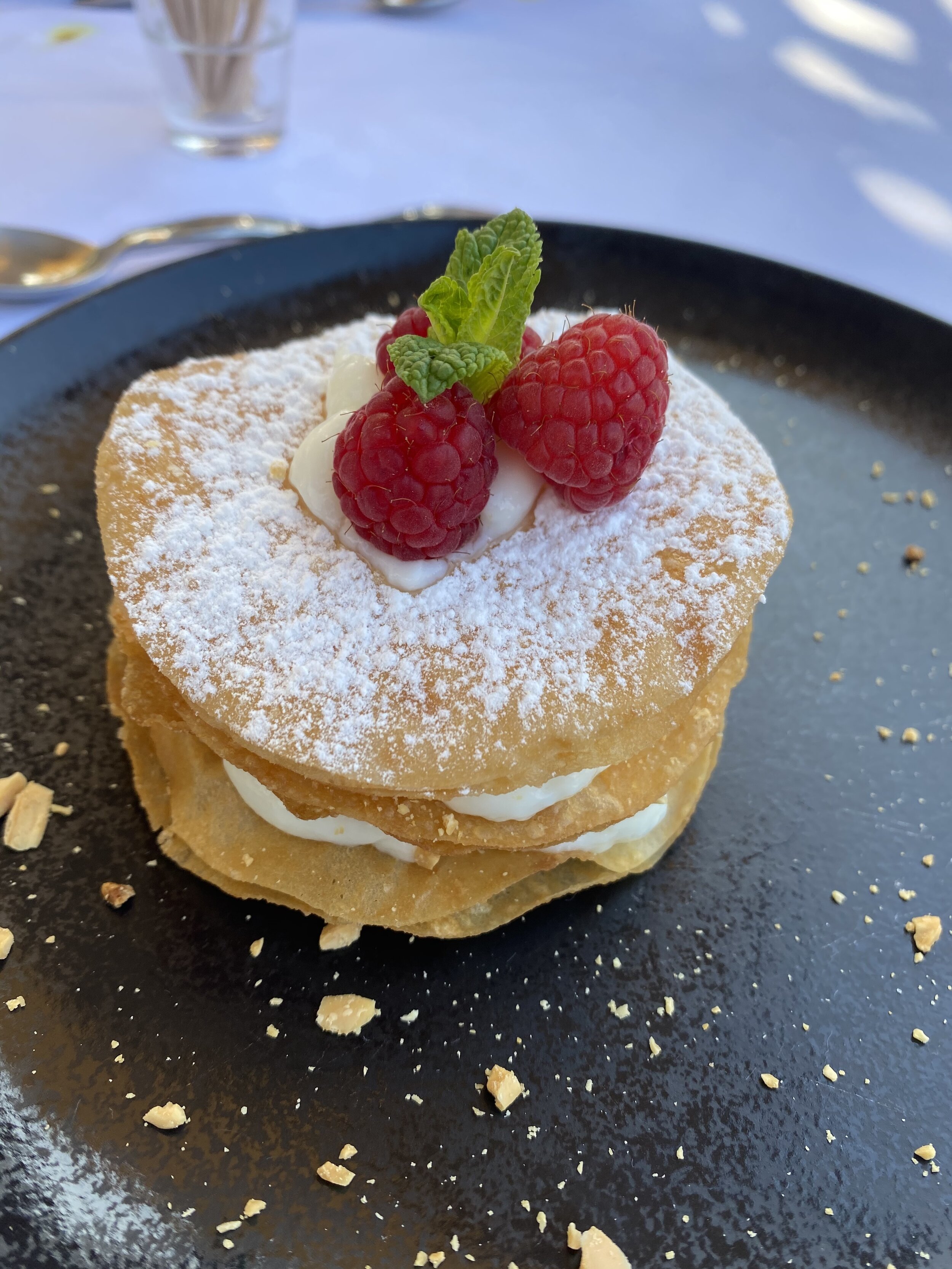
If you are staying somewhere else, following cooking class would also be recommended:
Souk Cuisine : Run by Gemma, a wonderful Dutch lady who now calls Morocco home.
http://www.soukcuisine.com
Duration of class: 10 a.m. - 3.30 p.m.
Cost: 50 Euro per person ( + tip for the Moroccan cooking assistants )
Classes can be taken in English, Dutch or French.
Hammam
Hammam - a traditional bathing and cleansing ritual. For most Moroccans, the hammam is more than a day at the spa; it is a social event that happens regularly, rooted in the tradition of Islamic cleansing ablutions. The exact experience may vary from place to place. Normally the hammam is divided into three steps: the extra-hot steam room to open the pores; get lathered in olive oil–based black soap and scrubbed with the traditional kessa glove to remove dead skin; and finally get immersed in COLD water for an invigorating finish.

Here is a list of the renowned hammam’s that are worth a visit, when you need to relax a moment from the crowds in the city:
- Le Bain Bleu: http://www.lebainbleu.com
- Hammam de la Rose: https://www.hammamdelarose.com
Located at 5 minutes’ walk from Riad ‘O.
- Les Bains de Marrakech: http://www.lesbainsdemarrakech.com
- Le Bain d’Orient: http://www.les-bains-dorient.com
The one we visited, as it was recommended by our riad. Located almost at their doorstep. We booked a duo Hammam Etoile du Sud of 50 minutes for 350MAD pp, including a hair treatment. Followed by a back massage of 40 minutes for 300 MAD. We had to pay a deposit of 50% in advance. I enjoyed the experience, certainly the back massage, it was really intense. The day after we also had a relaxing massage at our Riad, € 35 pp for 1 hour. It was less intense, a bit softer, but also pretty good, and the oils she used smelled amazing and made my skin very soft for at least 2 days.
The surrounding area of Marrakech
In 2020 we didn’t take the opportunity to discover the surrounding area of Marrakech, like the Atlas Mountains, the desert, etc … Because we did not want to rush ourselves and wanted to focus our visit on the city itself. But looking back, I thought it’s was a missed opportunity! So in 2026 we stayed for 2 nights in the Ourika Valley.
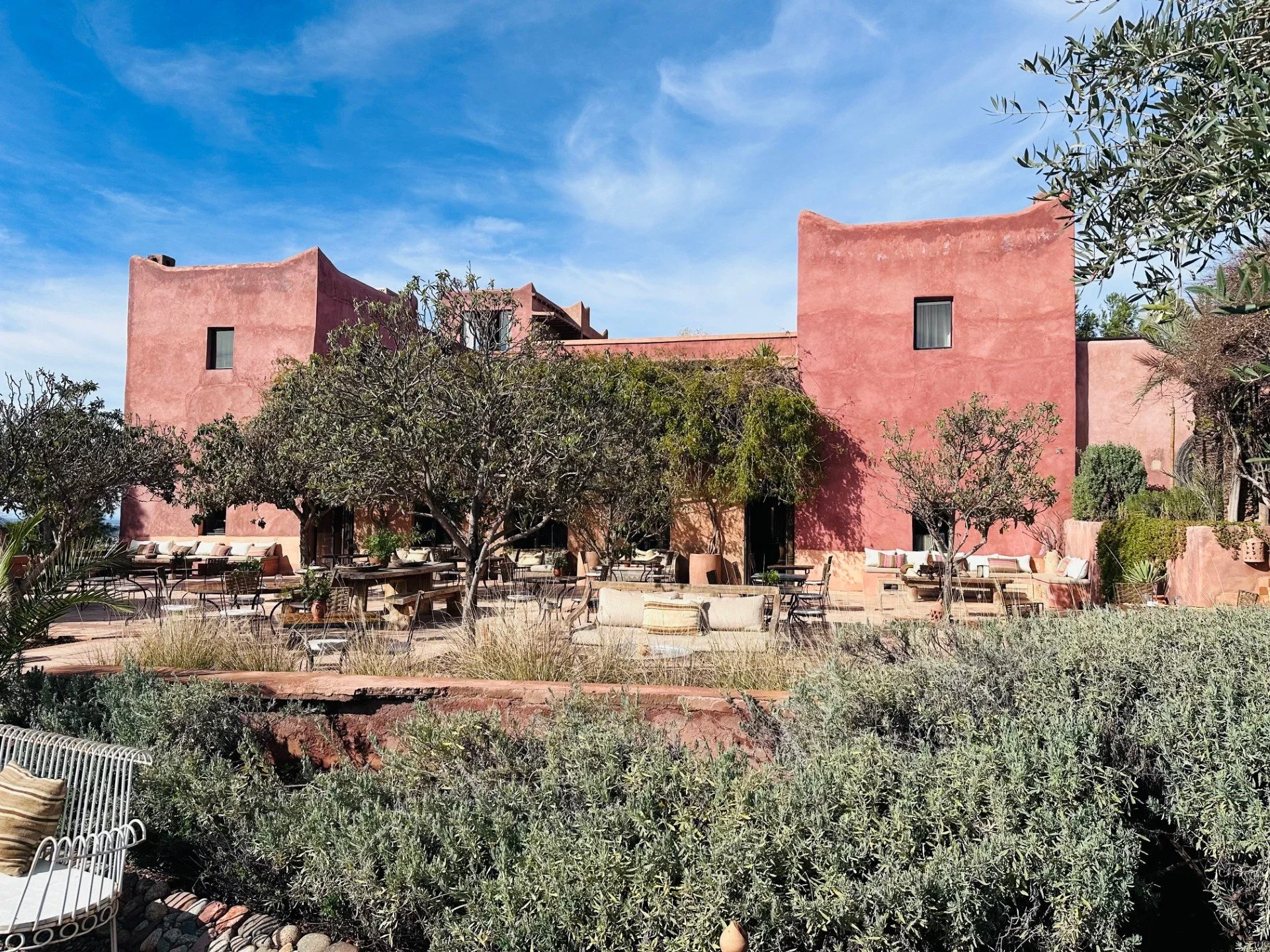
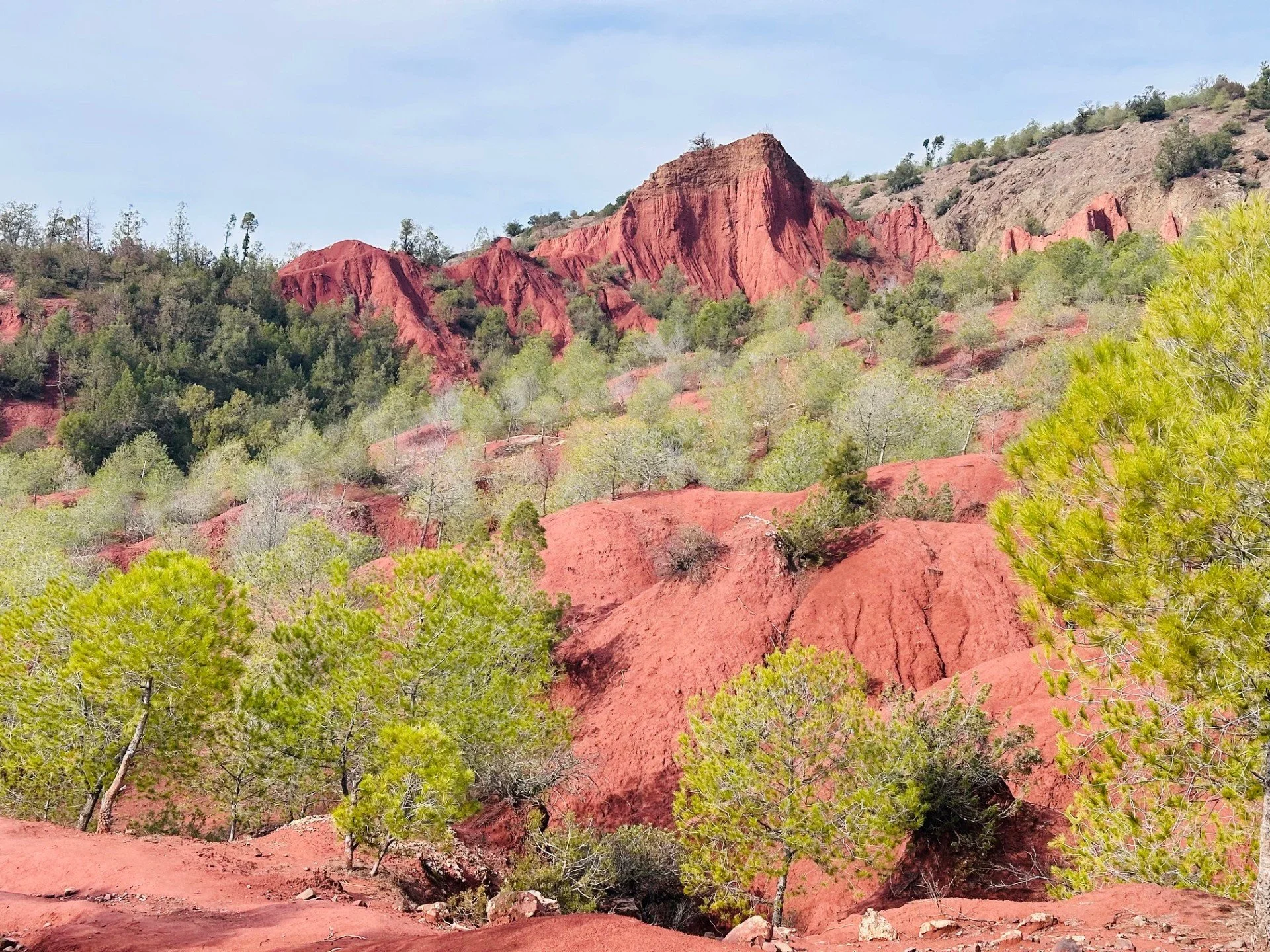
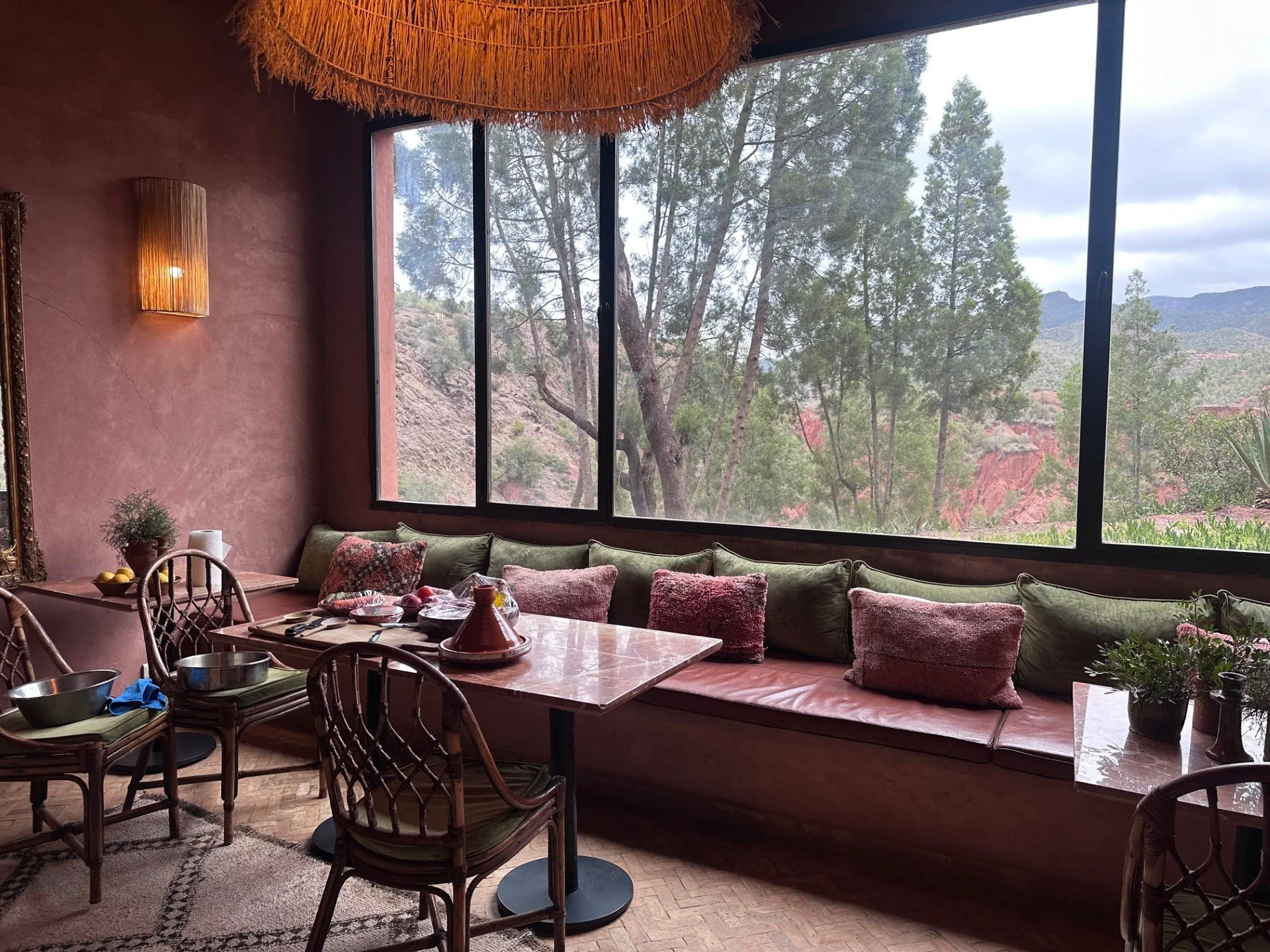
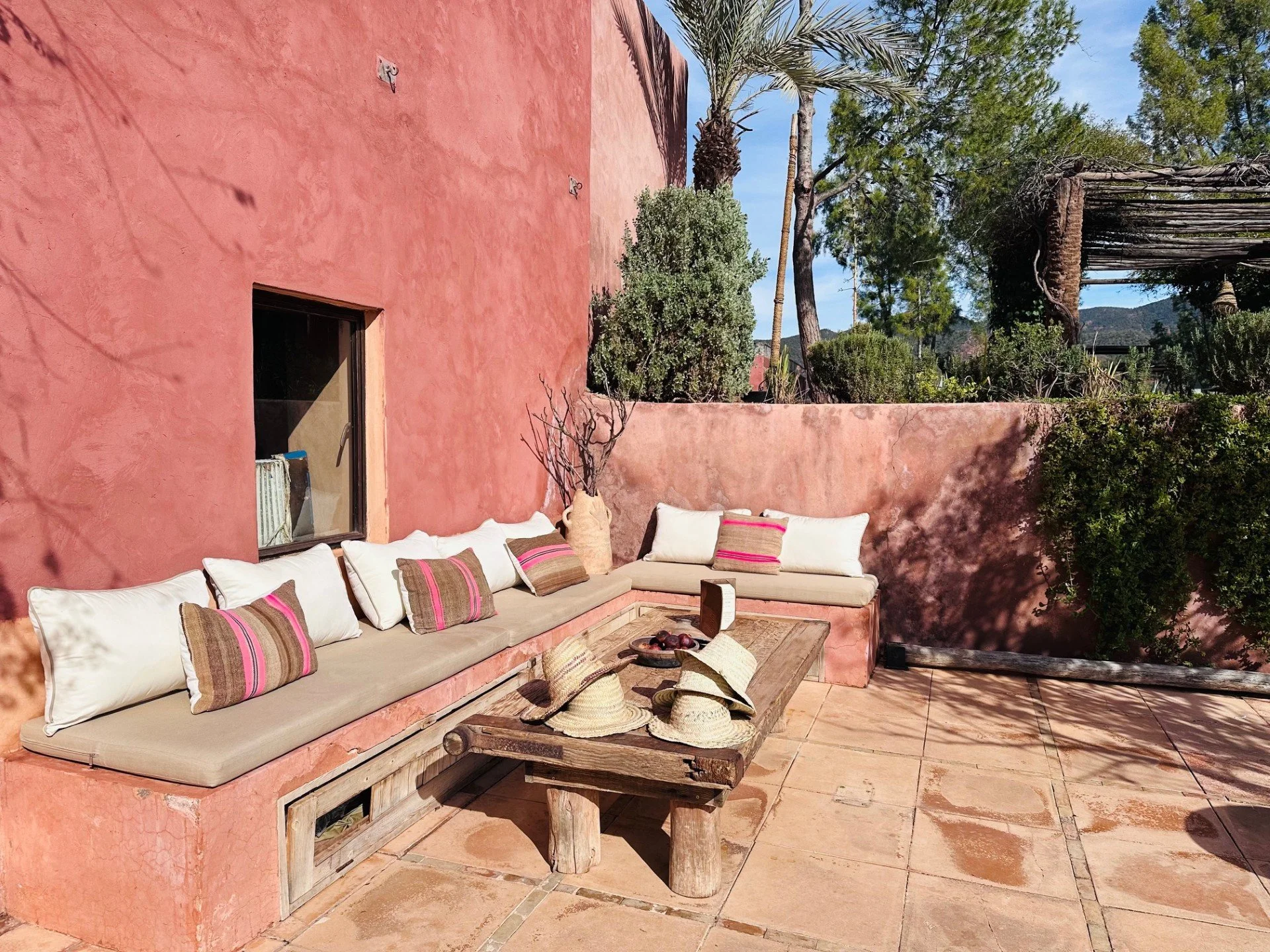
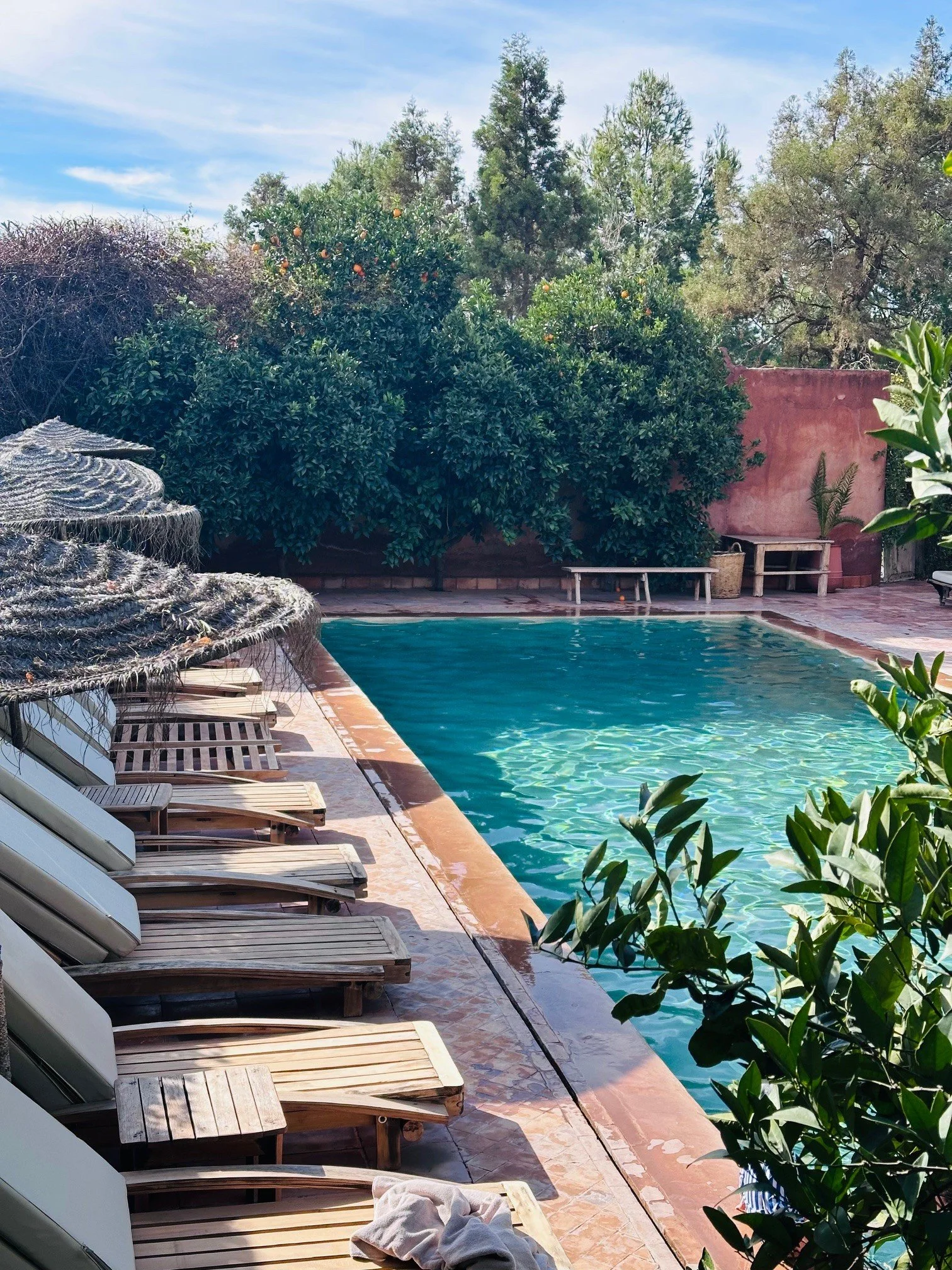
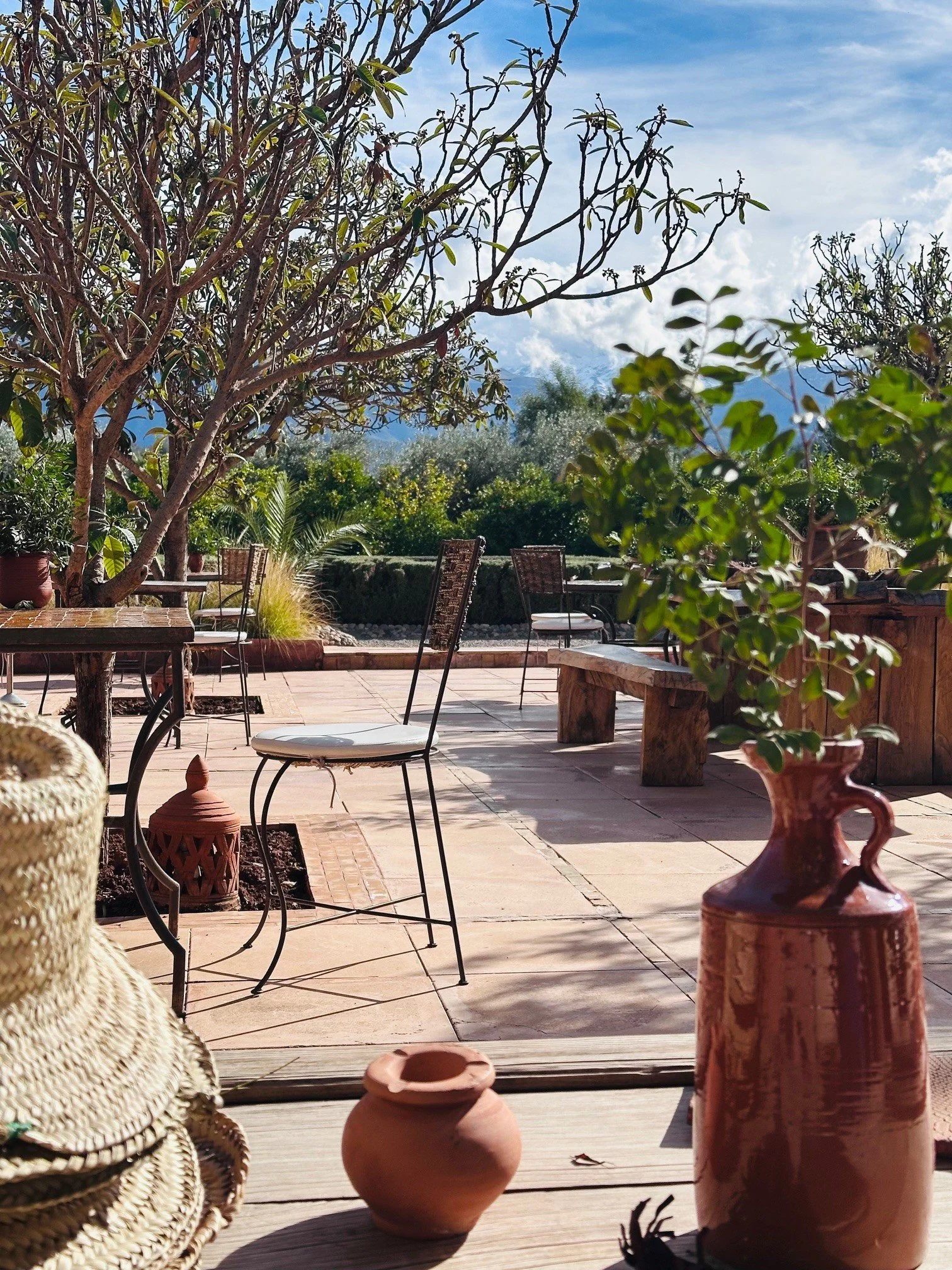
Ourika Valley, at 60km, an hour and 15 minutes from the city, in the Atlas Mountains, a valley with lush greenery, terracota hills and salt mines. Home to Siti Fatma, a bustling village with riverside restaurants and spectacular views. It has become increasingly popular over the last few years with tourists, keen for some respite from the sweltering summer heat of Morocco. When you book a guided tour, mostly you will see the traditional Berber homes and you will have some time at the waterfalls. We stayed 2 nights in the best Kasbah of this area, “Bab Ourika”, a real oasis in a rather poor and polluted area. It’s located next to the National Park, where you can go trekking on foot, you can also book a camel ride, wellness treatments etc… If you got even more money to spent, you can also chose for Kasbah Tamadot located in Asni. Kasbah Bab Ourika is owned by a British investor, he lives here with his dogs, he aims to give the locals and mainly the divorced wives, the opportunity to have a steady income. Enjoy the beautiful garden, patios and outdoor pool area and of course, the stunning views of the surrounding hills and mountains. https://www.kasbahbabourika.com/
IMLIL (Toubkal), at 64km from Marrakech. Located in the Toubkal National Park, the starting point for those off to climb Mount Toukbal, the highest peak in North Africa. But this isn't a spot only for adventurous types; this small village provides a wonderful insight into Berber culture as well. You can take a mule riding walk through the small village of Aremd. The Film “seven years in Tibet” was partially filmed here.

Agafay Desert, at 30 km, 45 minutes from Marrakech. You can book just a day tour which includes time on the dunes as well as village visits and there are also quad tours for the more adventurous ones. Looking for that romantic "English Patient" feeling somewhere in a remote piece of desert? Then I can advise you to book an overnight in the stunning Scarabeo Camp, a mirage of 15 beige and white tents, with soft Berber carpets and old travel suitcases and globes as decoration. The camp was founded in 2011 by a Belgian couple Florence Mottet and Vincent T’Sas. The setting, views and the atmosphere are incredible! Prices start from €250 per tent per night, including breakfast and dinner. Next year they are planning to open a second, even more luxurious camp with swimming pool.
To meet the real Sahara Desert, you need to drive 8 hours extra! According to our guide in
Ourika, Agafay is a desert for tourists and gives a distorted picture of the real desert.

Would you like a table?
Moroccan food is much more than tagine and couscous. Food is one of life’s greatest pleasures, and there is no better place to indulge your taste buds than in Marrakech. Thinking at all the exotic spices, the sweet desserts, …
Here is a list of restaurants and bars we visited in 2020 or that caught my attention:
La Famille
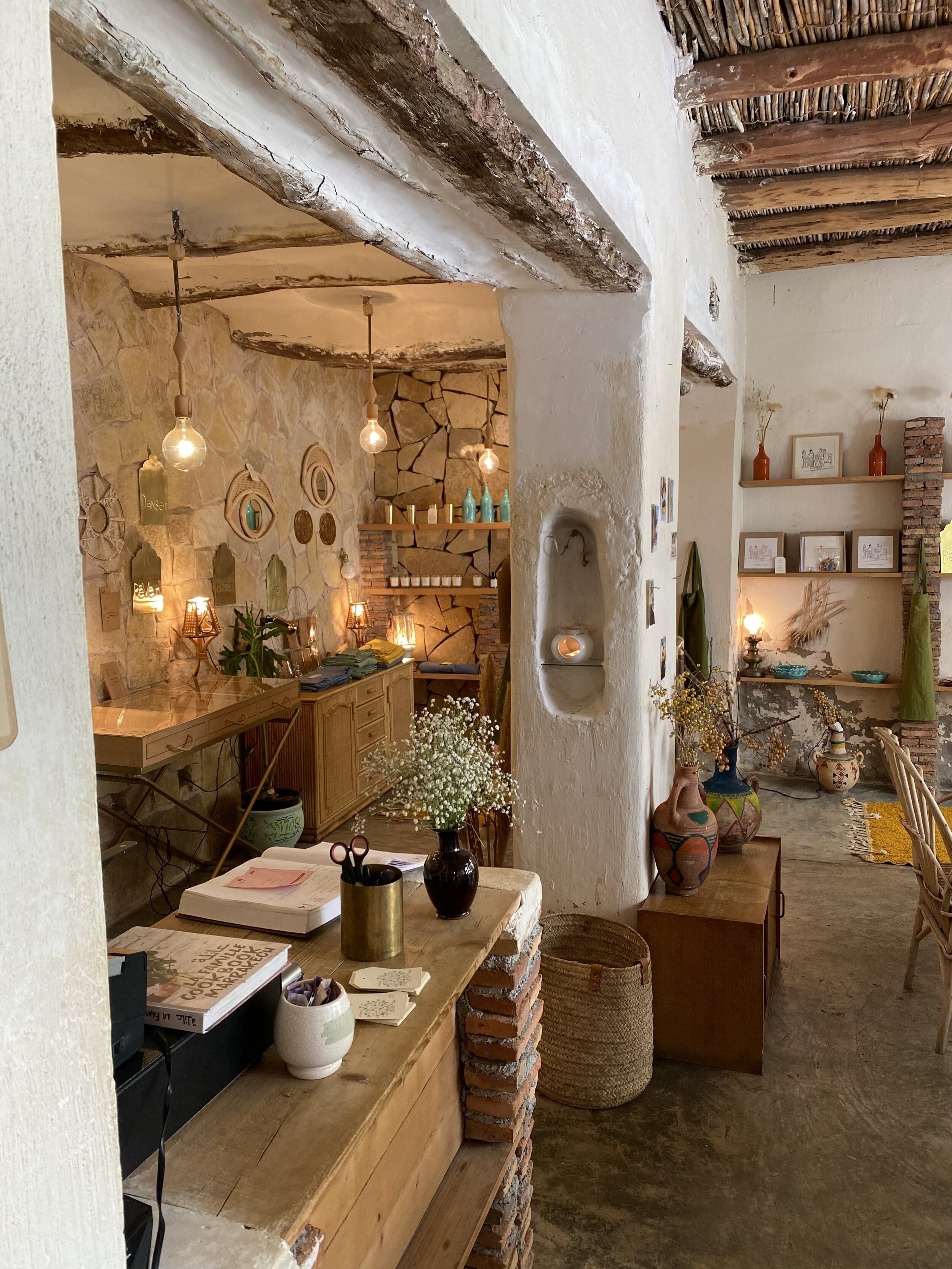
Relatively new place, perfect for lunch! Well-hidden and hard to find. A white modern setting with an adjacent cute boutique. They offer delicious shake’s, iced tea, salad’s and cake’s, all vegetarian. They are often booked ahead, so if you want to be sure of a table it’s best to book in advance. On Sundays they are closed. For me it was a real hipster place, the menu is rather limited and so is the space you get. We had to share a big table with 5 other couples / duo’s, which was a bit uncomfortable. We had the salad of the day with couscous and pear. Nice, but pricey enough.
Le Jardin https://lejardinmarrakech.com/
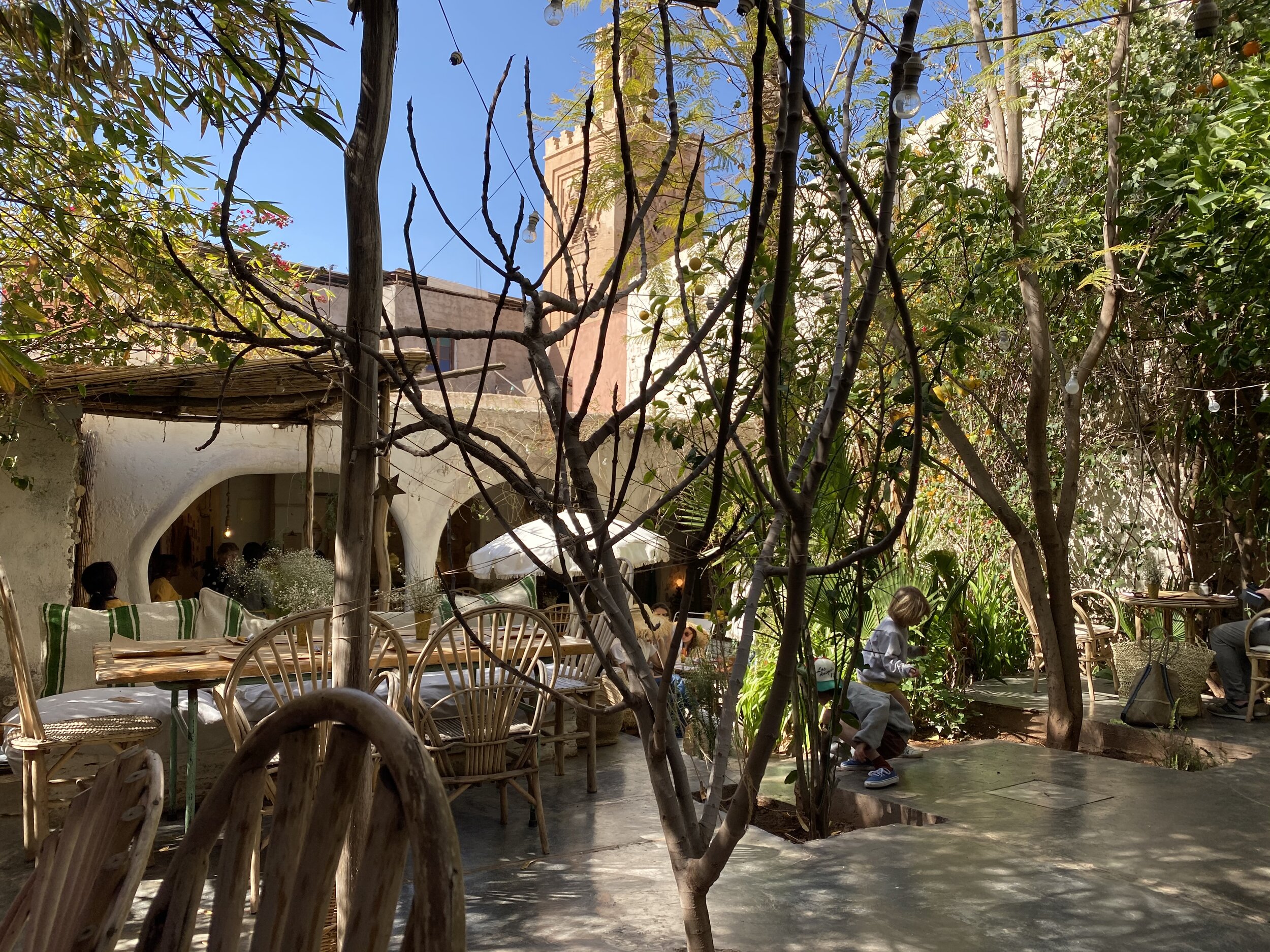
My personal favourite! A real oasis in the middle of the medina. The entire place is painted azure green and all along the yard are cosy private seats. It’s quite large, but due to the different compartments, very cosy. And the food is finger licking good! We had a red beat and goat cheese salad, chicken sate’s, a vegetable couscous and a lemon cake to share. We had a reservation and the place was pretty full, but I cannot imagine that you can’t find a spot without reserving in advance as they have a lot of seats to fill. There is also an adjoining shop “Norya Ayron” with beautiful long designer dresses, albeit with an expensive price tag.
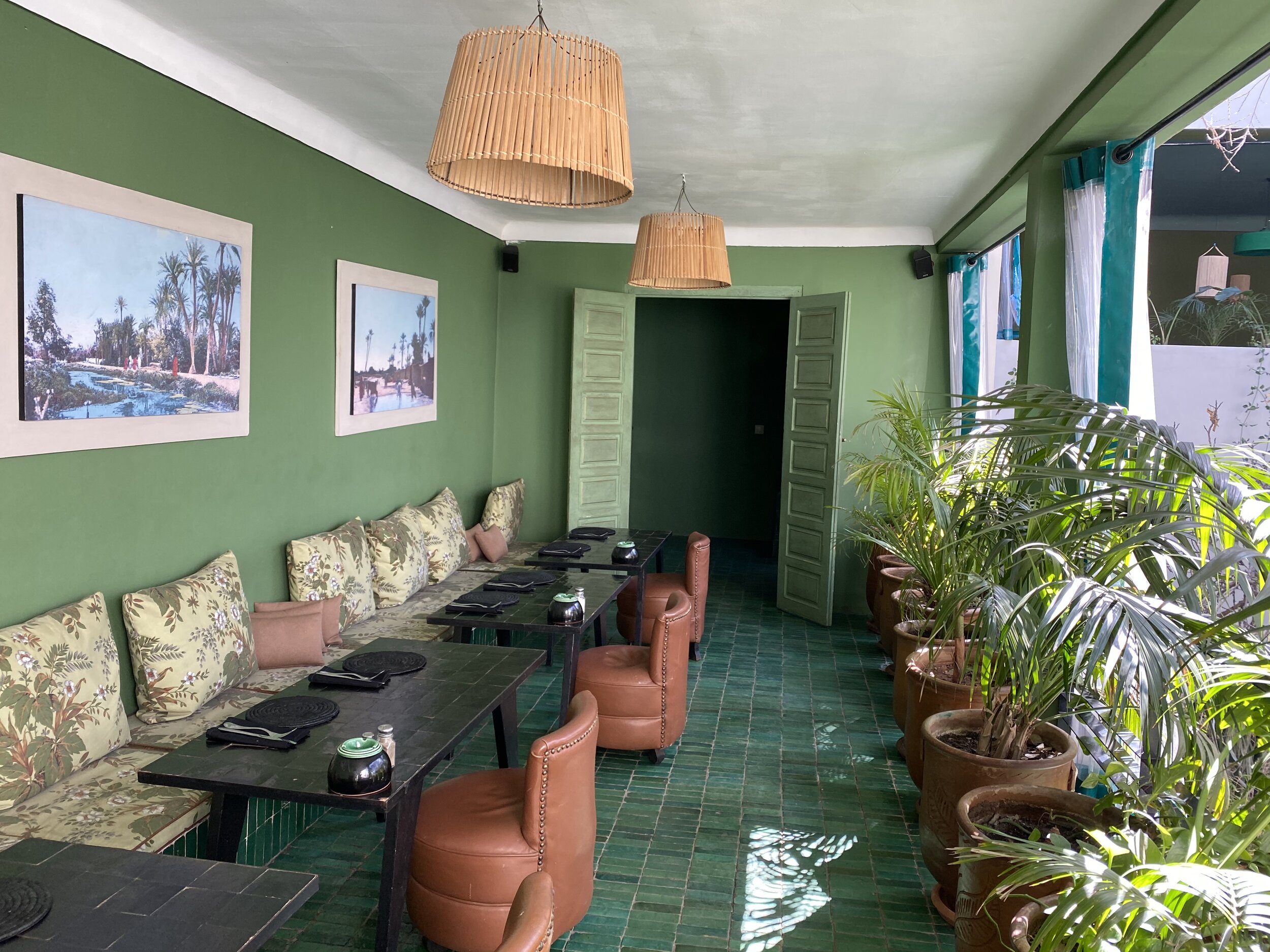
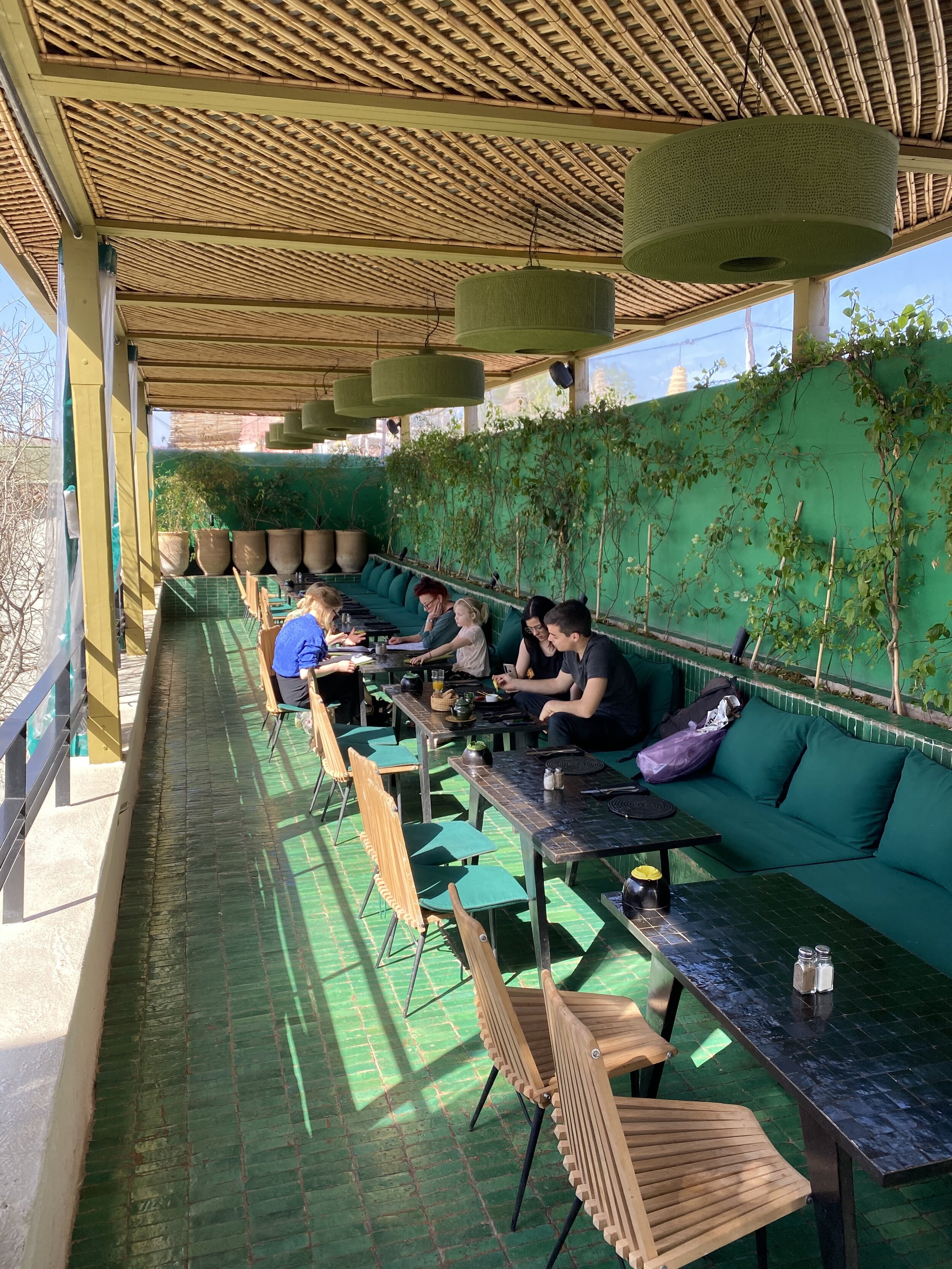
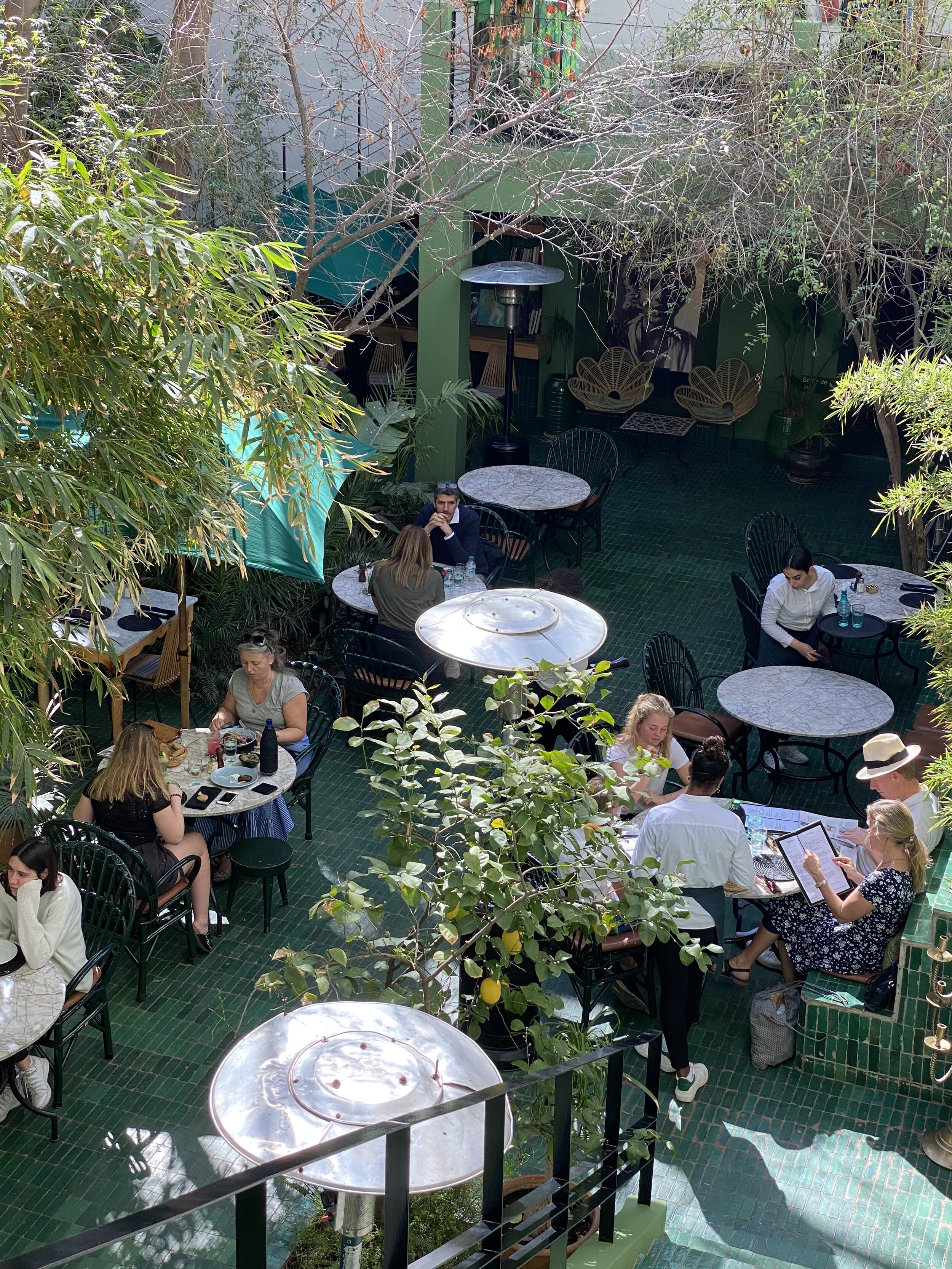

Nomad https://nomadmarrakech.com/
Another hotspot in Marrakech, well known for its beautiful rooftop terrace, it’s located close to Place des Epices. Nomad is one of the places that doesn’t serve alcohol, instead you can drink several mocktails, ice tea’s and 0% alcohol beer. The menu is rather hip and modern, but with a Moroccan touch. I had the roasted cauliflower and my husband the vegetarian couscous. Downstairs they have a small shop “Chabi Chic” with some colourful pottery and Arabic scents. Good to now is that Nomad, Café des Epices, le Kilim, le Jardin and Chichaoua tearoom are all part of 1 restaurant group!
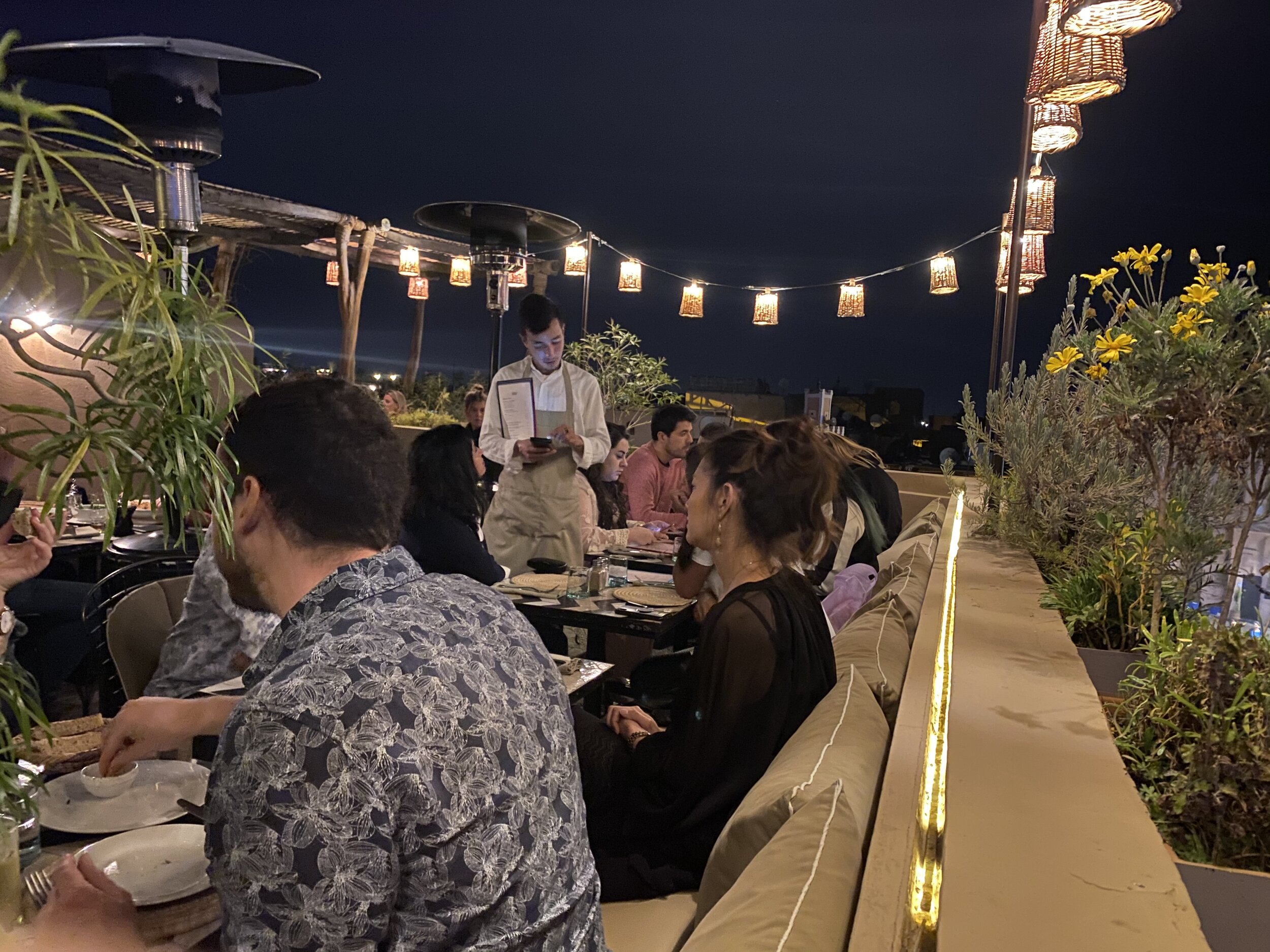
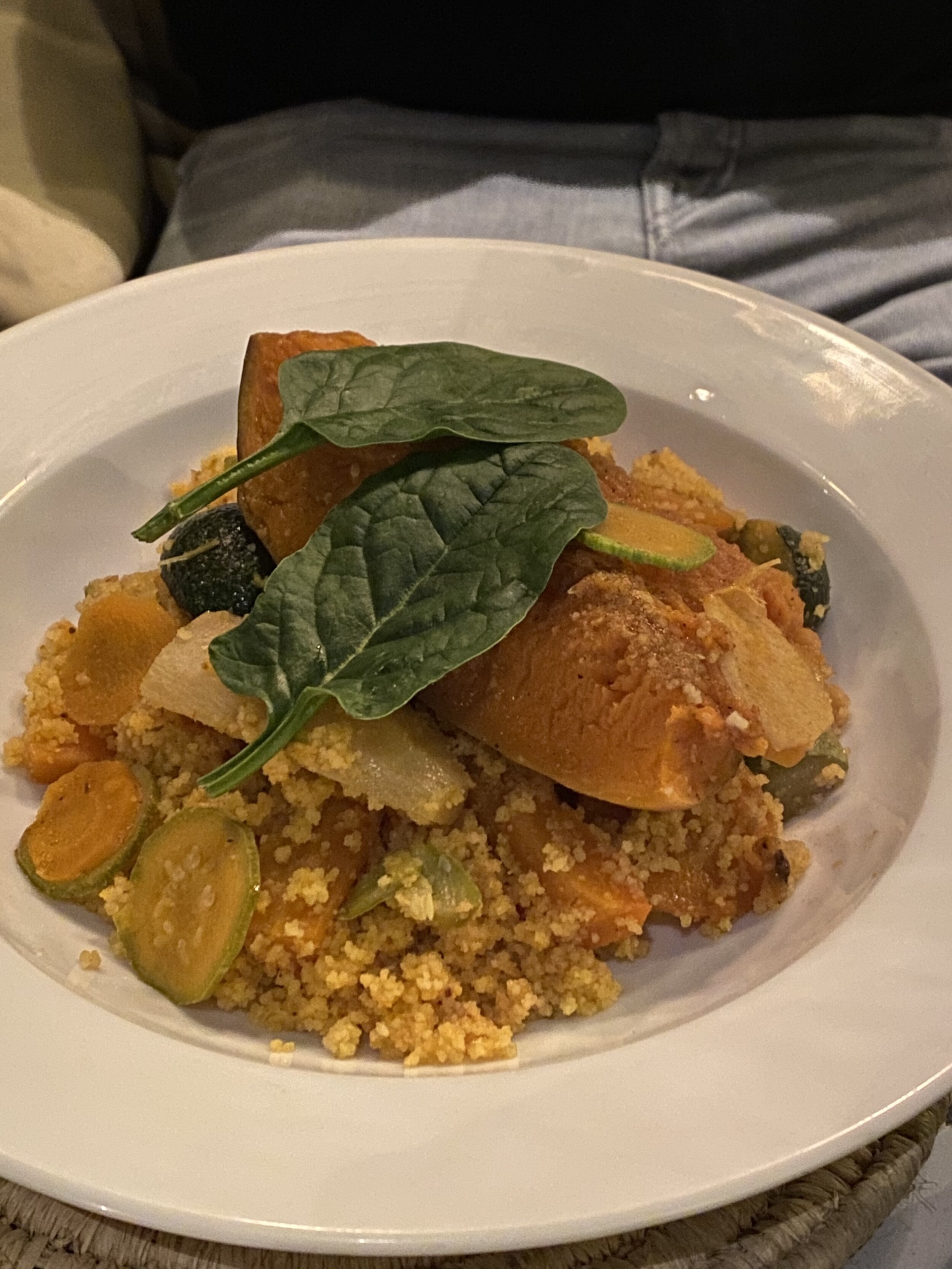
Zwin Zwin Café
Cute, cosy restaurant located in the Medina. The interior gives you a happy feeling. They offer nice salads and wraps for lunch and a cool shop around the corner. We have not come across this place, I purely recommend it because of what I have read about it.Max & Jan https://maxandjan.com/restaurant/
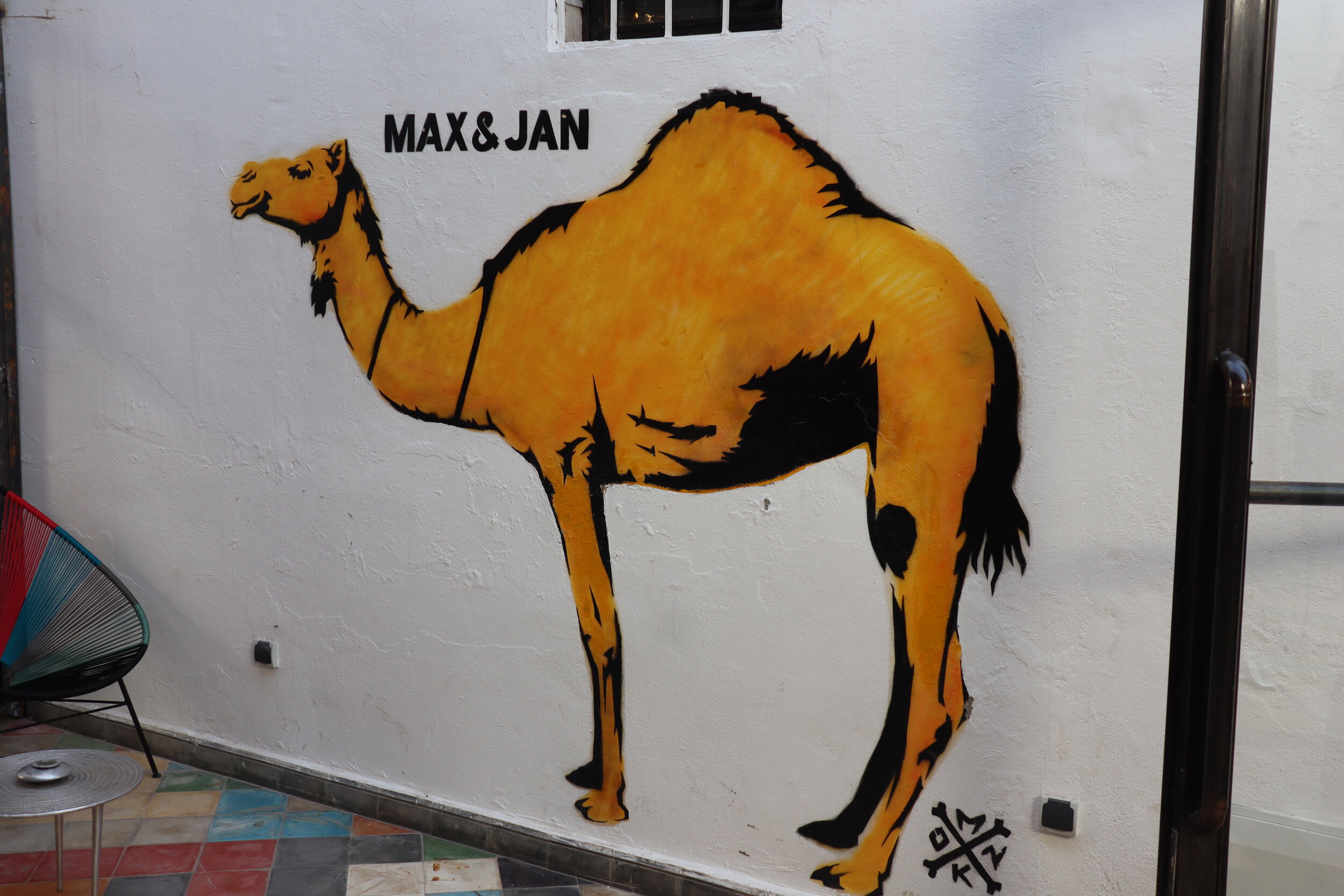
Max & Jan was already known for their trendy concept fashion store. On the menu you find organic and locally sourced soul food they are serving both Moroccan and international dishes. While we already had lunch, we only visited the shop and not their restaurant.Terrasse des Epices https://terrassedesepices.com/en/
Every trustworthy source is mentioning this place, so I cannot ignore them. Probably thanks to their big rooftop terrace, and nice lounge music to escape the hustle and bustle of the medina. They are not only offering tajine but also salads and non-Moroccan dishes. Due to the international atmosphere I would personally consider this place for lunch or a drink rather than for dinner. The prices are also high for Moroccan standards and reading mixed reviews, not sure if that’s justified. They only offer places outdoor, so make sure it’s warm enough!

Dar Moha https://darmoha.ma/index.php
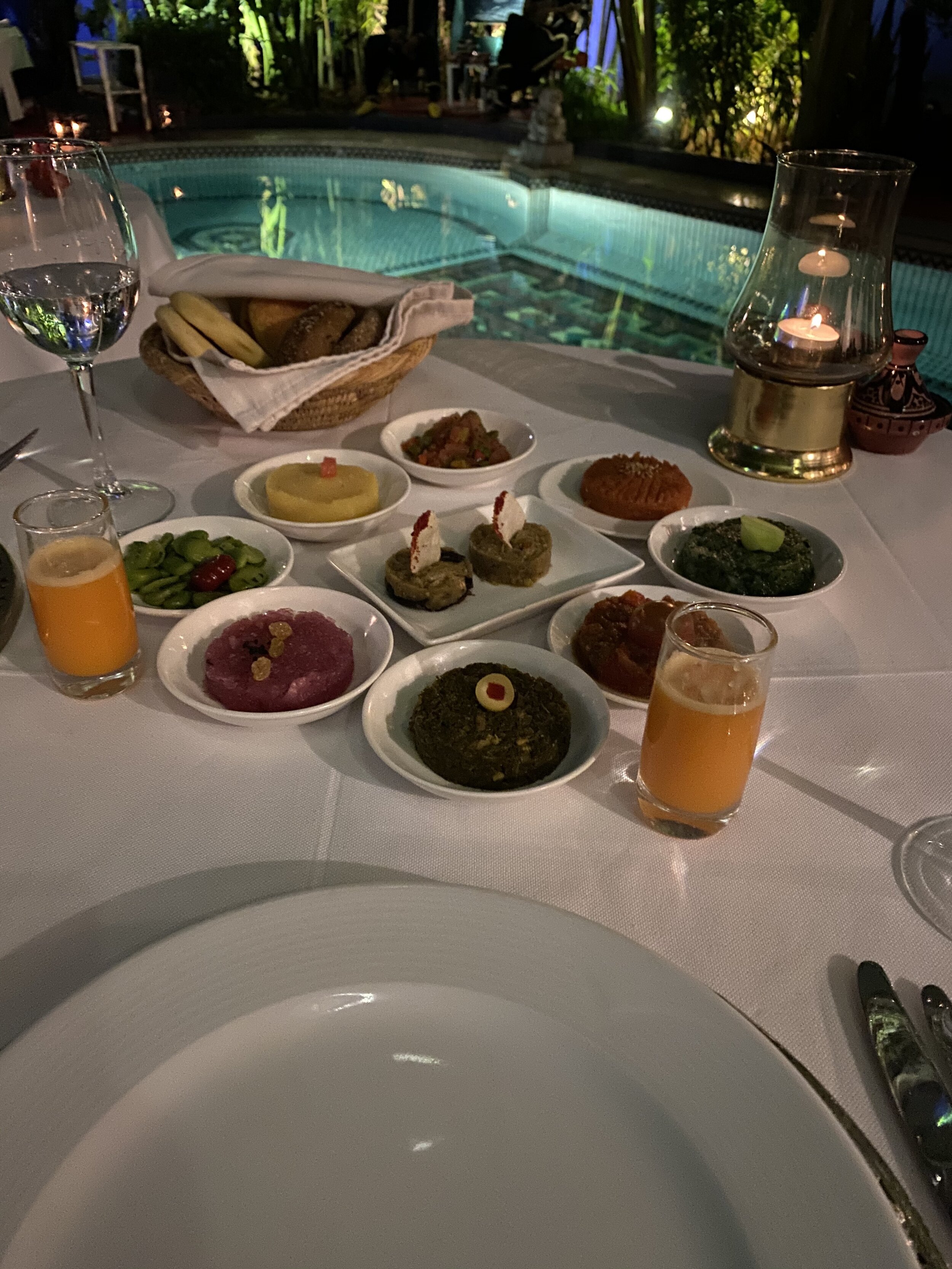
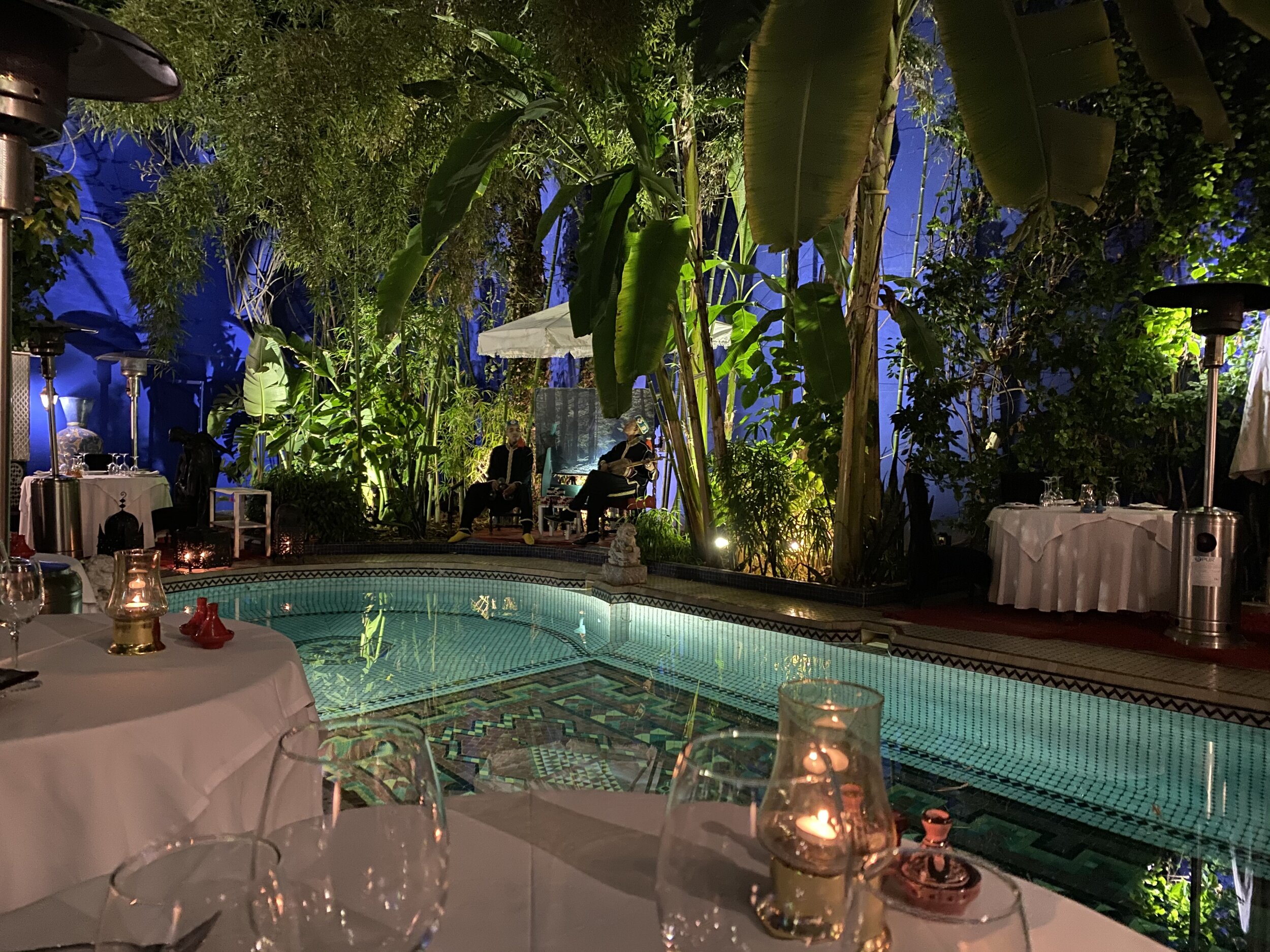
In this riad, which once belonged to the esteemed couturier Pierre Balmain, guests are invited to taste the finest nouvelle cuisine Morocco has to offer, in a stunning 1001-nights setting around the pool. We had diner here at our last night and to be honest we were not blown away. We had a 4-course diner, starting with 14 small salads and briouattes. The taste of the salads is a mixture of sour and sweet, I often did not recognize the vegetables it contained. To be honest I prefer my vegetables in their pure sense. Followed by a vegetable pastille and next a sweet but good tajine accompanied by a vegetable couscous. As desert I had an orange salad and my husband a melon couscous. The price for the menu is 530 dhs per person without drinks, so not cheap for Moroccan standards. Unfortunately, I already had a satisfied feeling after the starter, so I only took a few bites from the rest.
Dar Zellij https://marrakech-riads.com/restaurant-dar-zellij/
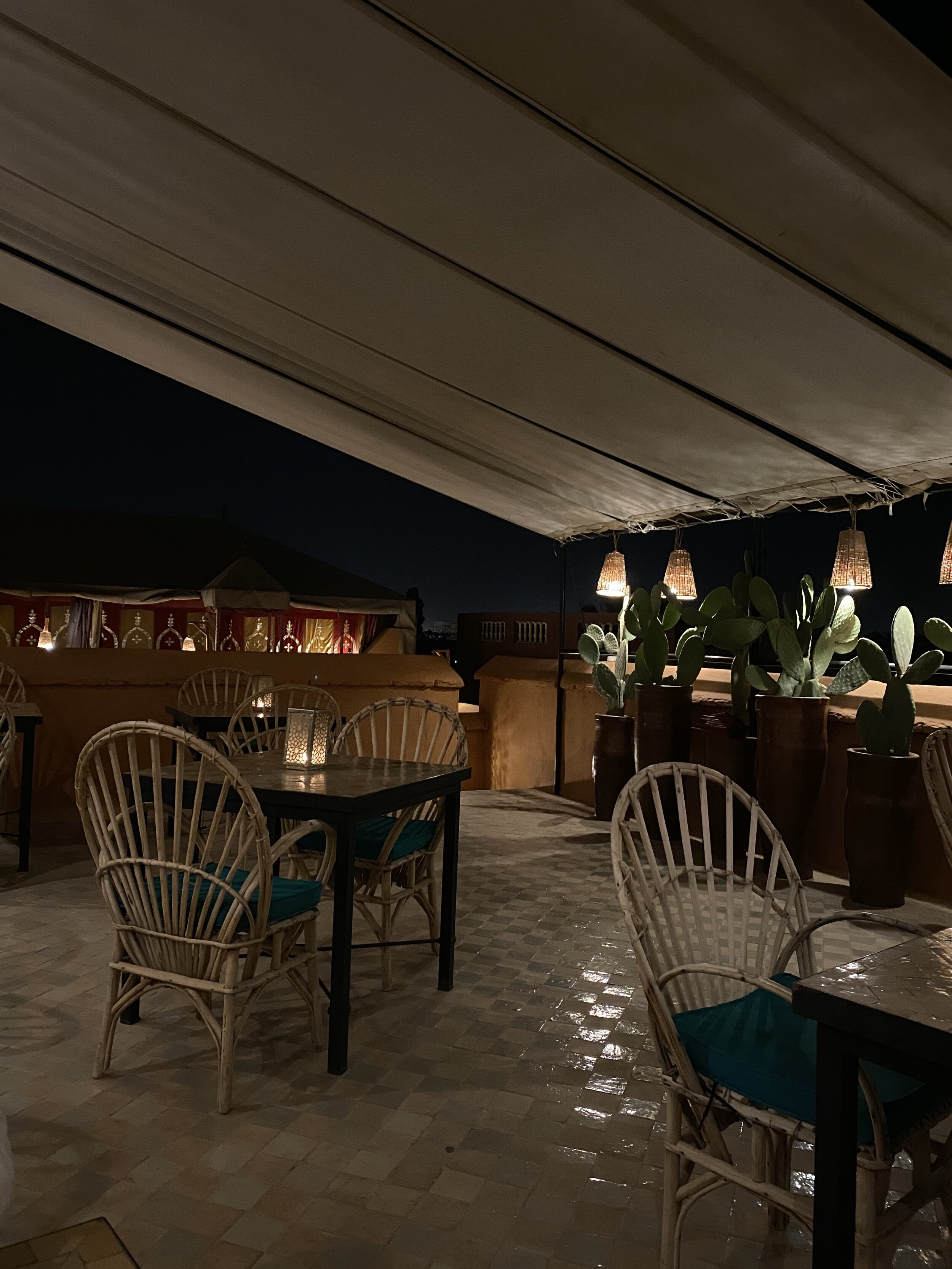
A traditional Moroccan restaurant part of the Marrakech Riads group. Beautifully decorated with “zellij”, colourful windows and traditional rugs. It’s located quite remote in a slightly less touristy part of the city. We first had our aperitif at a beautiful rooftop terrace, before we took a seat in the stylish restaurant. The interior appealed to me, for sure. There was an old men playing background music on his cittern. We had a 3-course dinner starting with Moroccan salads (comparable with the one’s in Dar Moha), a chicken tajine and a milk pastille as dessert. Not bad, but I slightly enjoyed the similar dishes in our riad more. Of the same group you also have Dar Cherifa, also a beautiful and calm setting it seems.
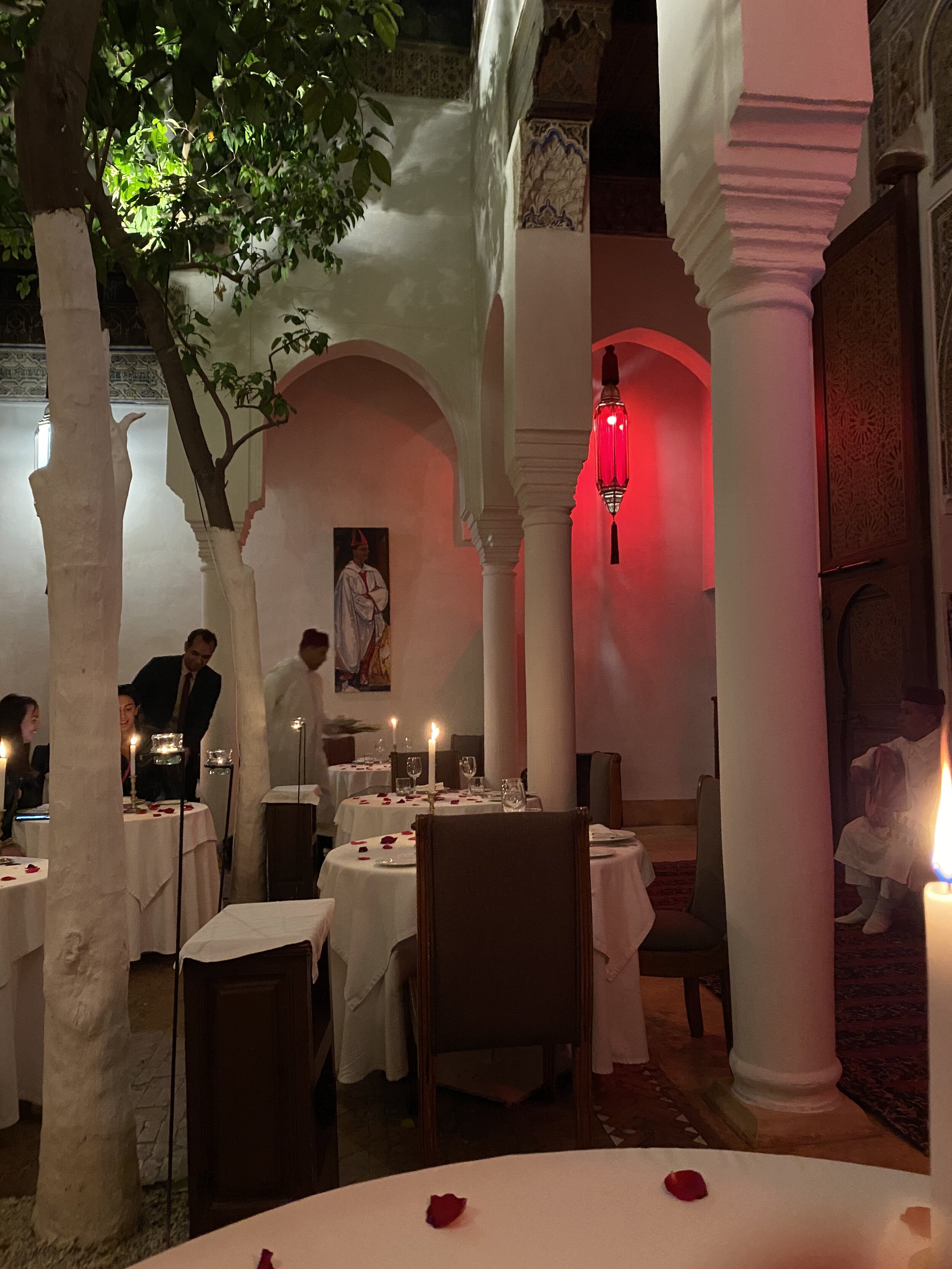
Le Trou au Mur https://letrouaumur.com/
Set in a small riad “Le Farnatchi” in the oldest part of the medina. The English owned restaurant has a modern chic European touch and a really nice rooftop terrace. On the cosmopolitan menu you find salads, Moroccan and international dishes. The service is apparently of a high standard. Literally a hidden gem if I read the comments on the internet. We had a reservation for our second night but due to a change of plans we had to cancel it, so I cannot give you my personal opinion.
Le Fondouk https://www.foundouk.com/
An established value since 2002. Located close to the Ben Youssef Mosque. Amongst many they have one of the best rooftop terraces in Marrakech. At night the terrace is softly lit by candles, enjoy the Arabian Nights atmosphere, while eating both traditional Moroccan and International dishes.Le Tobsil
The most reliable and one of the most spectacular “Banquet Palace restaurants”. Tables with white cloths, rose petals, big brass candelabra - couldn't be more romantic. The set menu of chef Fatima comprises a tableful of salads, replaced by another of pastries, another of tagines and another of fruit and pastries. It is, of course, more than anyone could or should eat, but that's the point. You come to Le Tobsil to be spoiled. I think you can compare it with Dar Zelij and Dar Moha, where we went.Dar Simons https://www.darsimons.com/
Not what we were looking for in Marrakech, but out of sympathy for a Belgian who rebuilt his life in Marrakech, I am willing to mention this place. Carlo Simons was chef at several Michelin restaurants in Belgium and the Netherlands ( including Comme Chez Soi ) and now owns a small boutique hotel and fine-dining restaurant in Marrakech. On the tasting menu of €75 per person, you will find French- Belgian haute-cuisine. You’ll be seated in a high-end décor with porcelain and Italian vintage, places are limited though.Projet M https://www.restaurant-projetm.com/
Are you tired of tajines and couscous? Then former “La Cantine Parisienne” can be a good alternative. Friendly service, trendy atmosphere, delicious food, a cosy interior and an extensive wine menu. Do you need more? But please bear in mind that you won’t have the impression you’re in Morocco. With a French menu and an elegant Tuscany style terrace, you rather think you’re in Southern Europe.Limoni
As with most places within the walled city it takes a little searching to find this little piece of heaven. They serve delicious Italian and Moroccan dishes, while you’re seated in a lovely, light courtyard setting with lemon trees. The bohemian atmosphere is set with a Bob Dylan poster in the lobby and continues throughout. The food should be very enjoyable with an attentive service, but please note that no alcohol is served. One to keep in mind if you’re looking for something different.Café Arabe http://www.cafearabe.com/
If you’re looking for a nice place in the medina to chillout a bit and drink a glass of wine, a cup of mint tea, a refreshing pint of beer or whatever, you must consider Café Arabe. A very stylish 1001-nights setting with nice views over the city. It’s close by le Jardin Secret. We only had drinks, but they also serve food.
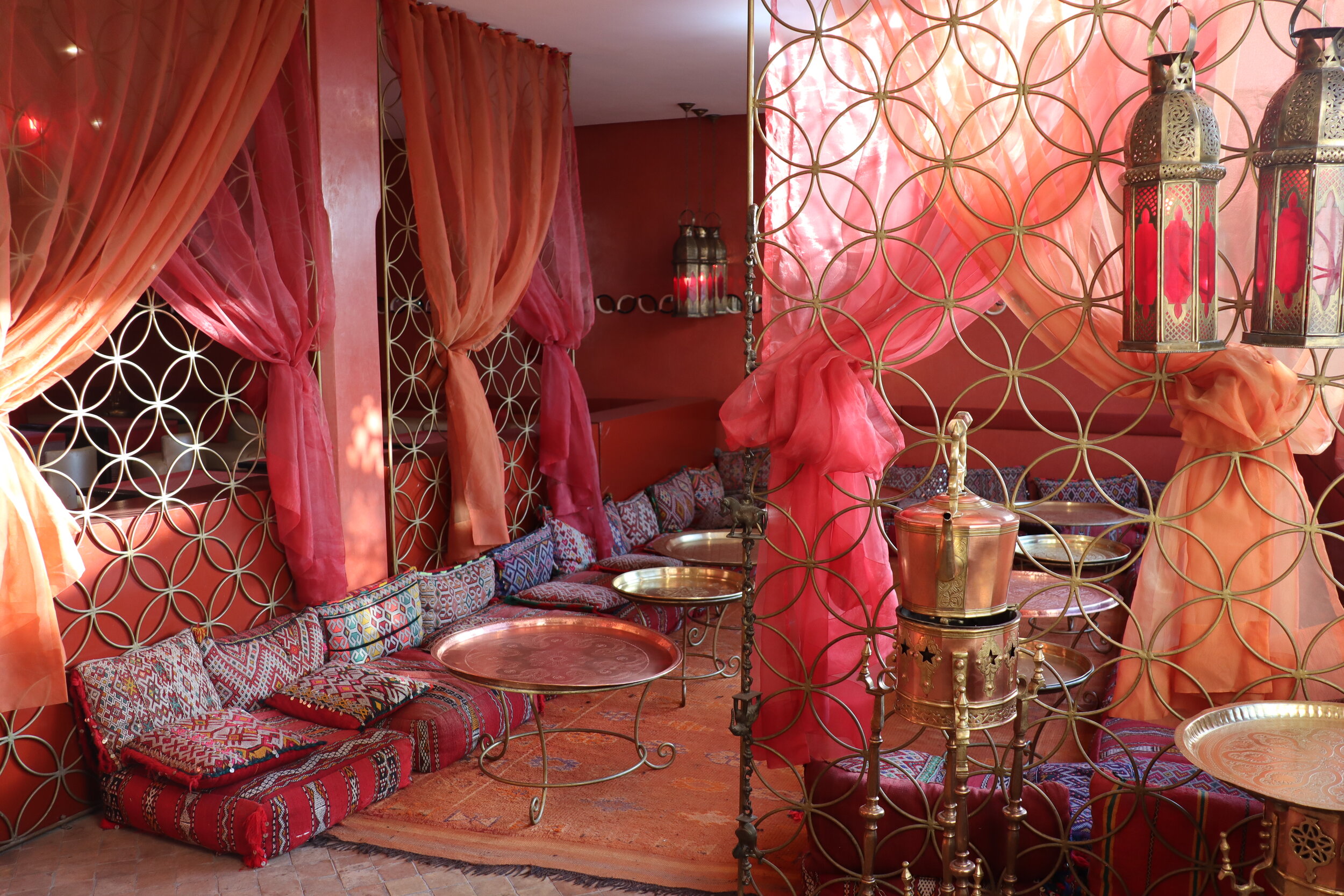
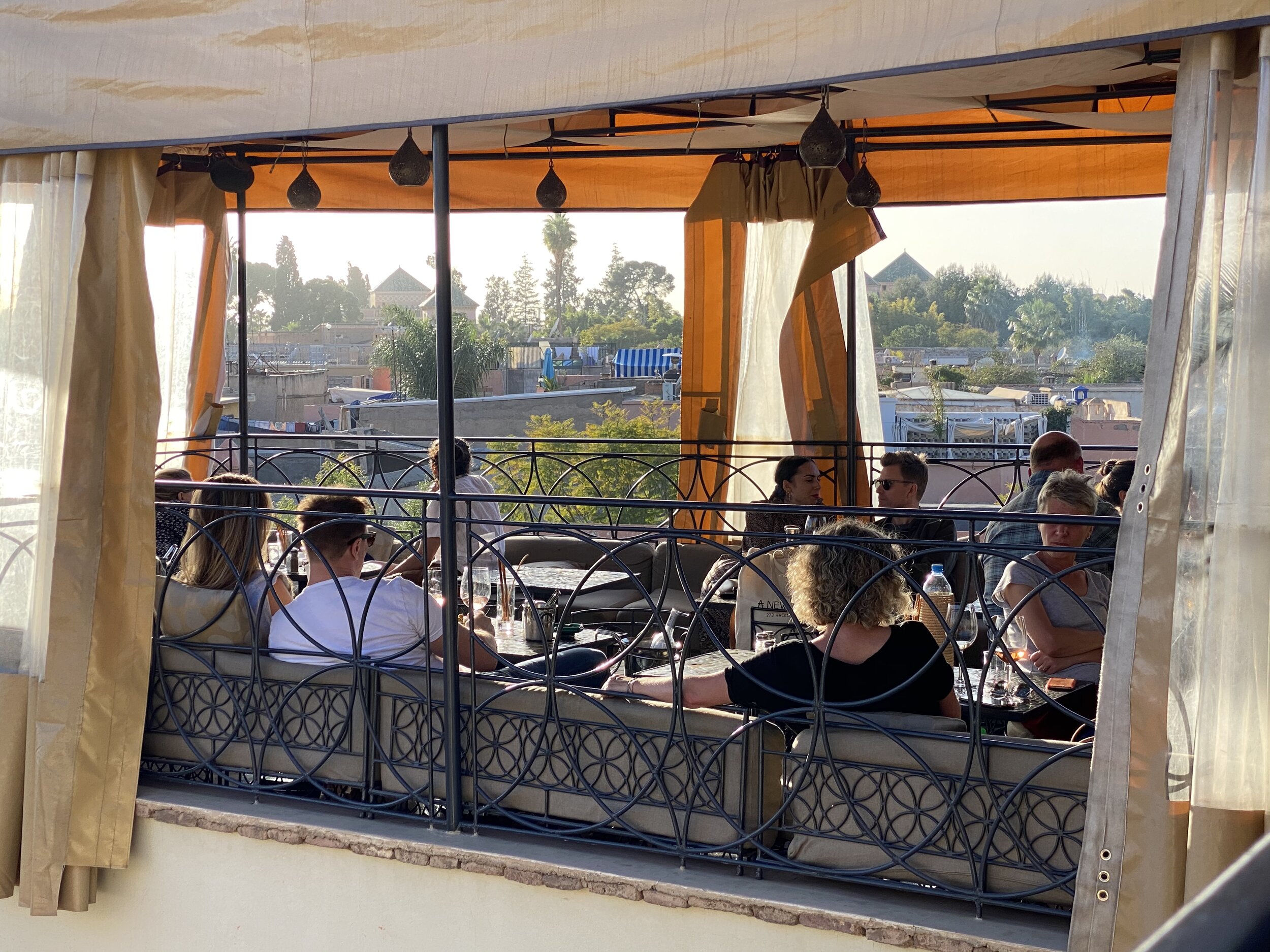
Al Fassia Gueliz https://alfassia.com/gueliz/
Popular restaurant, run exclusively by women. The chef cooks high-quality traditional food from tasty tagines, tender brochettes with saffron rice, couscous topped with caramelized onions and sweet-savory pigeon pastilla. They also serve alcohol. The place can be noisy and crowded with a slow service if there are large party bookings. They have a second restaurant “Al Fassia Aguedal”, a few kilometres out of town. This one was also recommended by our riad.
Baromètre
Located in the modern district of Guéliz. Created by the Hadni brothers, this restaurant and cocktail bar offers a creative Mediterranean cuisine menu and refreshing alcoholic and non-alcoholic cocktails. The interior has a modern, industrial flair. This place was also recommended by our riad.Le Kilim https://lekilim.com/
Another good option to eat in the modern city is Le Kilim, also part of the Nomad family.
Inspired by the glowing red of Marrakech combined with artistic Moroccan decorations. Once again a nice mixture between classic Moroccan dishes and international flavours.+61 https://plus61.com/
Staying in Guéliz, I want to suggest 1 other trendy place … namely +61. A co-operation between Cassandra Karinsky an Australian designer also known from the brand “Kulchi”, Sebastian de Gzell from “Nomad” and chef Andrew Cibej. They want to capture the relax and uncomplicated Australian lifestyle, therefore they combine wood and pastel colours in their interior and nice international blends in their menu.
Grand Café de la Poste http://www.grandcafedelaposte.restaurant/
A nice lunch spot after visiting the Majorelle Gardens. Reopened in 2005 by the same owners of Bo zin. The interior looks a bit colonial, the menu like the name probably suggests like in a French bistro, with quiche Lorraine, Camembert, Foie gras, … to choose from. Friends of us had lunch here and were enthusiastic about it.Azar https://www.azarmarrakech.com/
The more modern version of a 1001 nights interior, also located in Guéliz, with lots of lights and candles, warm colors, a touch of gold,… They offer an extensive menu, with Moroccan specialties combined with more Mediterranean and International options! Azar is also the place to be if you like some side entertainment, with their charming belly dancers. And they have a “Chicha” lounge with many fragrances at your disposal.OTTO https://otto-marrakech.com/
Perched above the winding alleys of the Medina like a rooftop pearl, OTTO draws you first with its panoramic views of Marrakech and the Koutoubia mosque, a setting made for sundowners that stretch into starry dinners. The minimalist, elegant design, soft lighting, refined table settings and a buzz that shifts from relaxed lunch to lively evening scene frames a menu where Italian finesse meets local Moroccan touches in dishes like black risotto with scallops or pistachio-crusted tuna, and creative cocktails that rival the sunsets. Some travellers find the food and service a mixed bag, but most agree that the setting and vibe make it a must-see Marrakech dinner destination.El Fenn Restaurant and Rooftop Bar https://el-fenn.com/food-and-drink/
Vibrant yet relaxed, with views that stretch over terracotta rooftops towards the Atlas Mountains. The décor mixes Moroccan charm with chic bohemian flair: potted palms, woven textures and soft lantern light under an open sky. Dishes emphasise fresh, local seasonal produce and herbs, with meat and fish options alongside veggie-forward plates, and plenty of space for drinks and snacks as the sun dips. Reviewers rave about the atmosphere and views, though food and service impressions vary; this is as much about the vibe as the cuisine.La Trattoria https://www.latrattoriamarrakech.com/
La Trattoria delivers the kind of warm Italian welcome that feels like a feast among friends. Set in Guéliz with a lively local crowd and classic red-checked tablecloths, it’s the kind of place where pizzas bubble with fresh mozzarella, pastas are perfectly al dente, and antipasti feel generous and bright. Unlike many more trend-driven restaurants, the story here is simple and delightful: hearty Italian classics with big flavours, attentive service and an informal energy that makes it a great dinner stop after gallery browsing or cocktails in the modern part of town.Pepe Nero https://pepenero-marrakech.com/
In the labyrinth of Marrakech’s old town, Pepe Nero unfolds like a hidden chapter of culinary romance: candlelit tables clustered around a tranquil riad courtyard and pool, the walls echoing with stories of Mediterranean winds and Moroccan spices. Part Italian trattoria, part haute kitchen, this long-loved restaurant blends refined Italian classics with respectful nods to Moroccan ingredients (and even a few local wine pairings) in dishes prepared with real craft.Maison Reine
Maison Reine reveals a sun-dappled rooftop terrace that feels more South of France than North Africa, pale blues, wicker baskets and olive trees whispering in the breeze above Marrakech’s rhythm. The menu centres on Mediterranean small plates and refined sharing dishes, where smoked aubergine with labneh, fine ceviches and delicate desserts like pistachio tarts show off a chef’s thoughtful hand. Reviewers call it a hidden gem, perfect for lunch or an elegant dinner unhurried by the city’s usual buzz; despite its modest size and slightly elusive entrance, the combination of fresh flavours, warm service and laid-back rooftop atmosphere makes it one of Marrakech’s most charming discoveries.
Good night, sleep tight.
From my experience in the travel industry, sounding names like La Villa des Orangers, Royal Mansour, La Sultana, La Mamounia, Riad El Fenn still ring a bell … But those are not the type of accommodation I am looking for.
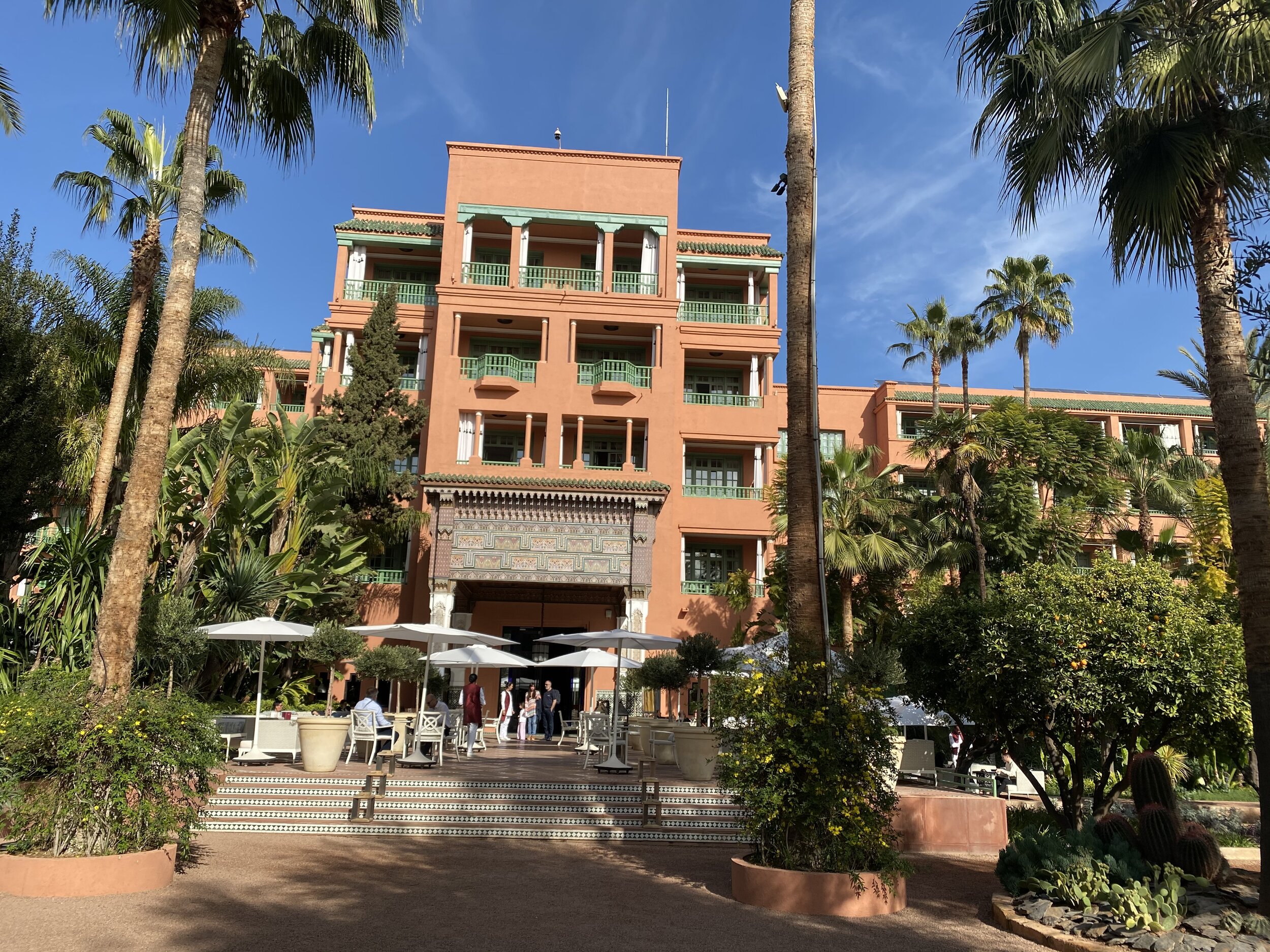
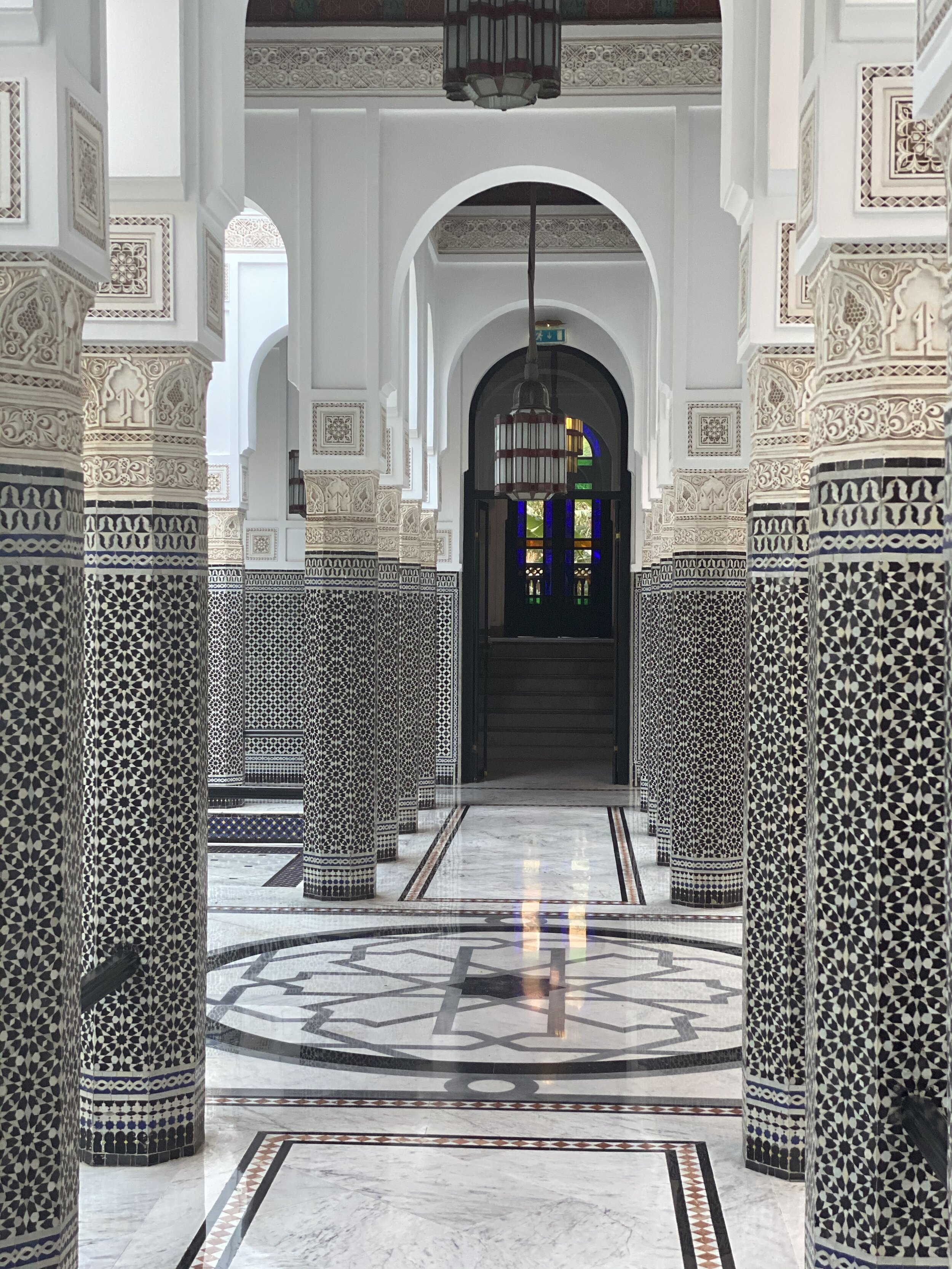
I prefer something small, really intimate, with discreet luxury, a hidden gem, but affordable.
The “Red City” is home to more or less 800 riads, “traditional Moroccan houses with beautiful courtyards”, each one with his own story. These gorgeous guesthouses capture the magic of Marrakech.
I've spent hours in 2020 researching for the best riad recommendations. These are my top picks. I did find it hard to pick one, as they all look gorgeous and have their specific character. Our final decision was between Riad ‘O and Riad 42.
Riad Yasmine https://www.riad-yasmine.com/
Probably the most Instafamous Riad of Marrakech, with the most Instagrammable pool. Owned by a French couple, offering 8 bedrooms, combining authentic charm, discreet luxury and a contemporary atmosphere. We passed by and I did not like the neighbourhood where it’s situated that much.Riad Dar Kawa https://www.darkawa.net/
Owned by a Belgian designer Valerie Barkowski, who already lives in Marrakech for years. Very tastefully decorated, with simplicity, authenticity and slow life as key words. The breakfast is phenomenal I heard, and at the rooftop terrace they have their own spa. This is rather one of the more expensive options from my list.
Riad ‘O http://www.riad-o-marrakech.com ( our stay in 2020 )
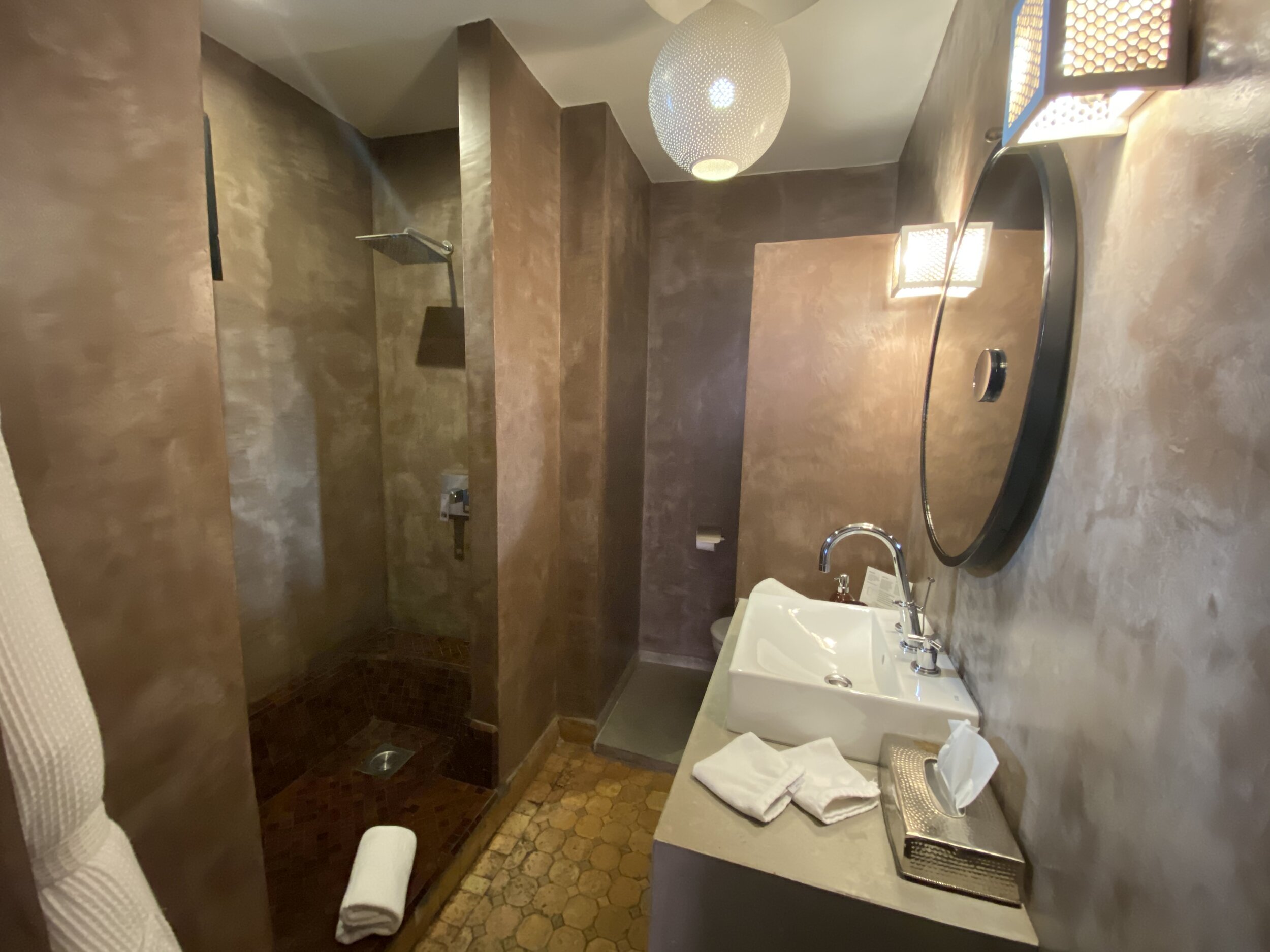
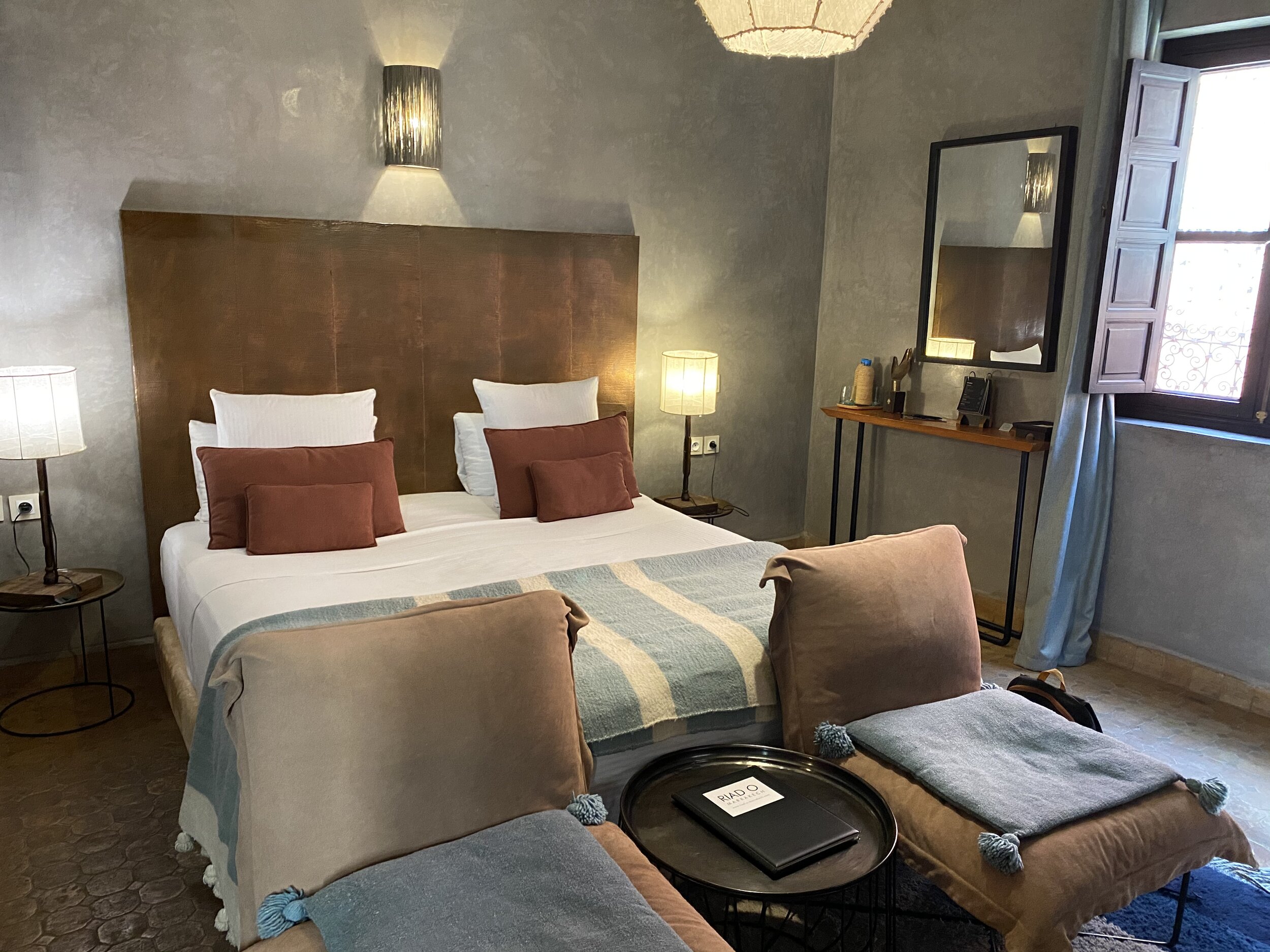
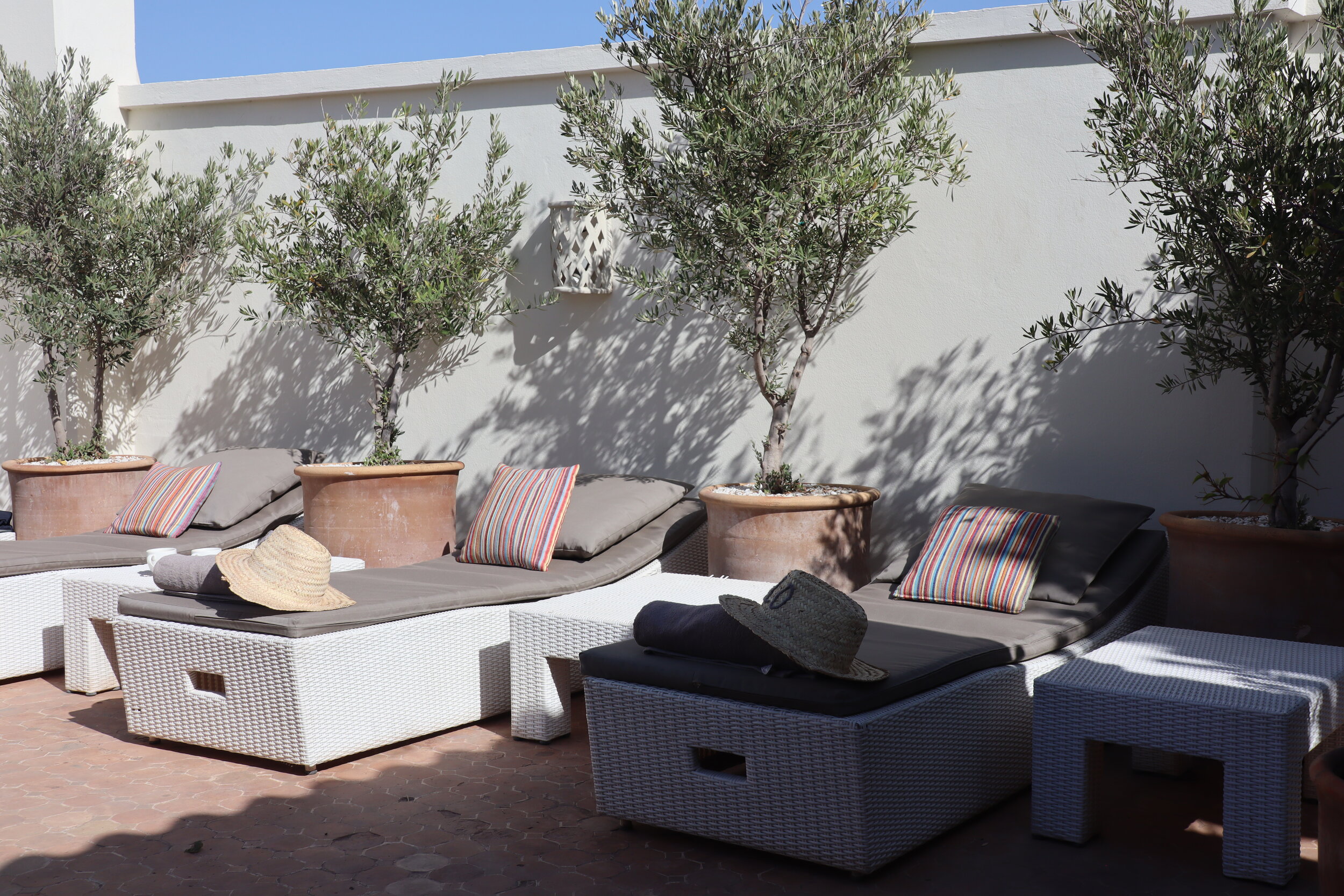
This riad caught my eye during a show on the Belgian television. It’s run by an ambitious young Belgian man “Manu”. They offer 5 rooms (from € 60 the night) and work with local staff, who offer pure Moroccan hospitality. A lot of credit goes to the fantastic home cook Fahima and to the charming Zakia who is willing to help you out with anything and everything. They have a lovely rooftop terrace with lounge chairs and a big table to eat outside. The eyecatcher, like in most of the riad’s is the patio with plunge pool. They also offer guided excursions with a private driver. If I must list a downside, then it’s the noise from the street at night from cats and prayers and the fact they do not serve fruit daily for breakfast, but for me that’s negligible compared to all the pluses. Affordable luxury, glad we stayed here!
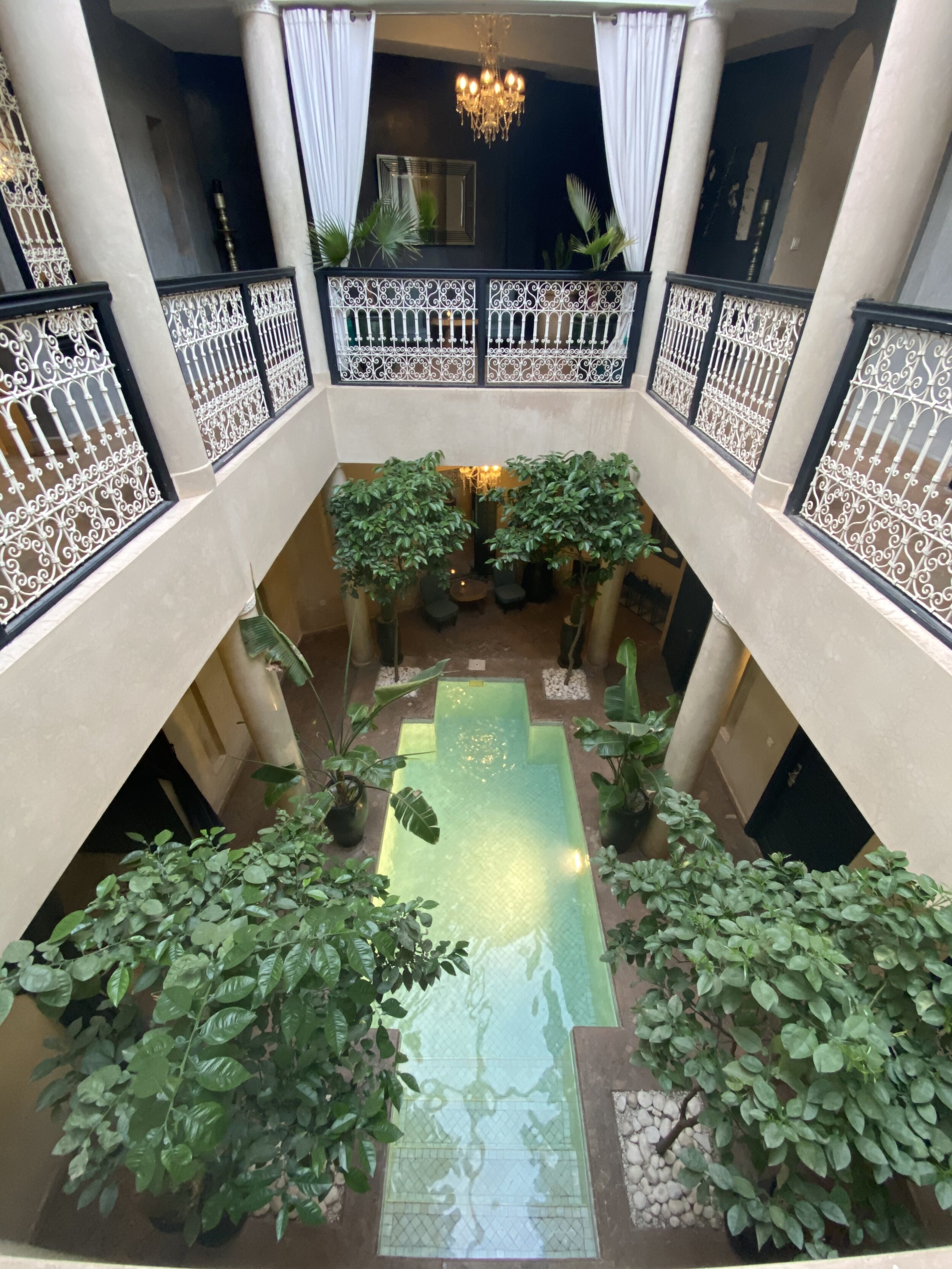
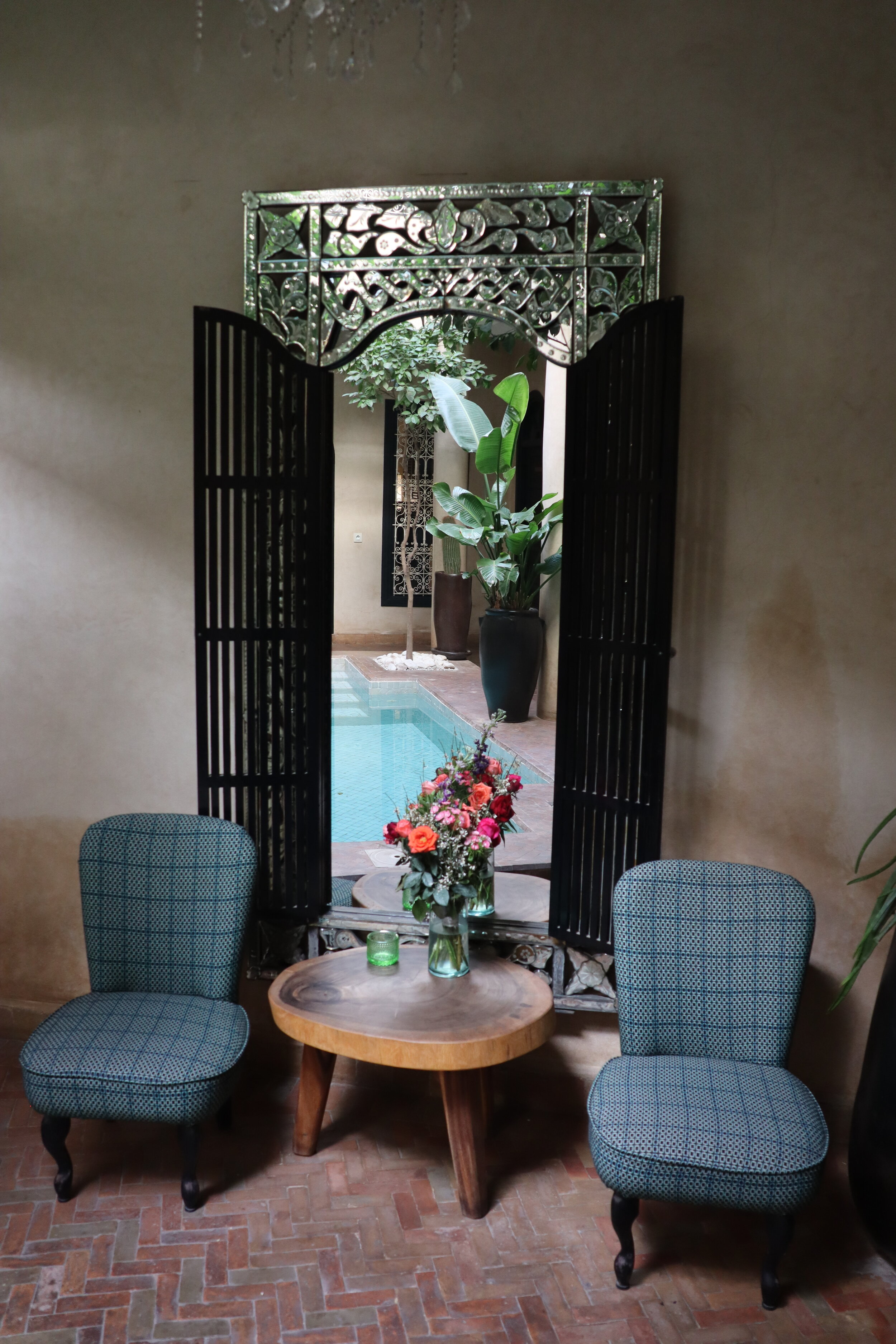
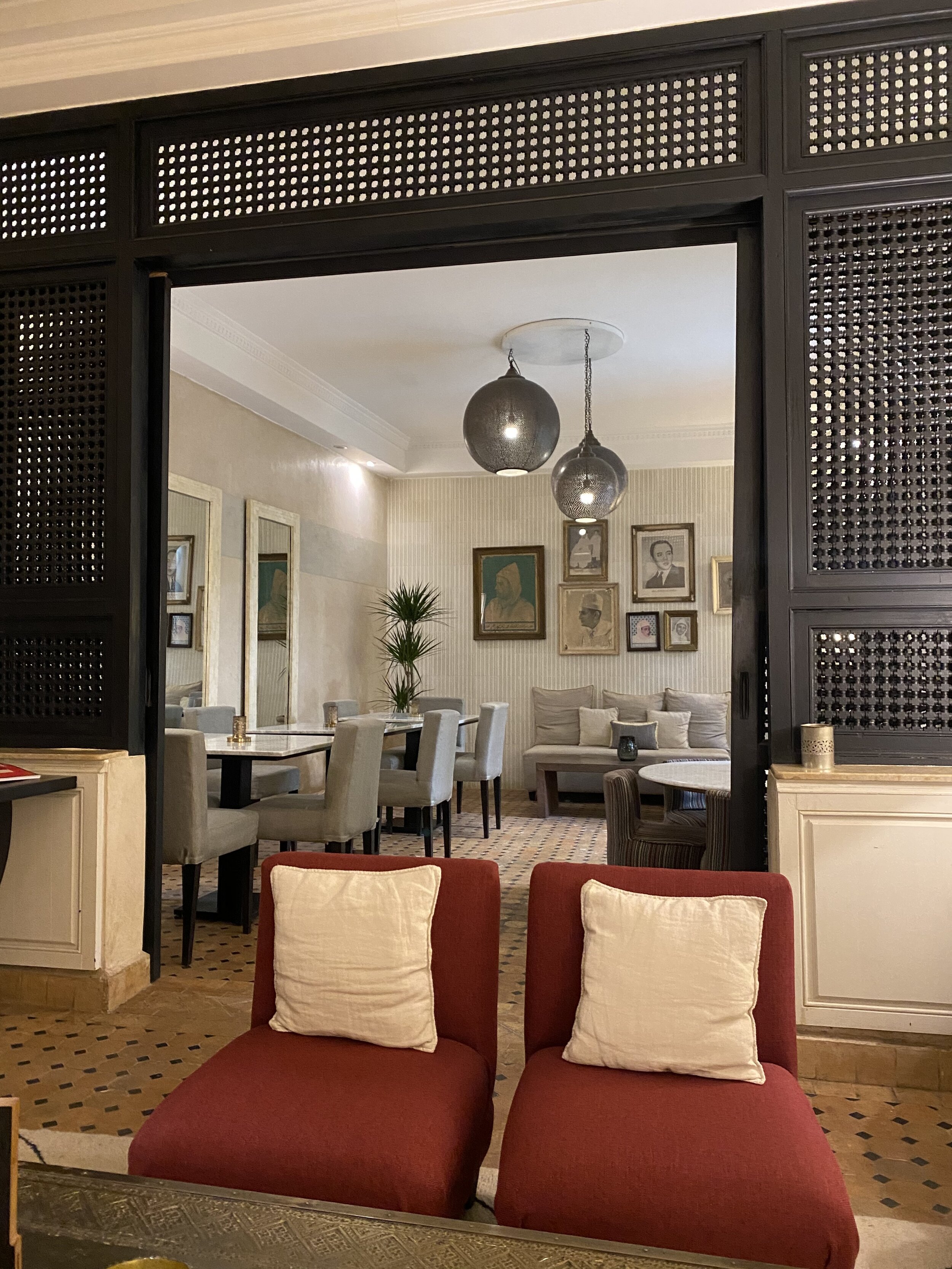
Ryad Dyor https://www.ryaddyor.com/ ( our stay in 2026 )
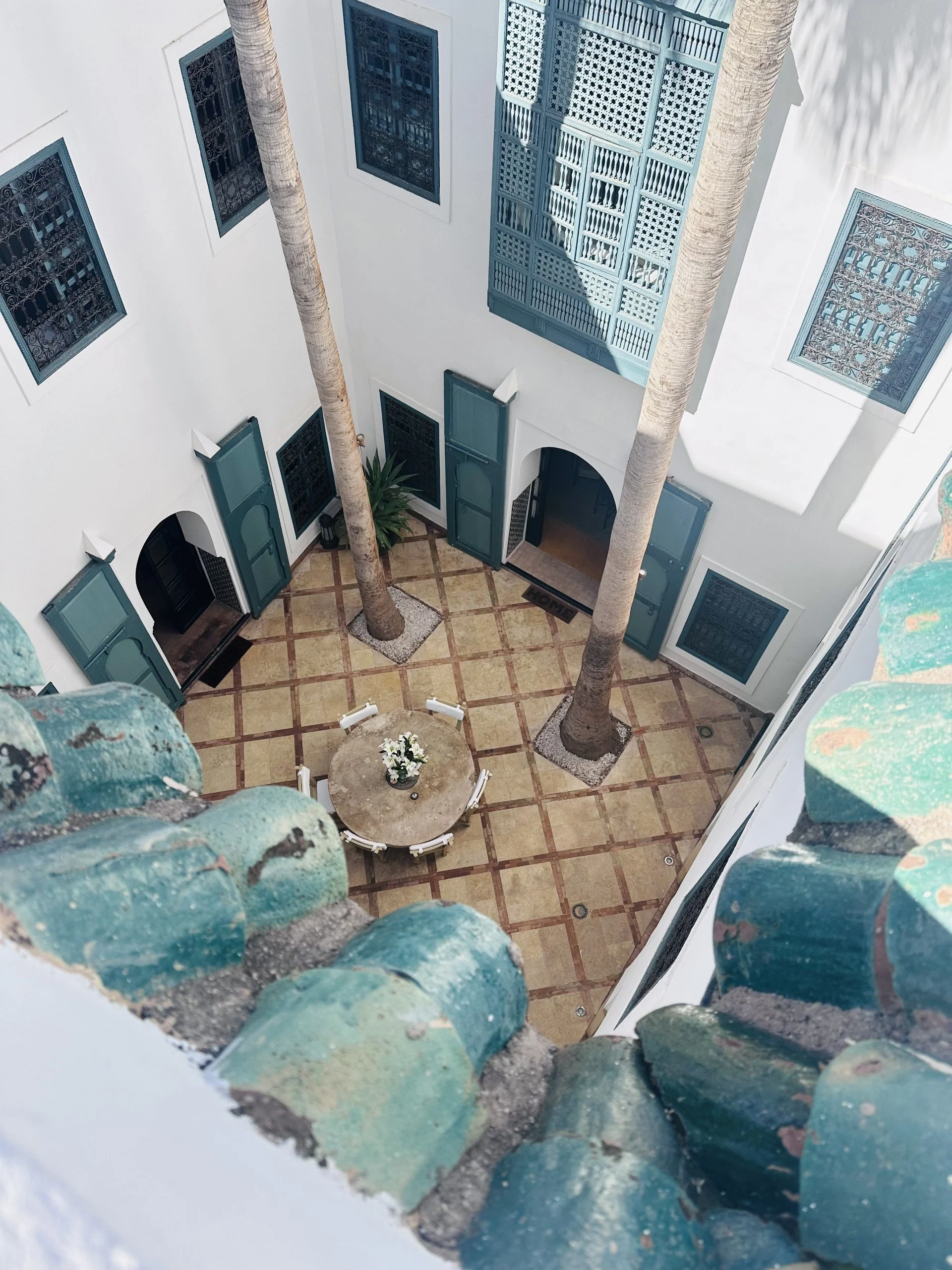
A fusion of 2 authentic riads back to back, with just seven rooms. Brighter, sunnier, somehow friendlier than the average riad hotel, maybe it’s the owners, a couple of designers, one Dutch and the other Spanish, but for whatever reason, Ryad Dyor stands out. We stayed here in 2026, our room was very spacious and beautifully decorated. Little minors were the lack of light in the bathroom and the door to the hallway, which could not be locked and was easy to open from both sides. Although this riad is located slightly more on the edge of the medina, there was more noise pollution. All meals are served on the roof terrace, rain or shine. They advertise that they also have a restaurant where you can dine in the evening. Personally, I wouldn't interpret it that way. They serve food, but are clearly not really used to hosting guests for dinner regularly. If you want to make use of the hamann, you need to reserve at least 1h30 at forehand. All in all, a pleasant stay with helpful staff.
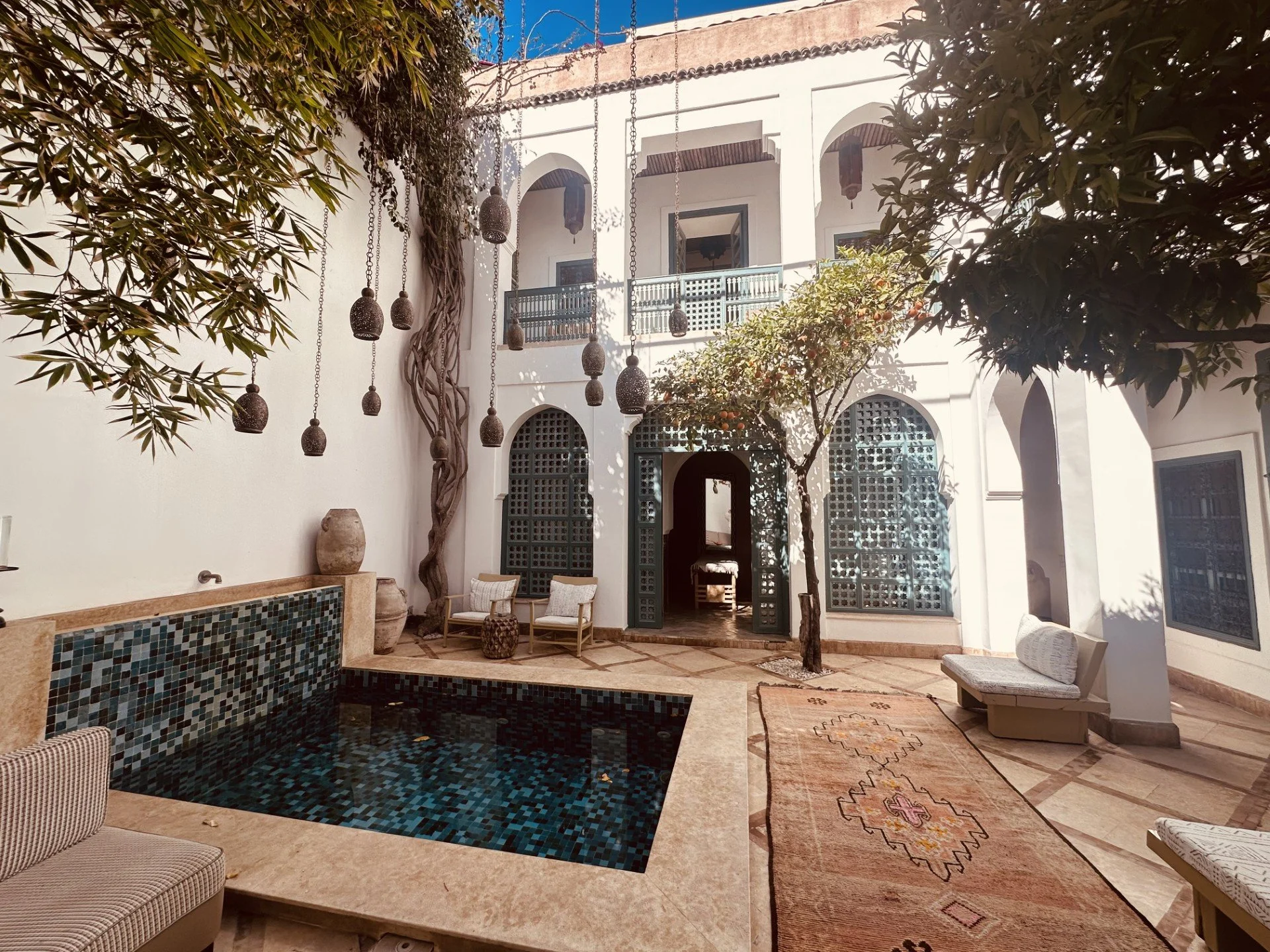
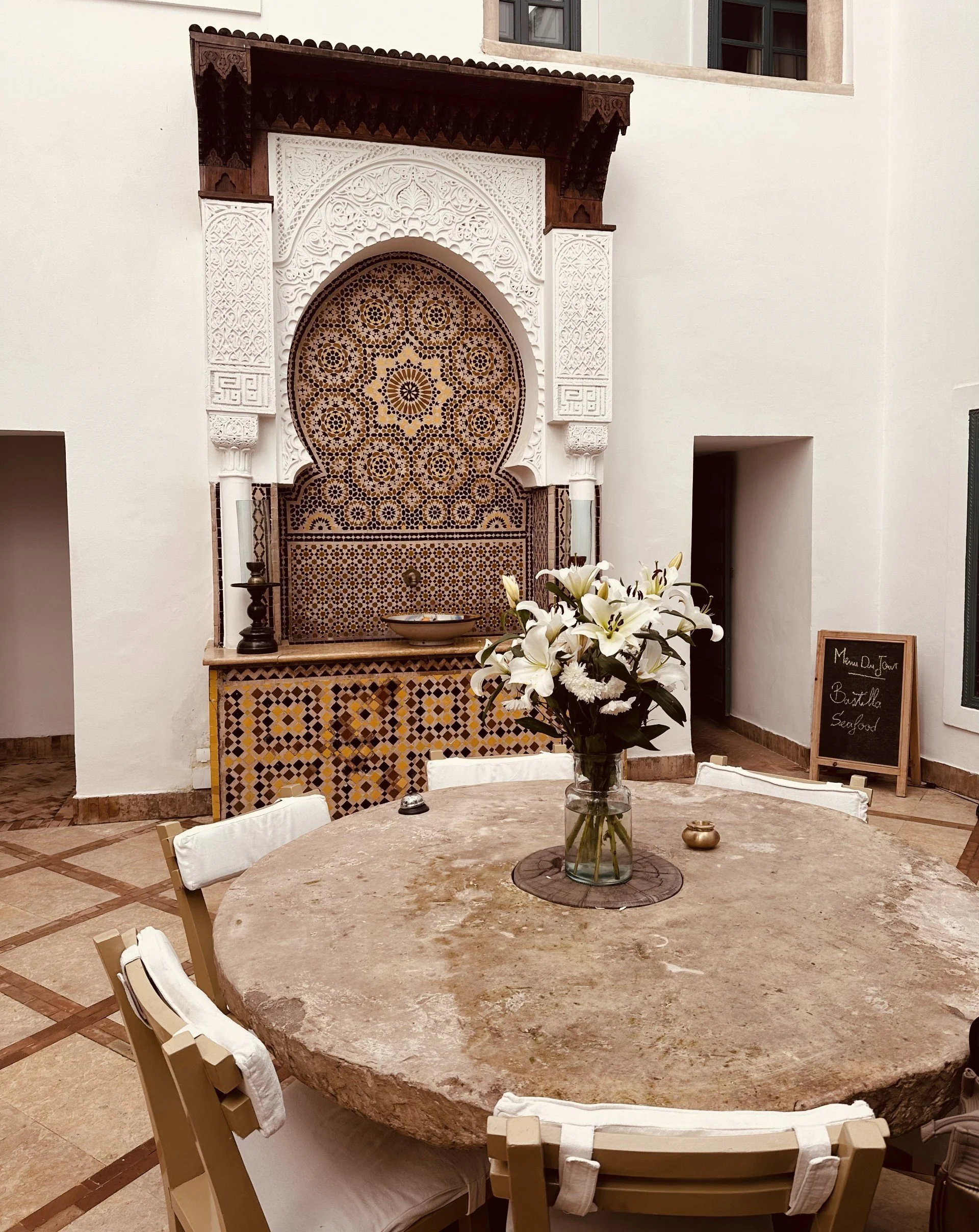
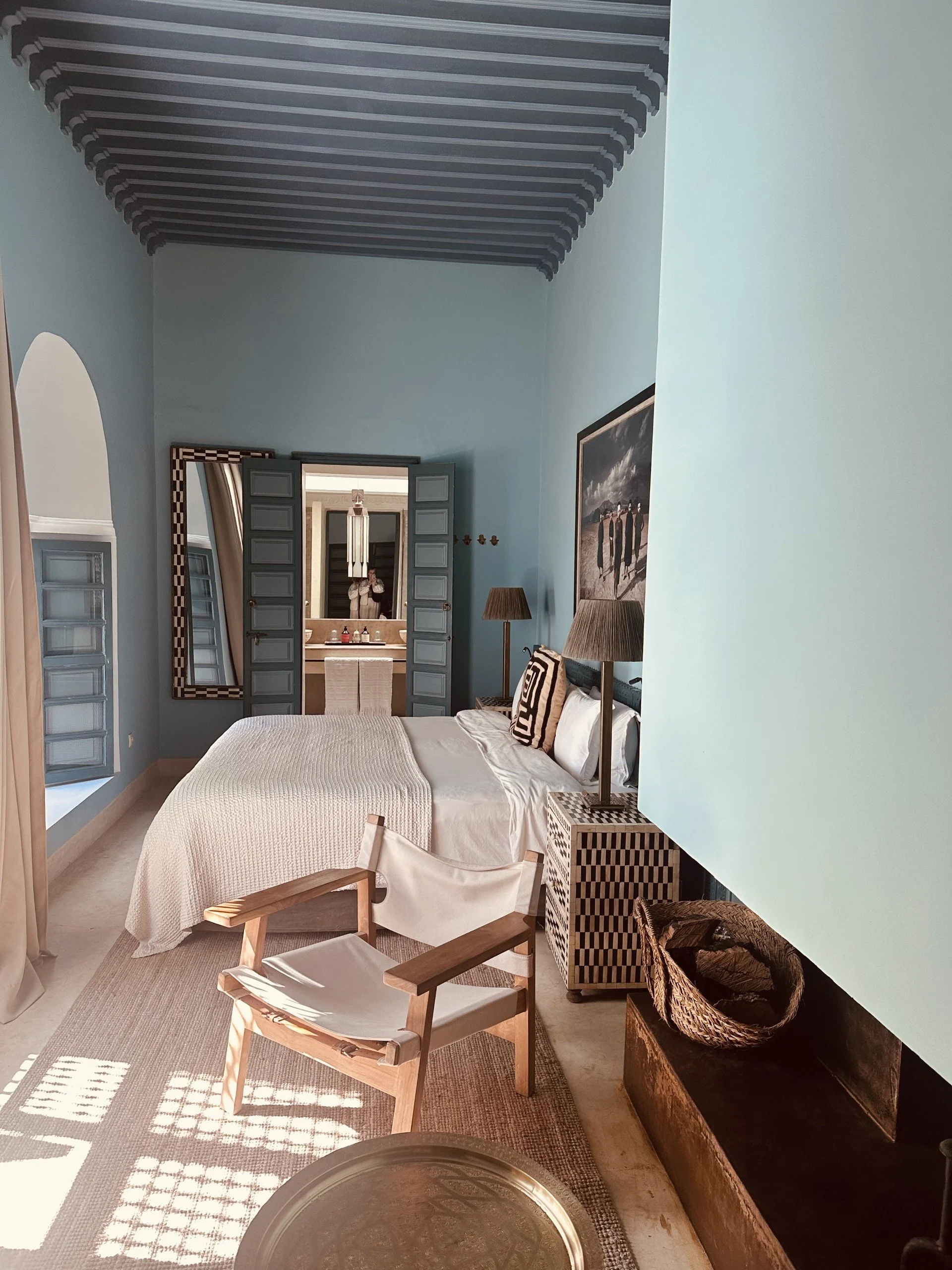
Riad Jardin Secret http://riadjardinsecret.com/
A riad out of the box, run by Cyrielle & Julien, a very cool Parisian couple, who worked in fashion, and are now living the Morrocan dream. They offer 5 simple, but very soulful rooms. The rooftop is amazing, landscaped with pergolas, long chairs and cushy cushions and exotic cacti. A nice option, when you’re travelling on a budget.
Riad Adore http://www.riadadore.com/
English owned riad, part of the group “Pure Riads”. Decorated in cool, pale shades of white, beige, and grey, with tadelakt walls and subtle lighting, elegant and sophisticated. The Berber Tent on the rooftop provides a retreat on hot summer days, or a relaxing area to enjoy a drink or a shisha. The ten bedrooms are individually decorated in a chic and contemporary Moroccan style. Prices start as from €150 per night. “Pure Riads” has 2 other hotels in their portfolio: Riad Dar Hanane and Riad Tzarra. Pretty similar, interior wise, certainly Dar Hanane. http://www.pureriads.com/Riad Helen https://www.riadhelen.com
The soft pastel tones of the walls and woodwork give Riad Helen a bit of a nostalgic 50’s atmosphere, very instagrammable ! Owners Maxine and Mario do everything to make you feel comfortable. Cook Fatiha takes care of breakfast, and in the evening, she makes a divine couscous or tagine. They also offer cooking classes. I can appreciate the bright colours and the affordable price. One of my personal favorites!P’tit Habibi https://ptithabibi.com/
P’tit Habibi means ‘little darling’. The white-washed courtyard, streaming with bright light, makes a fresh and surprising contrast with the less-than-pristine street outside. Each room is uniquely decorated with stunning hand-painted furniture and eccentric touches. The design comes of the owner, an architect who lives in Norway but sees P’tit Habibi as his second home, and who has doused it with a touch of Scandinavian cool. Whether you fancy a quiet day sunbathing on the rooftop terrace or enjoying a delicious home-cooked meal, nothing is too much trouble. You can have a film projected onto the large wall of the riad’s courtyard and cosy up at the giant floor cushions; the perfect wind-down after a busy afternoon negotiating in the souk. For me personally not the style I am looking for in Marrakech, but certainly one that stands out.Riad 42 https://www.instagram.com/riad42marrakech/
Designer Nicole from “La Maison” helped design this place; minimal decor, with a limited colour palette. Located in the centre of the historical medina of Marrakech, owned by Sarah and Grégoire, a French-Belgian couple, who fell under the charm of the Medina in 2007. Upon entering the elegant guesthouse, you feel a sense of calm, thanks to the perfect mix of traditional architecture and modern elements. The Riad has 3 double rooms (€ 110 pn) and 2 suites. All the rooms are bright with high ceilings, furnished with natural tones, wooden accents, and woven tapestries and textiles. There is a refreshing pool and traditional hammam on the rooftop. For €15 they offer private airport transfers. And for €20 you can have a nice diner under the stars. This one was my 2nd choice, as the design perfectly matches my personal taste, and they still respect the traditional architecture.Riad BE https://www.be-marrakech.com/
Probably one of the most well-known riads in Marrakech due to its popularity at Instagram. The central courtyard is quite amazing; retro, ceramic tiles cover the floor and climb the walls; the deep turquoise plunge pool surrounded by all kind of exotic plants. Behind it are energetic Swiss-Moroccan owners Nicole and Mohammed. The 5 rooms are furnished artful but simple. This place is perfect for young hipsters, travelling on a budget.

Riad de Tarabel http://www.riad-de-tarabel.com/
Welcomed in style, by the staff with white knee-high cocks and cropped harem pants and a red smock. An old colonial style mansion. The luxurious rooms can be best described as Moroccan style meets Victorian luxury. The junior suites offer even 2 bathtubs. Each guest gets a mobile phone upon arrival with two numbers in the contacts, the kitchen’s and the manager’s, ‘so that if you need something, you can just call.’ Calm, tranquillity, peace, discretion and beauty, are the watchwords of this unusual venue. It is obvious, that this property is in a higher price-range.
Ksar Kasbah & Spa https://www.ksarkasbah-spa.com/en/
A boutique style Riad. The decor is laidback, and the food is home-made: Layla, the excellent chef, is famous for her fluffy pancakes, fresh juices and traditional tagines. Ksar Kasbah keeps its footprint small by using solar energy, sourcing all its food from local markets and stocking organic bath products from Les Marocains. The inviting pool-area is surrounded by forest-green marble floors and tropical plants. The riad contains 11 rooms & suites built around the pool and furnished with natural materials in bohemian style.Riad 72 http://riad72.com/
Very well located in an upmarket part of the Medina. Giovanna, the Milanese owner, who has lived in Marrakech for many years, and her general manager Stephania, are thoughtful and professional hosts. They offer their guest a personalised map filled with interesting recommendations and a complimentary mobile phone upon arrival. The13 bedrooms are individually decorated, with an overall impression of artful, effortless elegance. There’s also a small house hammam and a massage room. Dinner needs to be booked in advance as the restaurant is open to the public in the evening. “La Table du Riad” fuses an organic farm-to-table philosophy with fine-dining bringing a new and elegant culinary experience to the heart of the Medina. This riad is a more expensive option.Riad Nashira & Spa https://www.riadnashira.com/
The interiors are classic and refined, polished tadelakt walls, intricate zellige tiles, carved wood and soft neutral tones, arranged around serene pools (one indoor, one in the courtyard). With 16 rooms, it has a slightly grander feel than many intimate riads, yet the atmosphere remains tranquil rather than showy. The spa and hammam are a real draw, and reviews consistently praise the calm ambience and attentive, discreet service, making this a good choice for travellers who prioritise comfort and wellness alongside authenticity.Riad Al Uzza https://riad-al-uzza.com/
Tucked away in the Medina’s quieter quarters, Riad Al Uzza offers a more minimalist, design-led take on the traditional riad. Earthy plaster walls, sculpted archways and soft lighting create an atmosphere that feels intimate and harmonious rather than ornate. The small central courtyard with its plunge pool and the rooftop terrace provide peaceful breathing space, while the rooms are generously sized and soothing in tone. Guests often highlight the warmth of the staff and the sense of being welcomed into a private home, ideal for those who prefer understated elegance over decorative excess.Maison Dar Sadaa https://riadresort.com/
Just moments from Jemaa el-Fna yet surprisingly serene inside, Maison Dar Sadaa reveals itself as a stylish urban retreat with a slightly contemporary edge. The dark-tiled courtyard pool contrasts beautifully with light stone walls and artisanal woodwork, giving the interiors a sophisticated, almost boutique-hotel feel. The rooftop terrace is a favourite for breakfast before heading into the souks, and reviews frequently mention the attentive service and excellent location. It’s a strong option for travellers who want to be right in the heart of Marrakech without sacrificing comfort or polish.Riad Sierra https://riadsierra.com/
Riad Sierra combines traditional Moroccan craftsmanship with a slightly more contemporary, curated aesthetic. Zellige tiles, carved plaster details, and warm, jewel-toned textiles frame a tranquil courtyard where the small pool reflects filtered light. The rooms feel carefully composed rather than lavish, and the overall mood is calm and tasteful. Guests often praise the attentive service and peaceful atmosphere, describing it as a refined hideaway that offers a quiet counterpoint to the busy streets just outside.
Airbnb top picks:
Riad Chamali https://bit.ly/2LTbwxq
Riad Jaseema https://bit.ly/2Khqyd7
Maison 28 https://bit.ly/333OQzQ
La Maison - The House https://bit.ly/333Riqk
I could give up shopping, but I am not a quitter!
With a bustling local artisan community, souvenirs from Marrakech are often one-of-a-kind. With so much on offer and a range of choice in the labyrinth-like souk, it’s hard to make up your mind and not to buy more than what fits into your suitcase.
In 2020 bought:
2 Straw Baskets (you can have them personalized in many stores, we bought 1 at Djemaa el Fna and another in the Arts & Craft Center)
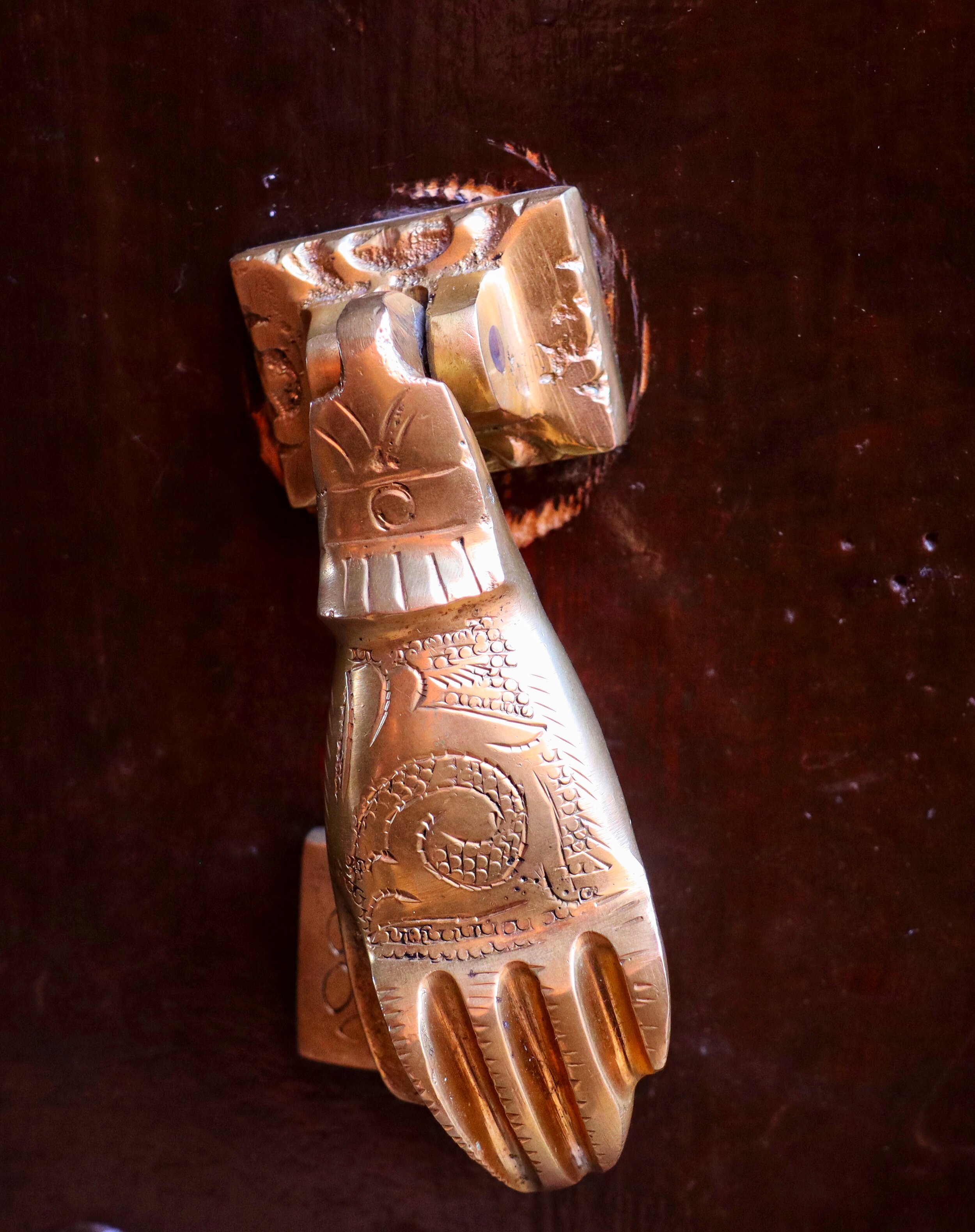
Golden Earrings (Baobab Trees from Mona Marrakech, I also like the hand of Fatima)
Mint Tea
Eucalyptus crystals (very strong stuff, ideal for a severe cold)
Spices (Ras El Hanoud, Kurkuma, Ginger-Lemon, Harissa, etc... )
Artisanal parfum bars (Musk & Jasmine)
Tea Glasses (60dhs piece)
Tea pot (150dhs)
Serving dish (150dhs)
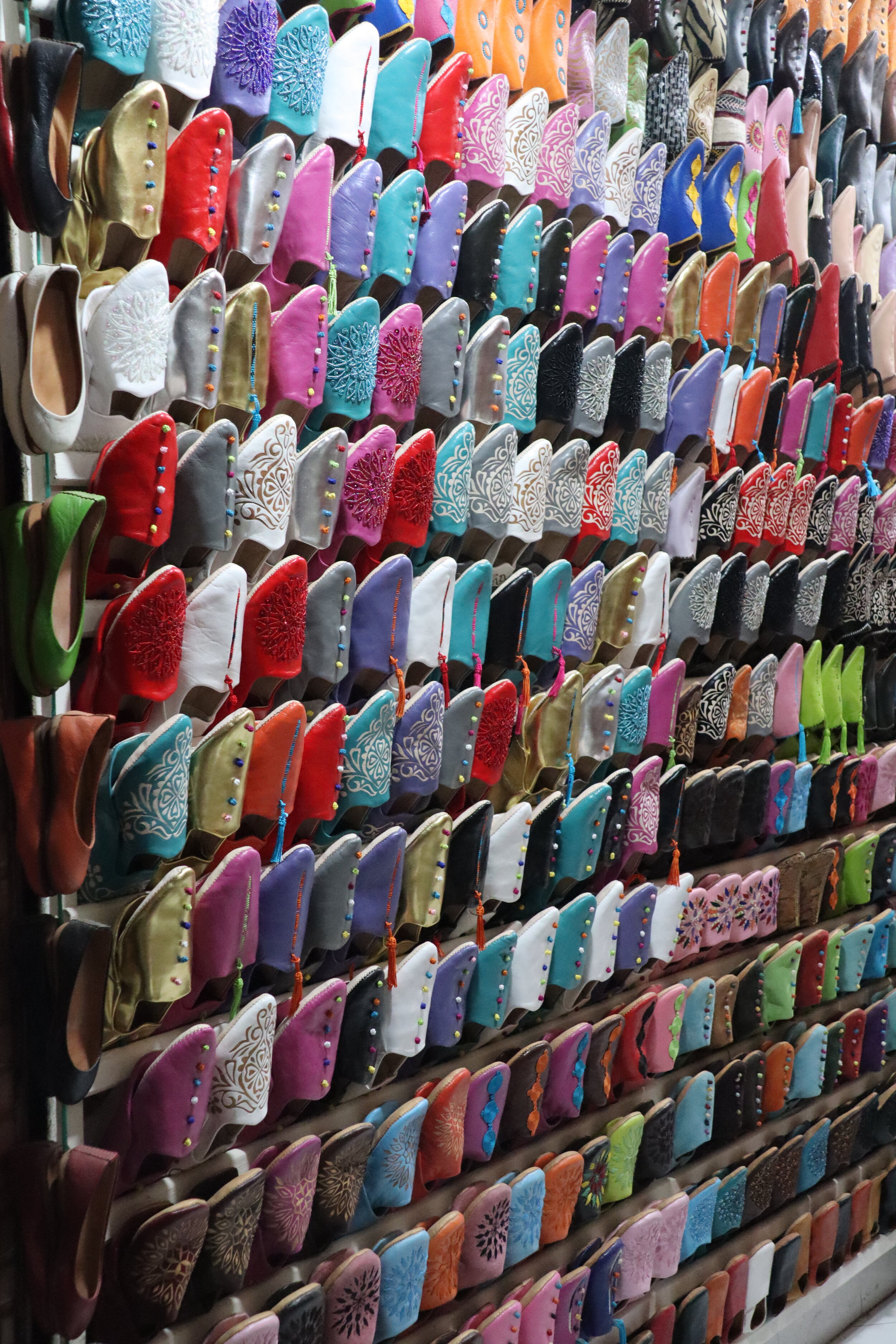
Babouches (100dhs)
Small carpet (Berber Style)
Moroccan Pastries (La Patisserie des Princes)
And almost a tajine, but we no longer had space in our luggage

Other specialties for you to buy:
Argan Oil
Tadelakt Home Accessories
Leather goods
Djellaba
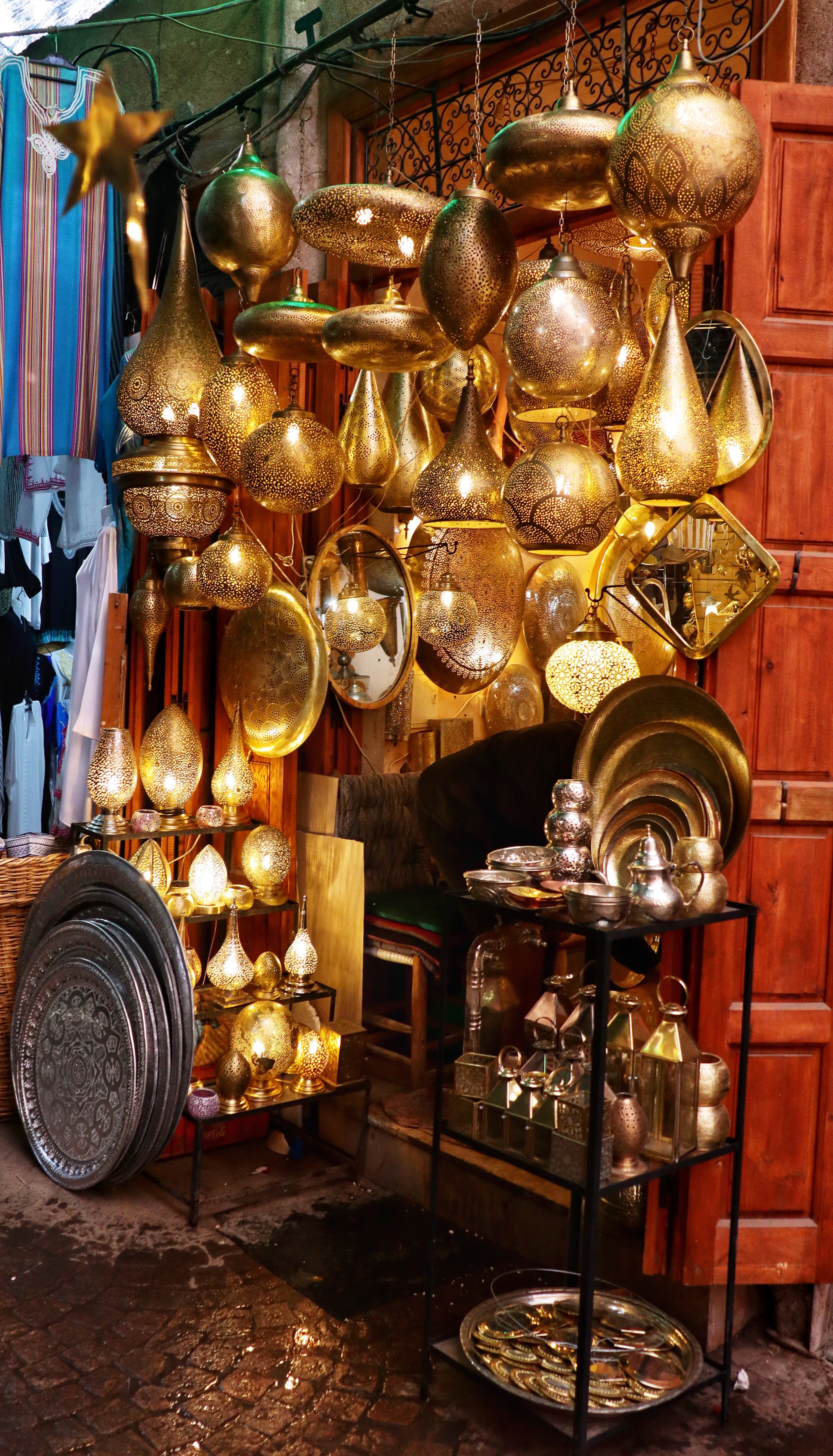
Lanterns
Hip & Trendy stores:
Chabi Chic (Nomad) https://www.chabi-chic.com/

Max & Jan Concept Store https://maxandjan.com/
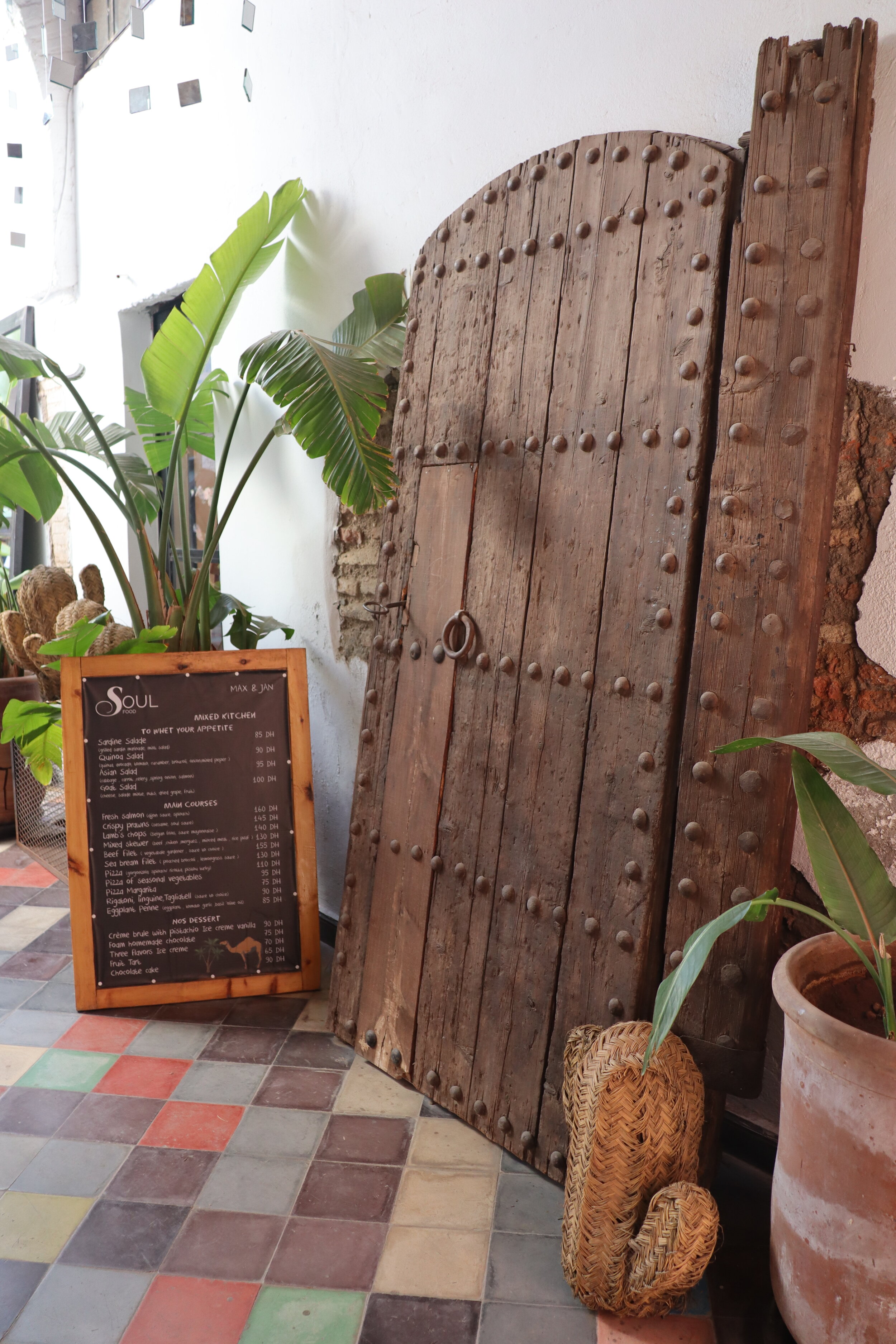
LRNCE Studio (Laurence Leenaert) https://lrnce.com/
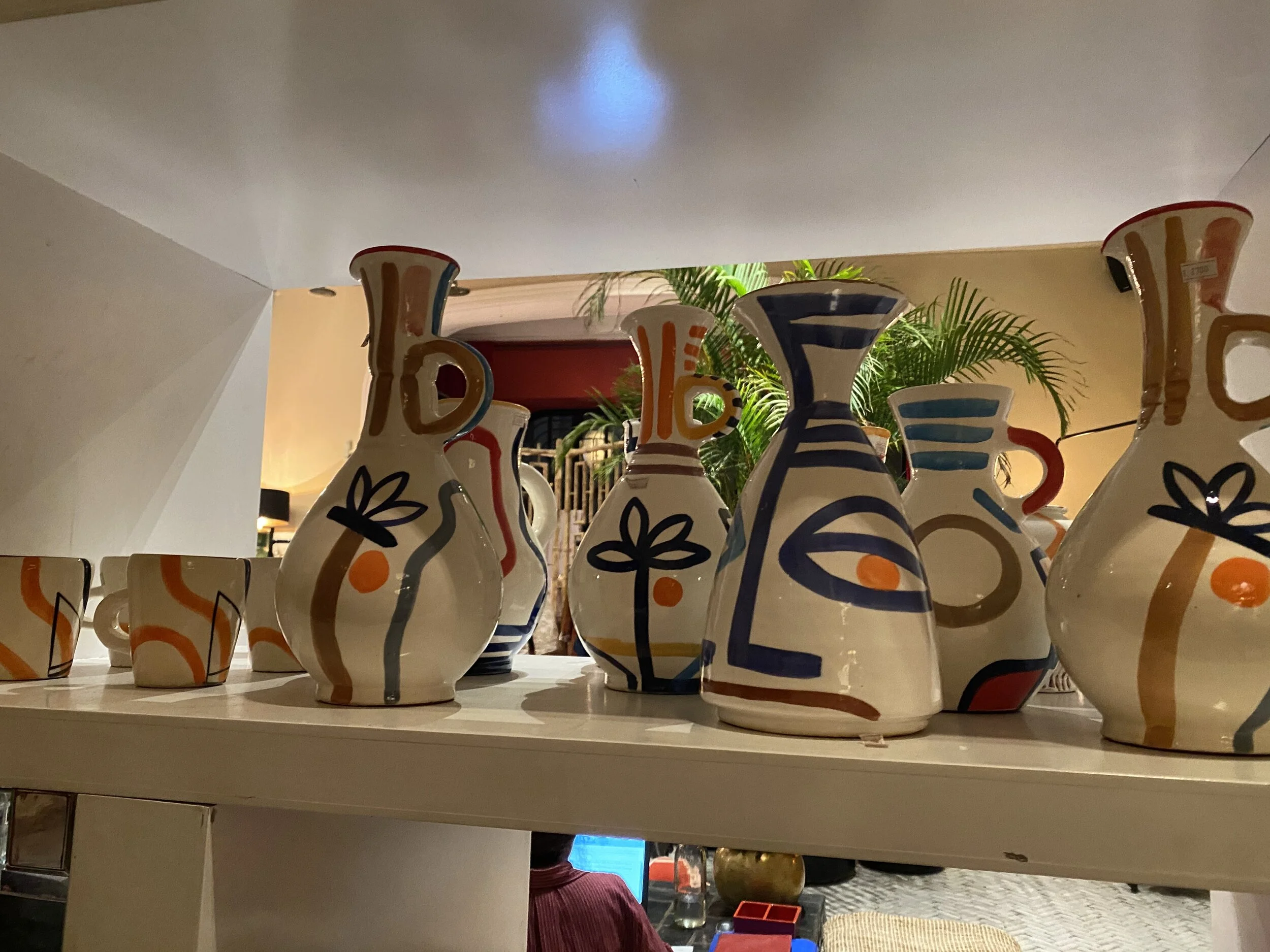
33 Rue Majorelle https://www.33ruemajorelle.com/
Some Slow Concept http://someslowconcept.com/wp/
Marrakshi Life https://marrakshilife.com/
Norya Ayron (Le Jardin) https://www.norya-ayron.com/

El Fenn https://el-fenn.com/boutique/

The earth is art, the photographer is only a witness!
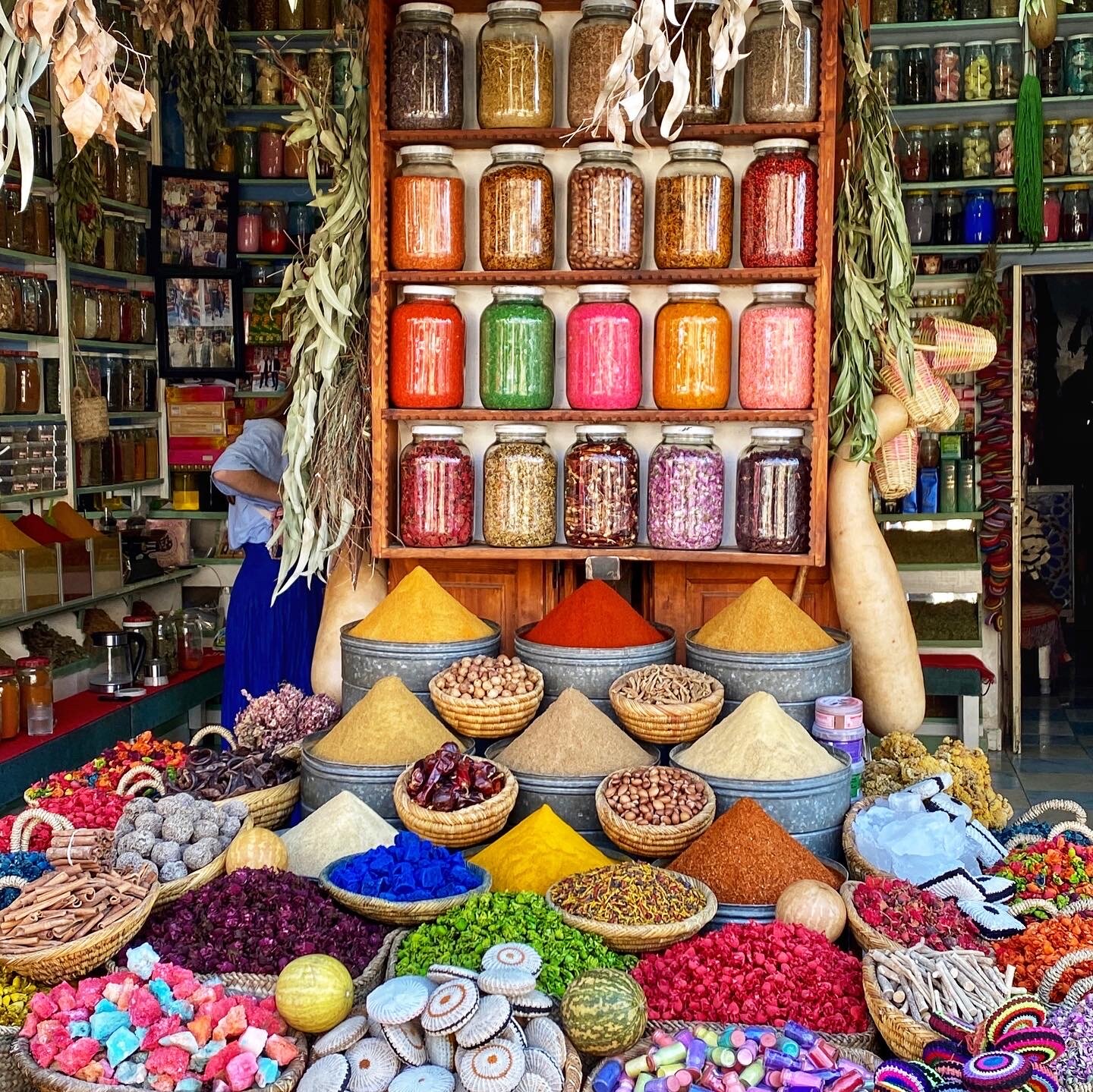
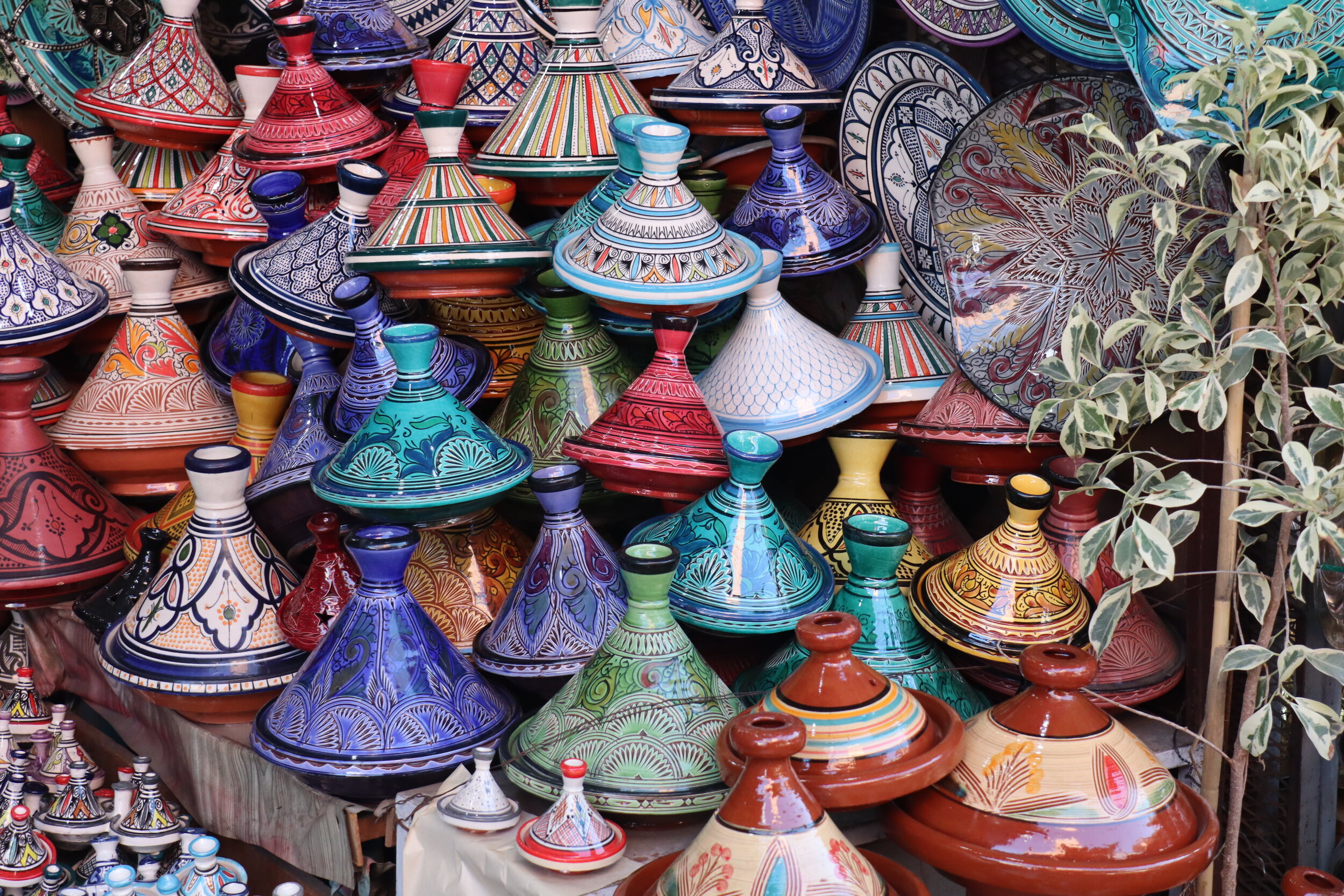
There are certain places on the surface of the earth that passes more magic than others, and one of those places is Marrakech. ~ Paul Bowles